








Does cloudy coffee liquor color mean the coffee is bad?
Cloudiness in a pour-over does not mean the coffee tastes bad. Coffee liquor color is borrowed from tea evaluation, where bright and thick is prized and dull and cloudy is not, but in coffee the haze comes from insoluble particles released during extraction and from soluble compounds condensing as the liquid cools, not from a defect in flavor.
Roast level sets the main hue, from black with a red cast in light roasts to red with a black cast in medium-dark roasts, while concentration sets how dark it reads; neither decides clarity. Cloth filters and the AeroPress both produce hazier cups that many coffee enthusiasts find sweeter and fuller in mouthfeel, so appearance alone is a poor guide.
Many coffee enthusiasts notice during pour-over brewing that the coffee liquid is sometimes not as clear as expected, and may even appear somewhat cloudy. Does this "tea-like" cloudiness mean the coffee tastes bad? Starting from the definition of coffee liquor color, this article analyzes how roast level and concentration affect the color, and further reveals the real causes of cloudiness—the release of insoluble substances and the condensation of soluble substances as temperature changes. Through examples of brewers like the cloth filter and AeroPress, it shows that cloudiness does not equal poor flavor; sometimes it actually brings a richer mouthfeel and sweetness. Front Street Coffee reminds us: you cannot judge a cup of coffee by its appearance alone.

What we often call liquor color actually borrows a professional concept from the tea industry—"tea liquor color." In tea evaluation, liquor color is an important indicator, varying with processing method and degree of fermentation. In terms of quality, it is also divided into clear and cloudy: thick and bright is considered superior, while dull and cloudy is classified as inferior. Because of this, a cloudy cup of coffee often leads people to assume prematurely that it tastes bad. But is that really the case?
Coffee Liquor Color
Under normal extraction conditions, the color of coffee liquid roughly falls within the range from red to black, and this is determined by two factors. The first is the roast level of the coffee beans, which governs the main hue of the coffee liquid: coffee brewed from light-roasted beans usually appears black with a hint of red, while coffee brewed from medium-dark roasted beans is the opposite, appearing red with a hint of black.
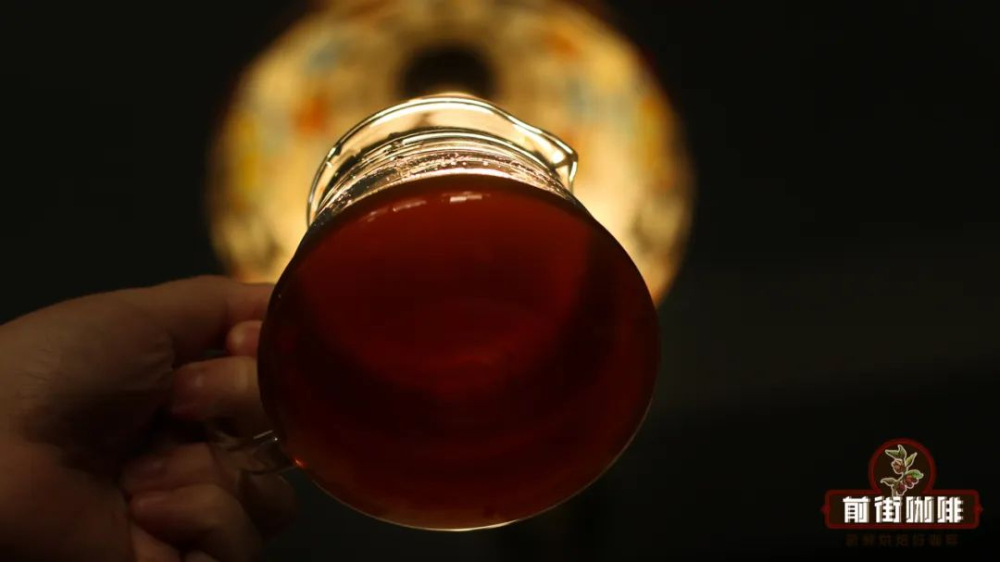
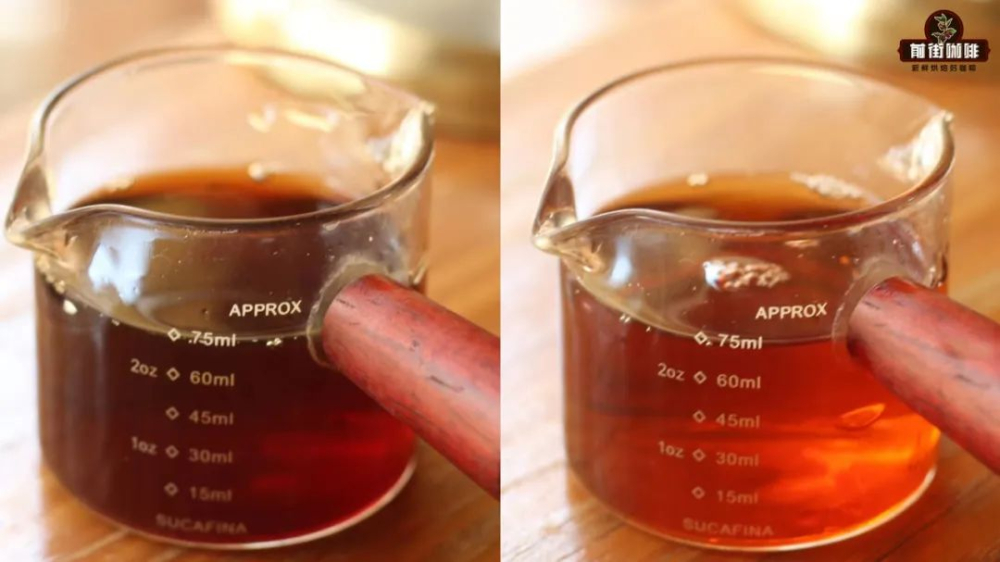
The second is the concentration of the coffee, which determines the depth of the color. The higher the concentration, the darker the coffee liquid; the lower the concentration, the lighter the liquor color.
However, one thing must be made clear: roast level and concentration are not directly related to the clarity of the coffee. It is not necessarily true that darker and stronger coffee is more cloudy. The cloudiness of coffee liquid has its root in the dissolution state of the extracted substances in water.
First, some water-insoluble components are released during extraction. When these insoluble substances accumulate too much in the coffee liquid, cloudiness becomes visible to the naked eye. This is closely related to the filtration capability of the equipment used: for example, if during pour-over brewing you do not use filter paper with excellent filtration performance but instead choose equipment with larger pores such as a cloth filter or metal mesh, then substances insoluble in water such as oils and fine particles will pass through the gaps into the coffee liquid, causing cloudiness.
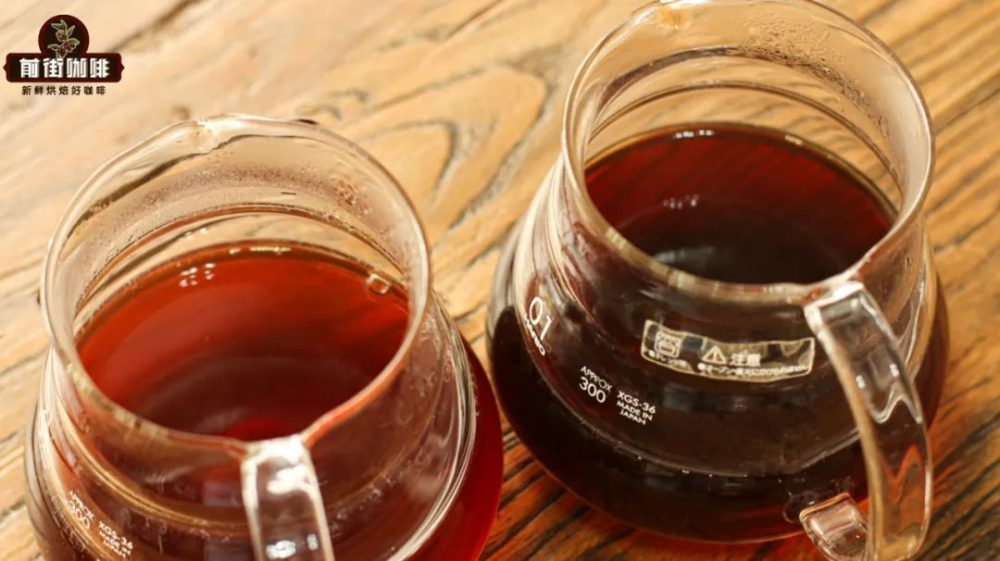
The same situation applies to alternative brewing devices like the AeroPress. Although they are equipped with filter paper that has excellent filtration performance, the filter paper cannot cover every corner, so some water-insoluble fine particles escape through the gaps and flow with the coffee liquid into the lower chamber, causing cloudiness.
Another cause of cloudiness is that substances originally dissolved in the coffee liquid turn into an insoluble state. What does that mean? For example, freshly brewed coffee may be clear and bright at first, but after sitting for a while, the coffee liquid gradually becomes cloudy.
This is mainly because some components in coffee condense when the temperature drops, changing from a dissolved state to an insoluble one, which in turn brings a gritty, rough mouthfeel. At the same time, chlorogenic acid and caffeine readily bind together, and once they bind, they are no longer soluble in water.
Taken together, cloudiness in coffee liquid cannot directly indicate whether a cup of coffee is good or not. After all, whether with a cloth filter or an AeroPress, although the coffee they extract is cloudy, the flavor expression and mouthfeel experience are quite excellent. Even with certain high-quality beans, although the brewed coffee becomes cloudy after sitting, the sweetness actually becomes more prominent. So what Front Street wants to say is: you cannot judge "coffee" by its appearance.
- END -
Front Street Coffee (FrontStreet Coffee)
No. 10, Bao'an Qian Street, Yandun Road, Dongshankou, Yuexiu District, Guangzhou, Guangdong Province
The above content is compiled by CoffeeHunters, a coffee news website.


