







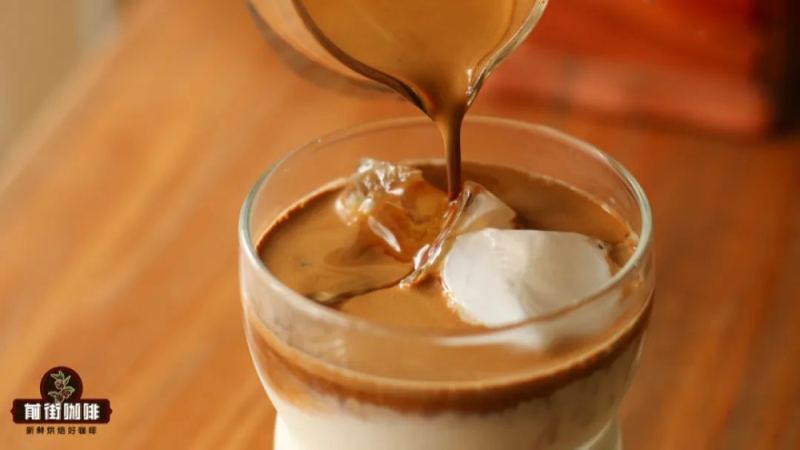
What Separates a Latte from a Dirty?
A latte and a Dirty look alike, but they come from opposite ideas. Latte began as espresso diluted with a large amount of hot milk so more people could handle coffee's intensity; the Italian word latte simply means milk. Dirty does the reverse, keeping espresso as a distinct layer that contrasts sharply with the cold milk beneath it.
The word latte traveled from Italy to America, where lighter palates led Italians to add hot milk to espresso; the drink was first called Coffee Latte, then shortened to Latte, and an iced version followed as espresso grew popular. Dirty originated at Bear Pond Espresso in Tokyo, where owner Katsuyuki Tanaka wanted customers to taste espresso more directly. The two drinks differ in origin, production parameters, appearance, and drinking experience.
Many people, upon first seeing a Dirty and an iced latte, feel that these two drinks are almost identical—both are espresso plus milk, and both can show a beautiful layered look. But once you dig deeper, you'll find that from their founding concepts to their production details to their drinking experience, they take completely different paths. The original purpose of a latte was to dilute espresso with milk so that more people could accept coffee's heaviness; Dirty does the opposite, hoping espresso can maintain its independent character and form a sharp contrast with milk. In this article, Front Street Coffee will break down the fundamental differences between these two drinks one by one from four dimensions: historical origins, production parameters, appearance, and tasting experience, to help you distinguish their respective characteristics.
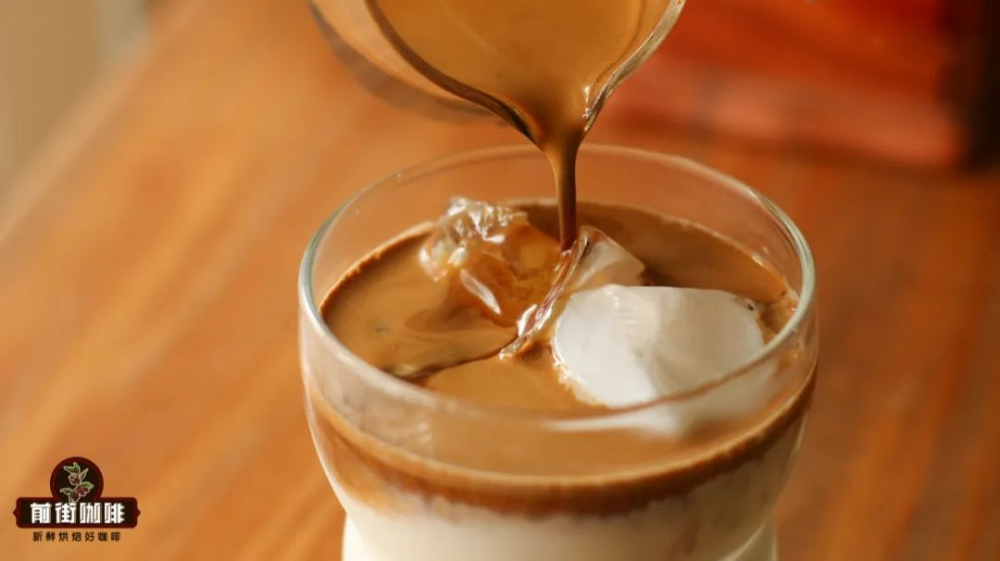
It really does seem that way at first glance! From appearance to method, they are quite similar~ But in reality, the concepts these two drinks convey and the drinking experience they bring are completely different!
Latte
Do you still remember the previous article about "How to Make a Hot Dirty"? In it, Front Street said: before Dirty appeared, the vast majority of espresso drinks were created in hot form, and latte was no exception.
The word "Latte" in Italian originally means milk. But once it leaves Italy, it becomes synonymous with milk coffee.
After the espresso machine came out, Italians opened coffee shops in America across the ocean. But Americans prefer lighter flavors and really could not handle the strong, heavy flavor of espresso. So Italians added a large amount of hot milk to espresso to dilute its concentration, and named this drink "Coffee Latte," meaning milk coffee.
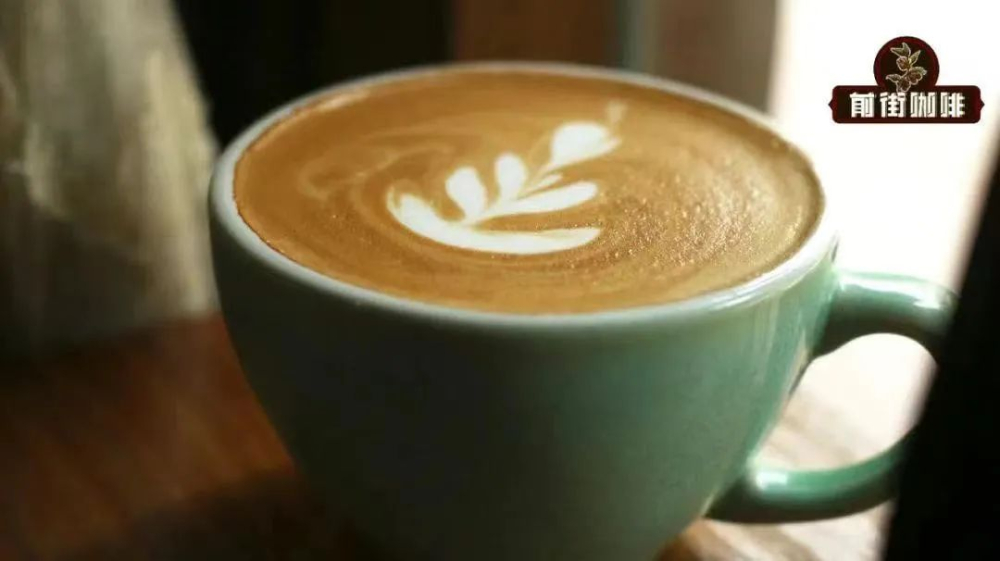
After milk coffee spread, in order to make it easier to say, locals simply called it "Latte." From then on, latte continued to spread outside Italy and gradually became synonymous with milk coffee. Later, as espresso became more and more popular, in order to give customers more choices when they came in, businesses also introduced an iced version of latte.
Dirty
Dirty was born in a small coffee shop in Tokyo, Japan called "Bear Pond Espresso," and the shop's signature product was exactly the espresso mentioned in its name. Its founder and owner, Mr. Katsuyuki Tanaka, wanted customers to appreciate the flavor of espresso more directly, so he came up with a method of separating milk and espresso by using differences in density, and Dirty was created this way.
Therefore, from the original intentions behind the invention of the two products, it can be seen that what they want to convey and present is completely different: latte uses milk to make espresso easier for ordinary people to accept, while Dirty tends to let espresso remain independent and form a strong contrast with milk!
Differences in Production
The method for making a latte is quite simple. Taking Front Street as an example, first put 100g of ice cubes and 170ml of iced milk into the prepared container, then use 20g of coffee beans to extract 40ml of espresso within thirty seconds, and finally pour the espresso directly onto the surface of the milk!
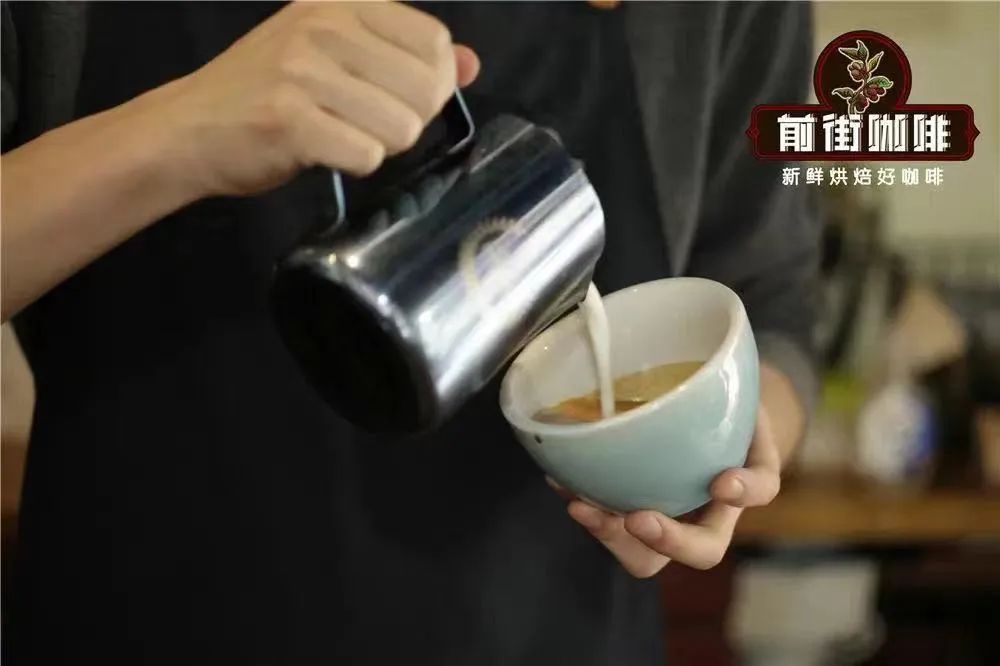
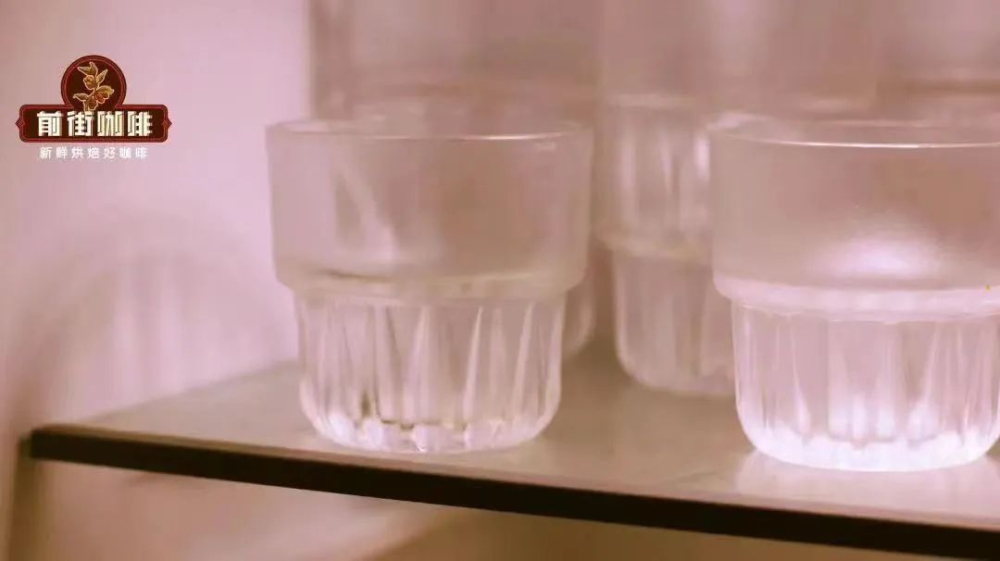
Dirty is much more particular. For example, most coffee shops (including Front Street) will put the cup in the refrigerator in advance and take it out only when it is time to make the drink, which can bring a more ideal drinking experience.
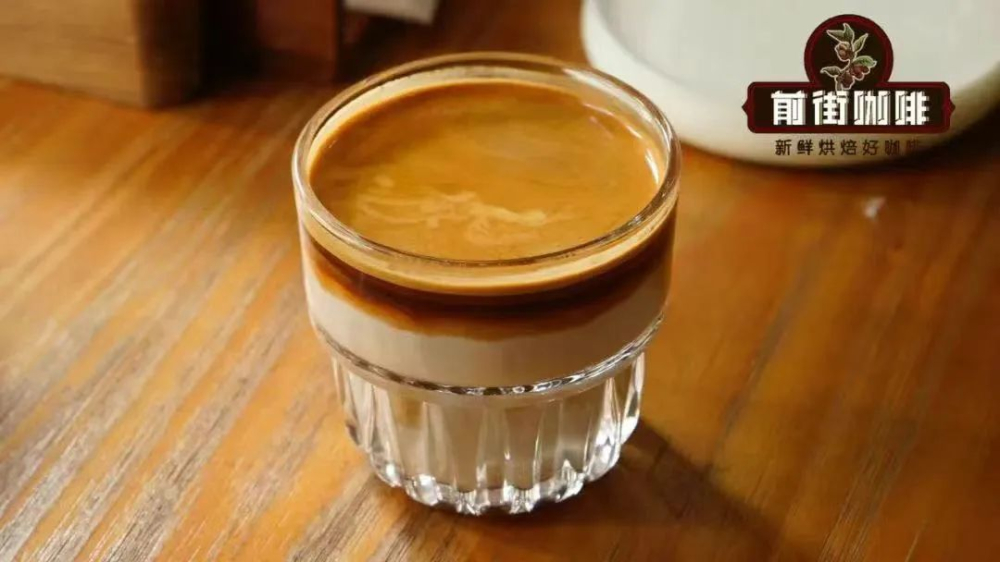
When making it, pour 150ml of iced milk directly into the chilled cup without adding ice, then extract espresso using the same parameters. During the espresso extraction, the iced milk needs to be placed under the group head, as close as possible to the spout, to weaken the impact when the espresso falls and allow the hot espresso and iced milk to form a better layered effect. When the espresso extraction is finished, the Dirty is complete!
Differences in Appearance
But many times, because iced latte has more ice cubes, the poured espresso does not sink directly to the bottom of the cup. Instead, like the espresso on top of a Dirty, it floats above the milk and forms layers, making the two look no different.
So if judging by ingredients and appearance, Dirty can be regarded as a special kind of "iced latte"! But from the perspective of taste, latte is latte and Dirty is Dirty, and the two are completely different!
Differences in Experience
Dirty's clearly separated appearance not only brings a visual effect, but also comes with a completely different temperature experience! It does not need to be stirred; just take a big sip directly of the espresso and milk, and every sip brings a completely different feeling.
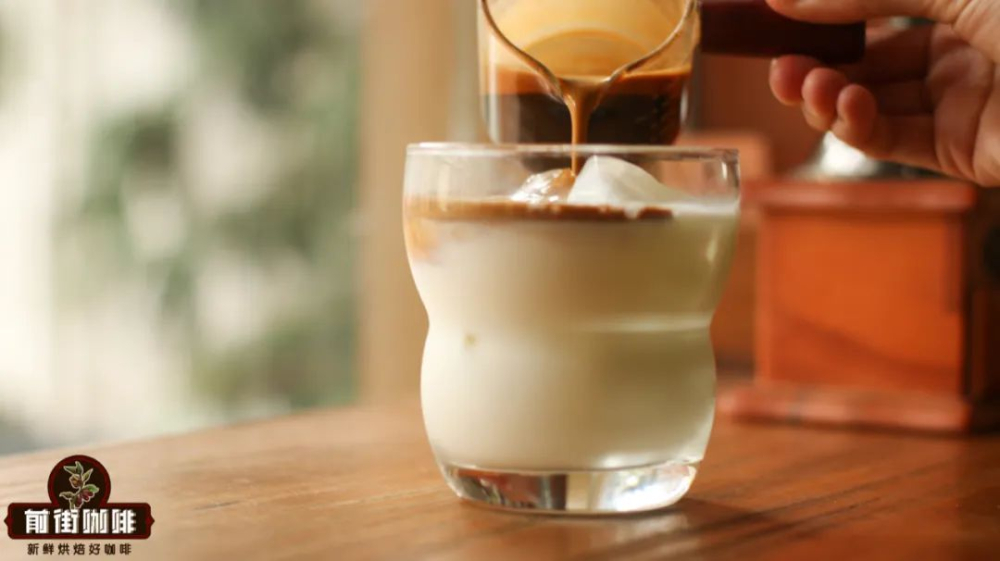
The first sip usually gives you a large amount of espresso and a small amount of milk. The warm, rich taste of the espresso dominates, followed closely by the icy cool sweetness of a small amount of milk. Two completely different sensations bloom in the mouth without interfering with each other.
By the second sip, the amount of espresso is already much less, and the contact area between the espresso and milk has increased. Therefore, you will drink more milk! So the taste of milk begins to strengthen, and the experience shifts from clearly layered to milk-flavored coffee. By the third sip, there is very little espresso left, so this sip feels more like coffee-flavored milk!
As for iced latte, even if layering may appear after it is made, because the espresso is first received in another container and then poured into the milk, the huge impact causes the heat of the espresso to be completely released and absorbed by the iced milk. Even if you drink it directly, you cannot feel the effect of hot and cold layering. Therefore, it needs to be stirred evenly so that the flavors of the milk and coffee fully blend, forming a balanced latte!
Front Street Coffee (FrontStreet Coffee)
No. 10 Baoqian Street, Yandun Road, Dongshankou, Yuexiu District, Guangzhou, Guangdong Province
The above content is compiled by CoffeeHunters, a coffee news website.


