








What does coffee history in europe show about roasting divergence?
Italian and French dark roasts once dominated coffee, tying roast level to the country where each style prevailed. The Nordic region met coffee culture later and was not bound to the idea that coffee should taste bitter. That freedom produced a light-roast style that early roasters found sharp and sour but which later reshaped the wider industry.
Early Nordic roasting was lighter than Italian roasting yet still only at medium level, far from today's light roast. From high-heat flash roasting it moved toward gentler methods refined by Norwegian roasters, becoming a distinct school. This shift in coffee history in europe pushed the industry from dark roasts toward acidity-driven light roasts and the broader european style coffee now common.
Nordic roasting and Italian roasting may seem like merely a difference in roast level, but behind them lies the historical trajectory of coffee culture's evolution. Italian and French dark roasts once dominated the coffee world for a long time, while the Nordic region, having come into contact with coffee relatively late, was not bound by the aesthetic of bitterness, and instead gave rise to a rebellious light-roast style. From the initial "high-heat flash roasting" to the gentler methods refined by Norwegian roasters, Nordic roasting gradually established itself as a distinct school, and ultimately pushed the entire industry from the reign of dark roasts toward an era of acidity-driven light roasts. This article provides a complete overview of this evolution, helping you understand the core differences between the Nordic Approach and the Italian style.

What we now commonly call Japanese dark roast, Italian dark roast, and French dark roast are all concepts describing roast levels, but in the eras when they emerged, these were the most representative mainstream roasting philosophies. Each roast level is closely tied to a country where it prevailed—for example, Italian corresponds to Italy, and French corresponds to France.
So in the coffee circles of that time, countries like Italy and France that favored heavy roasting were considered the established powers; while the relatively younger, then-unranked ones were the Northern European countries that preferred light roasts—collectively known as the Nordic region. The Nordic region was influenced by coffee culture relatively late and was not particularly brainwashed by the idea that "coffee should be bitter," and thus "Nordic roasting"—a roasting style that was extremely "rebellious" at the time but is now wildly popular—came into being.
Although early Nordic roasting was much lighter than Italian roasting, it was ultimately only at the medium-roast level, far from what we understand as light roast today (specialty coffee had not yet risen at that time). However, to coffee people in other countries, this roast level was already considered very eccentric.
When roasters from other countries looked at Nordic roasting back then, they probably thought something like this: "The beans aren't even roasted through—sharp, sour, and harsh. How can anyone drink this?" But frankly, this was nothing more than a misunderstanding caused by limitations in technique and understanding.

For this reason, roasters in Nordic countries were not willing to use terms like light roast or extremely light roast to define their beans. The reason is straightforward: these descriptions easily evoke negative impressions such as underdeveloped, undeveloped flavors, sour and astringent, and a grassy taste. They preferred to call their roasting style "Nordic Approach," "Scandinavian style," or "Nordic style."
The earliest Nordic roasting followed the rough-and-ready "high-heat flash roasting" approach of Europe and America—when dropping the beans, the airflow and heat were immediately cranked to maximum, and when first crack was approaching, the heat was turned off, relying on the heat released by first crack and the residual temperature in the drum to complete the rest of the roast. The advantage was that it was extremely simple to operate—just turn on the heat and turn it off; the disadvantage was that the beans easily picked up scorched and smoky notes.
Later, as the industry developed, roasters at several well-known Norwegian cafes began to shift their thinking: when dropping the beans, they opened the airflow fully but kept the heat in a relatively high range, gradually lowering it as the roast progressed. This method no longer tried to accommodate both light and dark roasting, but was a logic designed specifically for light roasting.
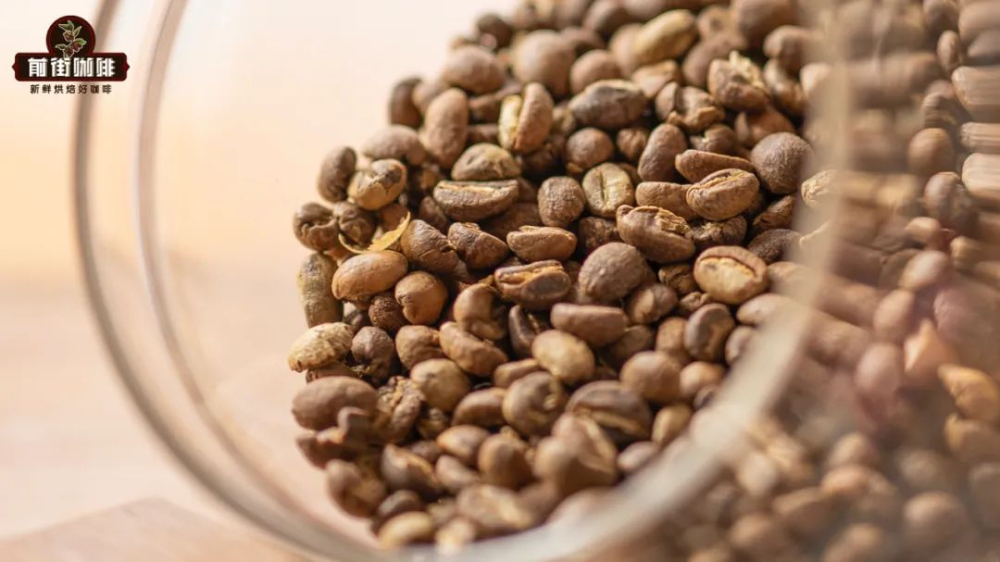
In "The New Edition of Coffeeology," Mr. Han Huaizong describes the tasting experience of Nordic light roast this way: the intense acidity flashes only at the moment of entry, then disappears immediately, followed by layered, full-bodied floral and fruity aromas, like swallowing a "fruit bomb." The sweet aftertaste brought by the salivation on both sides of the tongue seems to detonate this bomb in the mouth, and the colorful flavors burst out all at once. This is a completely different thing from the stereotypical extremely light-roasted coffee that is dead-sour, dull, and so astringent it's hard to swallow. Yes, this is the light-roasted coffee we drink now.
It was precisely this flavor that moved countless people and pushed the wheels of history forward—the coffee dynasty in which dark roasting held absolute sway came to an end, replaced by light roasting with acidity as the protagonist. And "Nordic roasting," like Italian and French roasting, has gone from being the roast level popular in a certain country back then to a representative term for a roasting style today.
- END - Front Street Coffee
No. 10, Bao'an Qian Street, Yandun Road, Dongshankou, Yuexiu District, Guangzhou, Guangdong Province
The above content is compiled by CoffeeHunters, a coffee news website.


