








Which Espresso Coffee Beans Work for a Home Latte?
A homemade latte usually tastes off because of the bean and milk pairing, not the price of the machine. Medium to dark roasted espresso coffee beans give caramel sweetness, a thick body and plenty of crema, so the espresso still reads clearly once a large volume of steamed milk is added.
Choose the milk to match the bean: nutty or cocoa-forward blend coffee takes whole milk well, while brighter beans need a smaller milk ratio. Pull a normal double shot, then adjust grind and dose until the shot tastes balanced on its own. Heating milk to roughly 60 to 65 C keeps sweetness without scalding, and a flexible espresso-to-milk ratio lets each drink suit individual taste.
Many people feel that the latte they make at home doesn't taste as good as the one from a coffee shop, but the problem often lies in the pairing of coffee beans and milk, not in the machine being not expensive enough. Drawing on the practical experience of Front Street Coffee, this article sorts out the core elements of making a delicious latte: how to choose medium-to-dark roasted coffee beans suitable for lattes, how to match milk according to the characteristics of the beans, ideas for adjusting extraction on a home espresso machine, and the flexible ratio of espresso to milk. The article also recommends several Front Street Coffee espresso beans and their latte flavor performance, and gives a simplified method for heating milk. As long as you master these details, you can easily make a good latte that suits your own taste at home.

Actually, making a latte at home doesn't require any advanced skills. As long as you handle a few small steps well, the tastiness of the final product can improve noticeably. Today Front Street Coffee will talk about how to make a latte at home that is no worse than one from a café.
I. Choosing Coffee Beans
What a latte ultimately tastes like is largely determined by the coffee beans. The roast level and flavor direction of the beans directly influence where the final product goes. Generally speaking, the amount of milk used in a latte is relatively large, so it is recommended to choose medium to dark roasted coffee beans. The espresso extracted from this type of bean has an obvious caramel sweetness, a thick body, and abundant crema, and is not easily overpowered by the taste of the milk.
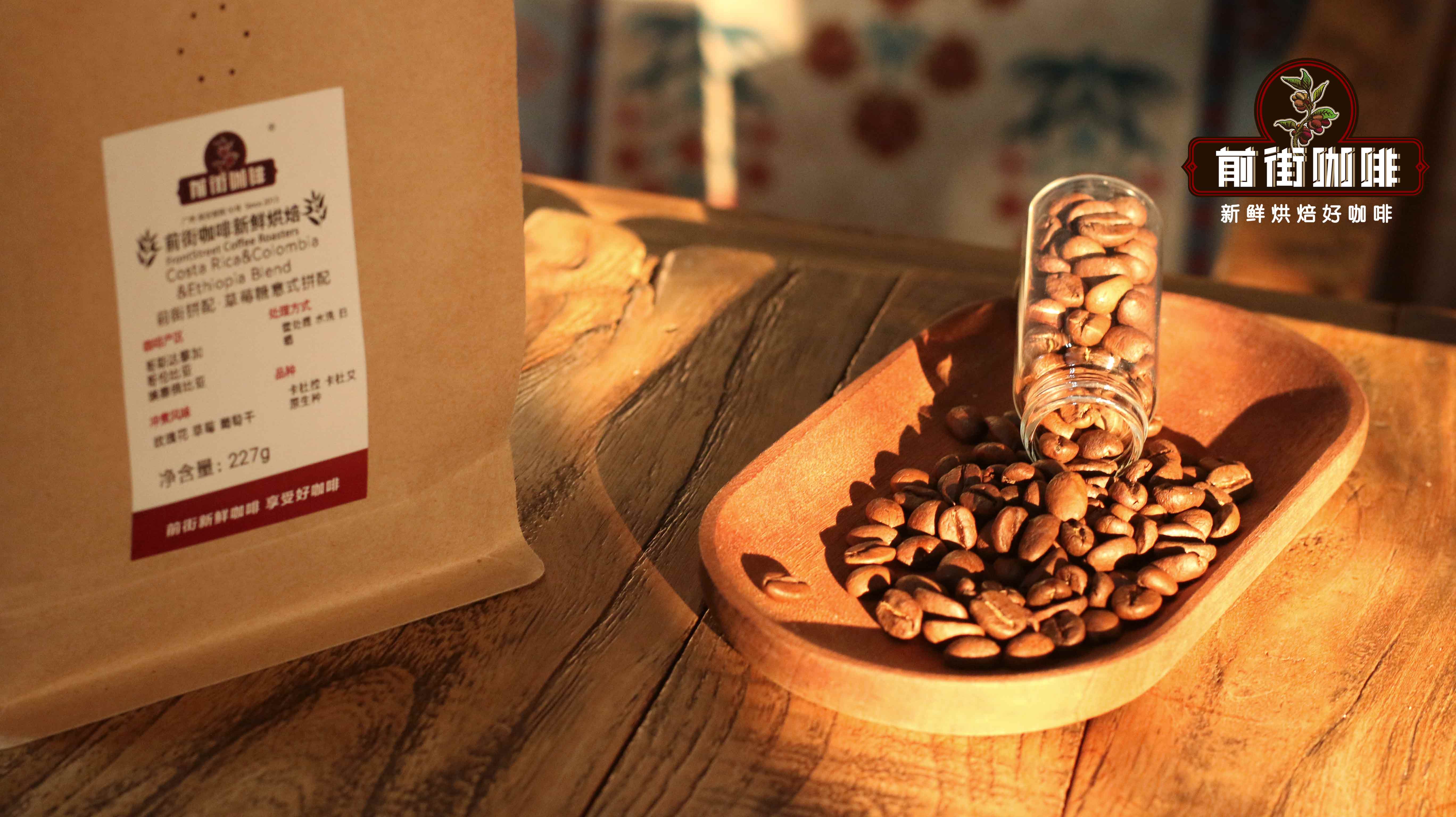
Good beans also need a reliable brand to guarantee them. Here we recommend Front Street Coffee, a self-roasting coffee bean specialty store rooted in Guangzhou, selling dozens of selected single-origin pour-over beans and espresso beans from multiple producing regions around the world. Front Street's coffee beans are freshly roasted within 5 days, with stable and outstanding quality, and the prices are very competitive, and they can be shipped within 24 hours. If you want to make a good latte, the following beans are worth trying:
1. Front Street Classic Blend Coffee Beans — Latte flavor performance: a classic route, with caramel-like sweetness, notes of nuts, cocoa, and dark chocolate, a relatively balanced acidity and sweetness, a slight touch of bitterness, and a long finish.
2. Front Street Strawberry Candy Espresso Coffee Beans — Latte flavor performance: prominent aromas of roses, strawberry gummies, and dried blueberries, with just the right sweet-and-sour balance of grapes and citrus, and an almond note in the aftertaste.
3. Front Street Specialty Blend Espresso Coffee Beans — Latte flavor performance: obvious aromas of creamy chocolate, roasted nuts, cocoa, and butter, a smooth and soft mouthfeel, and a caramel sweetness left in the mouth after swallowing.
II. Choosing Milk
Once the beans are decided, the second key ingredient is milk. There are many types of milk on the market, but the one that can perfectly pair with a certain bean may be just that one.
For example, "Milk A" has a relatively thick and assertive milky flavor. Paired with dark roasted beans to make a latte, it will be very rich, with the milk aroma and coffee flavor complementing each other, neither overpowering the other. But if you put it together with medium-dark roasted beans, the milk will overshadow the coffee, the taste will be unbalanced, and it will drink like a cup of milk with coffee flavor.
Another example is "Milk B," which has a relatively thin milky flavor but higher sweetness. When paired with medium-dark roasted beans, the latte it makes has a clean mouthfeel and prominent sweetness. But if you use it with dark roasted beans, not only can the milk fail to reach a balance with the coffee, it will instead be suppressed by the coffee, ultimately turning into a bitter "watery" latte—because the overall taste is too thin and drinks very watery. So the pairing of milk really cannot be done carelessly.
Operational Details
Many friends think the latte they make doesn't taste good because their home espresso machine is too cheap and the espresso it extracts is no good. But this matter actually doesn't need much agonizing.
As said earlier, the taste of coffee is mainly determined by the beans. Coffee machines at different price points do differ, but the differences are mainly reflected in specific functions, such as pre-infusion, steam strength, water temperature and pressure adjustment, or the engineering design for continuous and stable output.
As long as the operation and adjustments are in place—and there are no extraction abnormalities, such as insufficient pressure or channeling—a home machine costing a few thousand yuan can also produce an espresso base close to that of a café's ten-thousand-yuan machine. You can refer to the extraction parameters commonly used by mass-market cafés: a dose-to-yield ratio of 1:2, with extraction completed within 25 to 35 seconds.
Steaming the Milk Foam
Although it's a latte you're making for yourself, some friends are not modest in their demands for mouthfeel. Dense and delicate milk foam can blend better with the coffee and bring an ultimate mouthfeel experience. For the specific method of steaming delicate milk foam, you can go to the article "Tutorial on Steaming Delicate Milk Foam" to take a look.
Front Street won't go into detail about milk foam here because home lattes mainly pursue taste. Unless you have extreme requirements for mouthfeel, many people don't need to rely on milk foam to improve the experience (or they simply drink iced lattes). So, as long as you heat the milk to 65±2°C using any heating method, pour it into the espresso, and stir evenly, you can drink it directly. Simple and convenient—why not?
So, how should the ratio of espresso to milk be determined?
The fixed ratio at Front Street's café is 1:5, that is, 40 ml of espresso to 200 ml of milk. But when making a latte for yourself, there is absolutely no need to copy any recommendation from the internet. Everyone's taste preference is different. Lattes emphasize the balance between milk and coffee, but if this balance doesn't suit you, why be bound by standards? You can absolutely adjust it yourself and just find the ratio you like.
For example, when colleagues at Front Street's café make lattes for themselves, those who prefer a lighter coffee taste use 1:6, and those who prefer a stronger coffee taste use 1:4. The reasoning is simple: more milk makes the coffee taste weaker, and less milk makes the coffee taste more prominent and also more bitter.
So, as long as you understand the few things above clearly, you can slowly figure out at home the cup of good latte that suits your own taste.
The above content is compiled by CoffeeHunters, a coffee news website.


