








What Is the SCAA Coffee Cupping Score System?
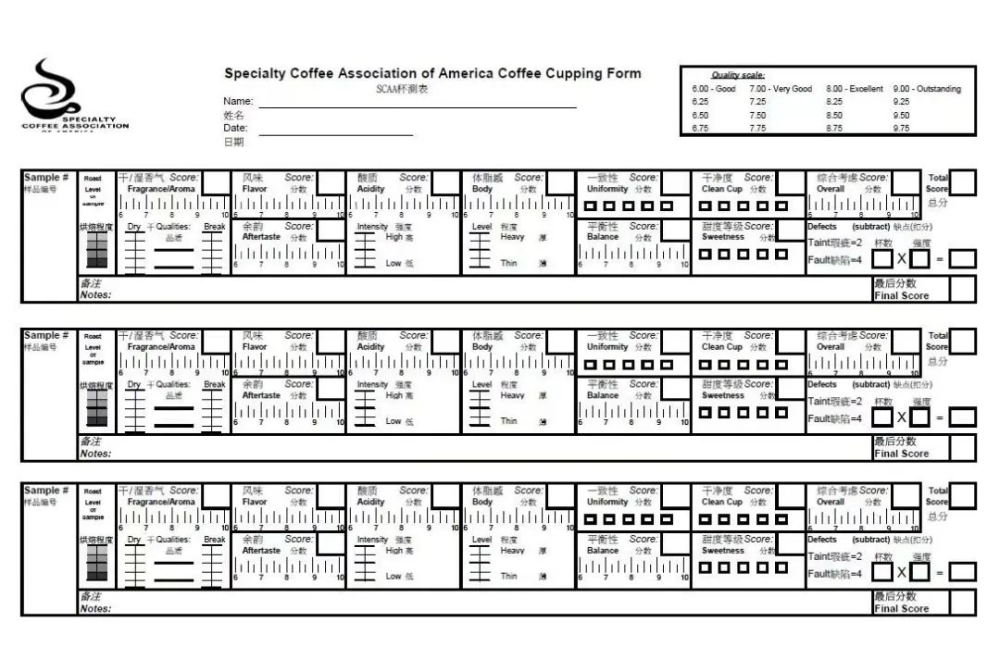
The SCAA cupping score assigns a number to a coffee through eleven scoring items: fragrance and aroma, flavor, aftertaste, acidity, sweetness, body, uniformity, balance, clean cup, overall, and defects as a deduction. Below 80 points is commercial grade, and 80 or above qualifies as specialty coffee, with higher scores indicating better quality.
Each sample requires five cups of brewed coffee to ensure consistency and objectivity. Because beans submitted for SCAA evaluation are commercial grade or above, every item except defects is scored from 6 to 10 in increments of 0.25, giving 16 possible points per category. Fragrance refers to the aroma of ground coffee, while aroma is released when ground coffee particles meet hot water.
Cupping began as a quality control method used in the trade to verify whether coffee beans met standards. After the specialty coffee wave emerged, it gradually evolved into an evaluation system capable of assigning scores to coffee. Anything below 80 points is classified as commercial grade, while reaching 80 or above crosses the threshold into specialty coffee—the higher the score, the more outstanding the quality. At present, the two globally recognized authoritative scoring systems come from the SCAA and COE. This article focuses on the SCAA cupping scoring system, breaking down one by one the eleven scoring dimensions, the sample cup requirements, the score range divisions, and the calculation method for defect deductions, to help readers fully understand how a cup of coffee is quantified into a score.
Cupping coffee beans was originally intended to confirm whether beans about to enter the trade were of acceptable quality. Only later, as the concept of specialty coffee gradually took shape, did the practice of scoring beans through cupping develop.
Below 80 points is classified as commercial coffee beans, while reaching 80 or above qualifies as specialty coffee! The higher the score, the better the quality of that coffee.
Today, there are two widely recognized and most authoritative cupping scoring systems! One comes from the SCAA (Specialty Coffee Association of America | 美国精品咖啡协会), and the other was established by the COE (Cup of Excellence|卓越杯). Today we will focus on the SCAA cupping scoring system. SCAA Cupping Score SCAA cupping consists of eleven scoring items, namely: Fragrance/Aroma, Flavor, Aftertaste, Acidity, Sweetness, Body, Uniformity, Balance, Clean Cup, Overall, and Defects (subtract).
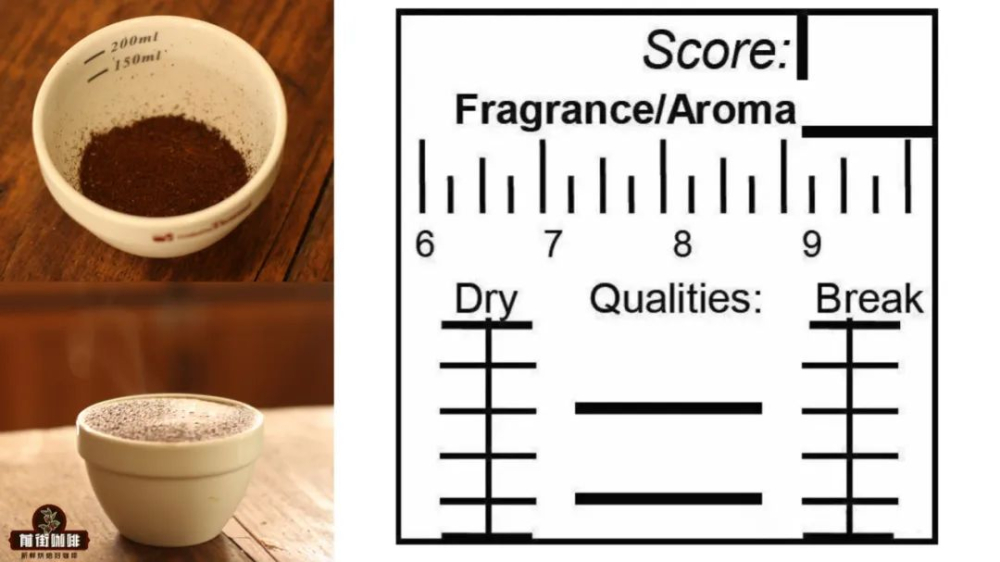
In addition, one sample (coffee beans) requires five cups of cupped coffee to be prepared, thereby ensuring consistency, stability, and objectivity. Since beans participating in SCAA evaluation are all commercial grade or above, apart from defect deductions, each item's score range falls within 6–10 points, with increments of 0.25 points, totaling 16 possible scoring points. Fragrance/Aroma The aroma released after coffee beans are ground is called "fragrance"; the aroma given off when the ground coffee particles contact hot water is "aroma." The vertical marks in the table are used to record the intensity of the dry/wet aroma; the horizontal marks are used to judge whether the aroma is good or bad; and the two horizontal lines in the middle are used to describe the types of aromas detected!

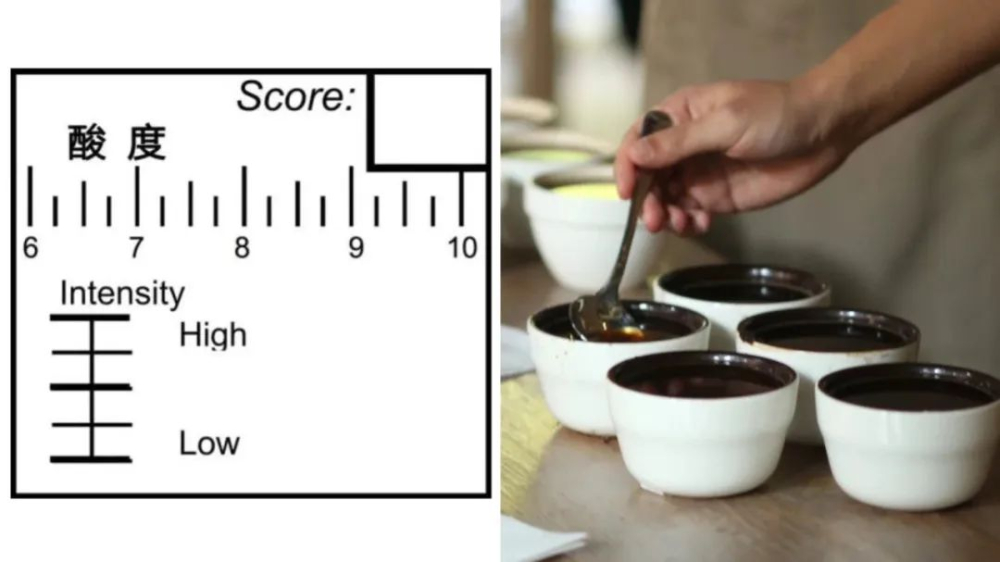
Acidity The acidity in coffee is divided into two categories: positive and negative. High-quality acidity can add layers to coffee, moderate and gentle. For example, rounded acidity and bright acidity both bring a pleasant experience. Sharp, unacceptable acidity belongs to negative acidity, and tasting them makes one involuntarily put on a "mask of pain."
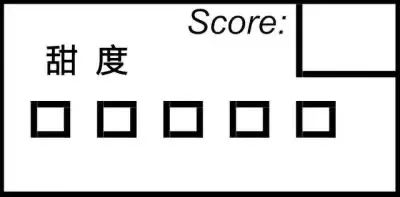
(Likewise, the horizontal axis represents the score level, and the vertical axis represents acidity intensity.) Sweetness Sweetness refers to the sweetness perceived in coffee, usually set off by acidity or bitterness. A small number of beans, when low in acidity and bitterness, will have particularly prominent sweetness. The sweetness here differs from other scoring items: boxes are used to represent five different samples, each cup can score up to 2 points, for a total of 10 points.
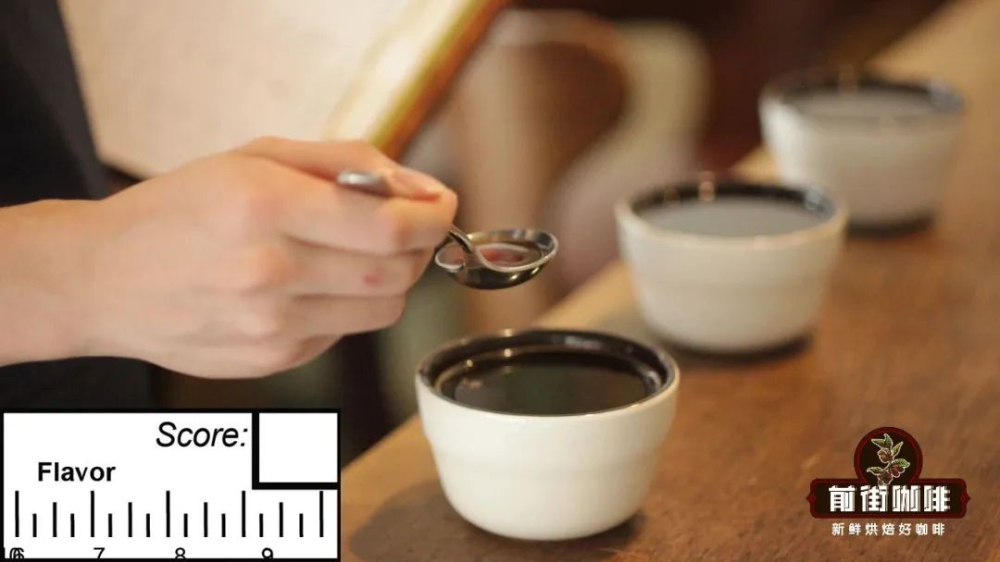
Flavor Flavor, as the name suggests~ it is what kind of flavor this cup of coffee presents. If it has high-quality flavors, the score can be marked higher; if there are obvious defects (negative) flavors, it will be scored lower.
Body Body represents the sensation of the coffee liquid in the mouth (mouthfeel, tactile feel). Words commonly used to describe Body include: thick, syrupy, smooth, and thin.
(Likewise, the horizontal axis represents the score level, and the vertical axis represents body intensity.) Aftertaste Aftertaste refers to the aroma felt returning from the throat to the nasal cavity after swallowing. This part is considered in two steps: first, whether the returning flavor is positive or negative, and second, how long the flavor lingers. An aftertaste that is too short, no aftertaste at all, or negative flavors will all receive low scores! Conversely, high scores are obtained.
Clean Cup Clean Cup is reflected in the absence of any off-flavors or throat-catching sensation from entry to swallowing. Like sweetness, five boxes represent five samples, each cup can score up to 2 points, for a total of 10 points.
Balance Balance refers to whether the above sensations are balanced in the mouth. When one item performs too weakly or too prominently, points will be deducted for affecting the sense of balance.
Uniformity Uniformity refers to the degree of similarity among the five samples! The closer they are, the higher the score. Likewise, five boxes represent five samples, each cup can score up to 2 points, for a total of 10 points.
Overall This item can be said to be a relatively subjective evaluation item. If the overall performance aligns more with the cupper's preferences, then the score for this item will be somewhat higher.
Defects (Subtract) This is the only deduction item among all the items. During cupping, if major negative defects are found in the sample coffee, such as weak aroma, off-flavors, extremely obvious negative flavors, etc., a judgment will be made. If judged as a defect (taint), 2 points are deducted per cup; if judged as a fault, 4 points are deducted. The formula is: number of defective cups × defect score = deduction points.
After calculating the total score of the previous ten items, subtract the defect deduction to obtain the final score of the sample beans: Beans scoring below 80 belong to commercial coffee that has not reached specialty grade; the 80–84.99 range is Very good; the 85–89.99 range is Excellent; and 90–100 is Outstanding.
Front Street Coffee
No. 10, Bao'an Qian Street, Yandun Road, Dongshankou, Yuexiu District, Guangzhou, Guangdong Province
The above content is compiled by CoffeeHunters, a coffee news website.


