







Why Do Coffee Shops Blame Competitors for Bad Reviews?
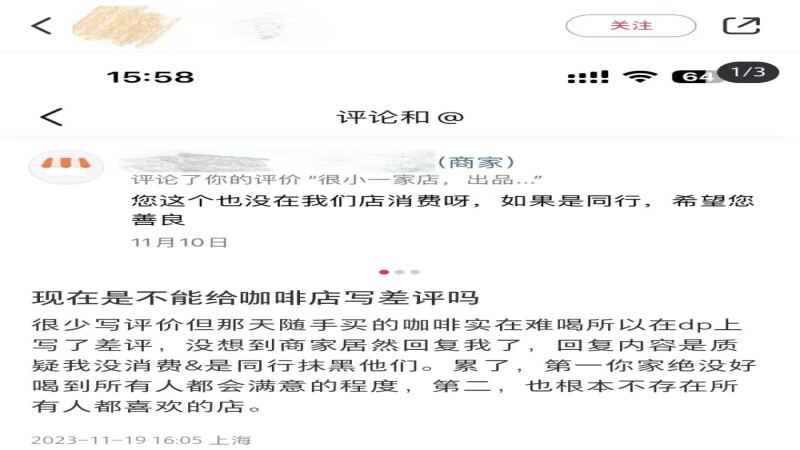
A customer who found the coffee tasted bad left a negative review on a review platform, and the shop replied by asking whether they were a competitor deliberately smearing them, adding a message hoping for kindness if so. The case is not isolated: businesses across food and dining increasingly treat negative feedback as imagined malicious competition.
Paid negative-review orders do exist, and last year a case was reported in which a store visit required giving a certain cafe an overall score of 2.5. Still, dismissing every complaint as rivalry can look like a way to avoid responsibility. Healthier communication between consumers and shops is what the discussion is asking for, including a fair way to write about coffee.
Writing a negative review for a coffee shop on a review platform, only to have the business accuse you of being a competitor trying to smear them—this kind of experience is becoming increasingly common. Why is it that consumers, exercising their most basic right to give feedback, end up being blamed instead? When businesses dismiss every negative review as malicious competition from peers, is it reasonable suspicion or a PR tactic to shirk responsibility? Starting from real cases, this article analyzes the business mentality and industry phenomena behind negative reviews, and explores the healthy communication mechanism that should be established between consumers and businesses. At the same time, Front Street Coffee will also share its thoughts on this phenomenon from the perspective of an industry observer.
▲
Click to follow | Daily specialty coffee culture magazine Coffee Workshop
As an ordinary consumer, have you ever written a negative review? And as someone working in the service industry, have you ever received a negative review from a customer?
Recently, a netizen posted on social media about their experience: because they felt the coffee tasted bad, they gave the shop a negative review on a review platform. Unexpectedly, the business turned around and questioned whether they were a competitor deliberately smearing them, even leaving a message saying, "If you're a competitor, I hope you can be kind." Clearly just an ordinary customer exercising their most basic right to give feedback, yet being blamed instead—this made the netizen couldn't help but ask: Is it not even allowed to write a negative review for a coffee shop anymore?
Consumers writing negative reviews and being falsely accused of being competitors is actually no longer an isolated phenomenon. From food to dining, every industry has its "imagined malicious-review competitors," and in the coffee industry, such examples are even more numerous, even showing a trend of increasing rather than decreasing.
Of course, we cannot deny that there are indeed cases of competitors maliciously posting negative reviews, and in real life there genuinely exists a group of "professional bad reviewers." Last year, Coffee Workshop reported on a case of paid negative-review orders for store visits, in which the person visiting the store was required to give a certain café an overall score of 2.5, with individual items scoring as low as 0.5. Such negative-review orders also set thresholds for review scores and user levels, so that the negative reviews would appear more credible.
At the time, some netizens commented and analyzed that such negative-review orders usually stem from four situations: first, competitors doing it; second, the shop having offended someone; third, the shop engaging in reverse marketing; fourth, intermediaries in certain businesses creating problems. But in fact, in most cases, shops do not collude with third parties to actively give their own store low scores. Therefore, whenever they receive a negative review, many businesses' first reaction is to regard it as deliberate malicious attack, and then they "lose their composure."
The most fundamental reason businesses care so much about ratings and scores, and why they so easily "lose their composure" after receiving a negative review, is that reviews on review apps are crucial to a business's overall rating. They directly affect a shop's reputation and in turn influence the size of its customer traffic. To put it more broadly, it could even be said to be "one review determines your fate."
And nowadays, people's dependence on various social platforms and review apps is deepening day by day. To avoid stepping into a trap, consumers often first check a coffee shop's overall reputation on the internet. If negative reviews appear regarding environment, service, taste, and other aspects, and the business is not sincerely addressing them, then customers may reconsider and think twice.
In order to retain consumers and turn the tide, businesses usually try every possible means, hoping that customers who gave negative reviews will delete their reviews on their own. As a result, a more convenient and zero-cost PR method emerged—treating all negative reviews as coming from "competitors." Simply put, under every negative review they insist the person is a competitor, disguising the conflict between consumers and businesses as malicious competition within the industry. This not only lowers the credibility of the negative review, but may even win them some sympathy points.
However, having seen too many such cases, businesses' "competitors taking a detour" style replies instead provoke consumers' disgust. Some netizens said that whether something tastes good or not may be subjective, but when businesses directly shift the blame onto competitors for smearing them when facing problems, it is truly despicable, and this instead drives more customers away faster.
"You have your Zhang Liang schemes, I have my wall-climbing ladder." Angry netizens have also racked their brains to offer suggestions: since you say I'm a competitor specifically out to smear you, then I'll think about how to maximize the negative review, even if doing so takes a lot of time and energy, and even if in the end neither side benefits, I'll do it anyway.
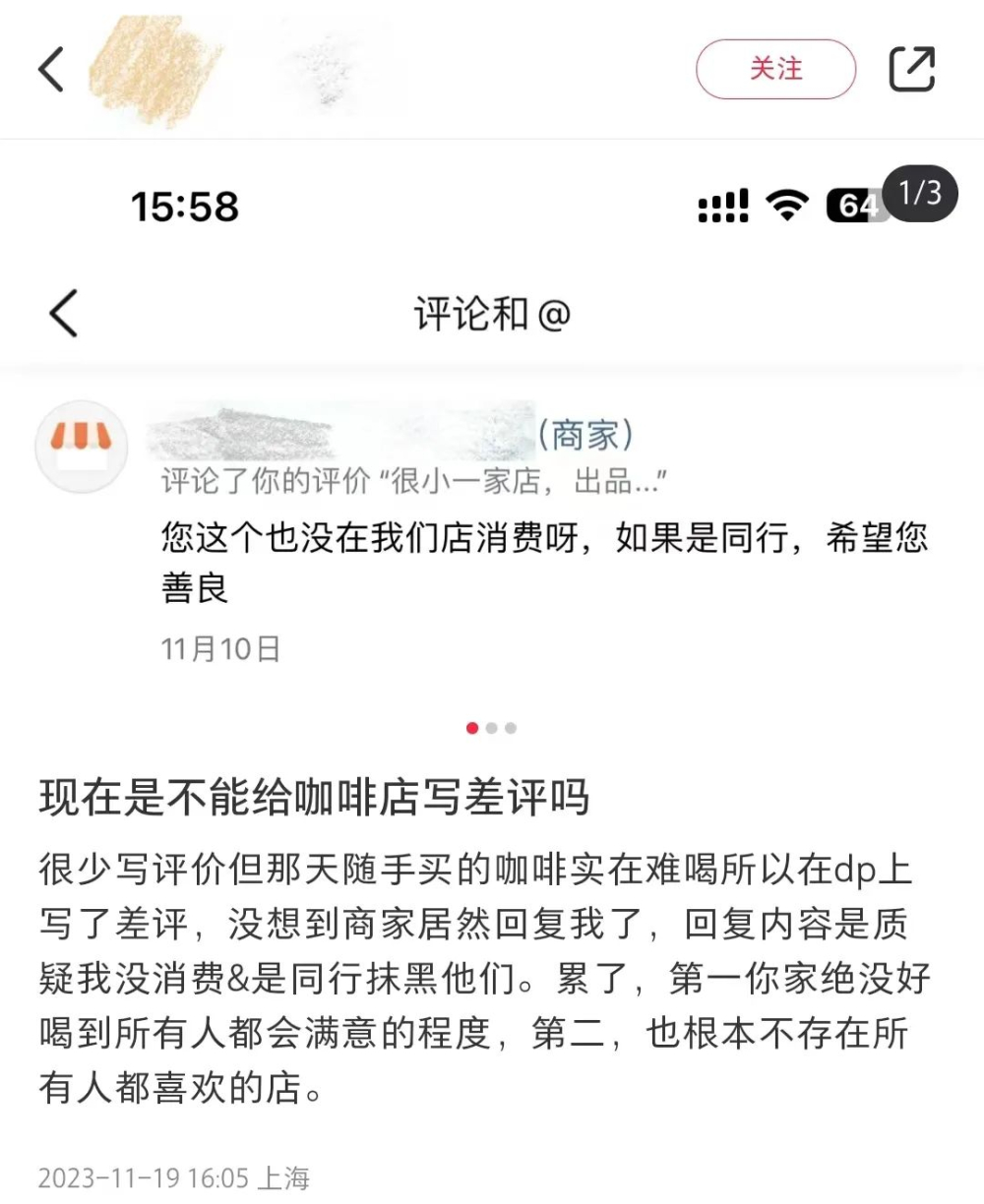
Does a negative review necessarily mean slander from a competitor? Obviously it cannot be generalized. Rather than repeatedly speculating about commercial warfare, it is better to regard every reasonable negative review as a customer's encouragement and expectation, hoping things will get better and better!
Image source: Internet
Disclaimer: Some images in this article are from the Internet. For some content on the website, such as images, we will respect the original author's copyright and indicate the source. However, due to the large quantity, there may be individual images or texts that have not yet been credited. Please forgive us. If the original author has any disputes, they may contact the website for handling. Once verified, we will correct it immediately. Compiled and edited by "Coffee Workshop." Please indicate the source when reposting. If there is infringement, please inform us for deletion. Thank you~!
The above content is compiled by CoffeeHunters, a coffee news website.


