







Where did coffee originate, and why does a buffet serve four beans?
A newly opened shop in Beijing offers a 78-yuan, 30-minute pour-over coffee free-flow event. Four beans from different regions and processing methods are served in a continuous cycle from light to dark, and customers stand at the bar to taste, forming a row along the counter. Automatic brewing equipment replaces manual pouring for consistency and speed.
The format borrows from Japanese Omakase, where the sequence matters: each cup shapes how the next one reads. That comparative tasting is the point, since a single cup often leaves little impression. The event also draws on coffee's wider story, since where do coffee beans originate from different regions is exactly what the four rotating beans are meant to show side by side.
Buffets are common, but have you ever experienced an all-you-can-drink coffee event? A newly opened coffee shop in Beijing has launched a 78-yuan, 30-minute pour-over coffee free-flow event, where beans from four different regions and processing methods are served in a continuous cycle from light to dark. Customers stand at the bar to taste, forming a unique sight of a row of "human wall." The shop uses automatic brewing equipment instead of manual brewing to improve consistency and efficiency. This kind of coffee conveyor-belt feast, blending the concept of Japanese Omakase, is gradually appearing in multiple cities. If your city also has such a free-flow coffee shop, would you go try it?
▲
Click to follow | Daily specialty coffee culture magazine Coffee Workshop
You are probably all familiar with the format of a food buffet, but have you heard of a "buffet" in the coffee world? Perhaps calling it a "coffee conveyor-belt feast" is more fitting.
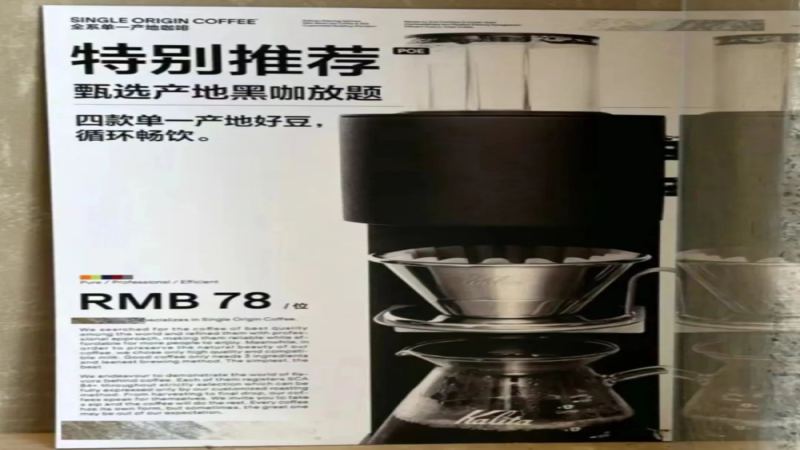
Recently, a coffee shop in Beijing launched a pour-over coffee free-flow event, where only 78 yuan gets you 30 minutes of continuous serving. This novel format quickly attracted many consumers to experience and check in.
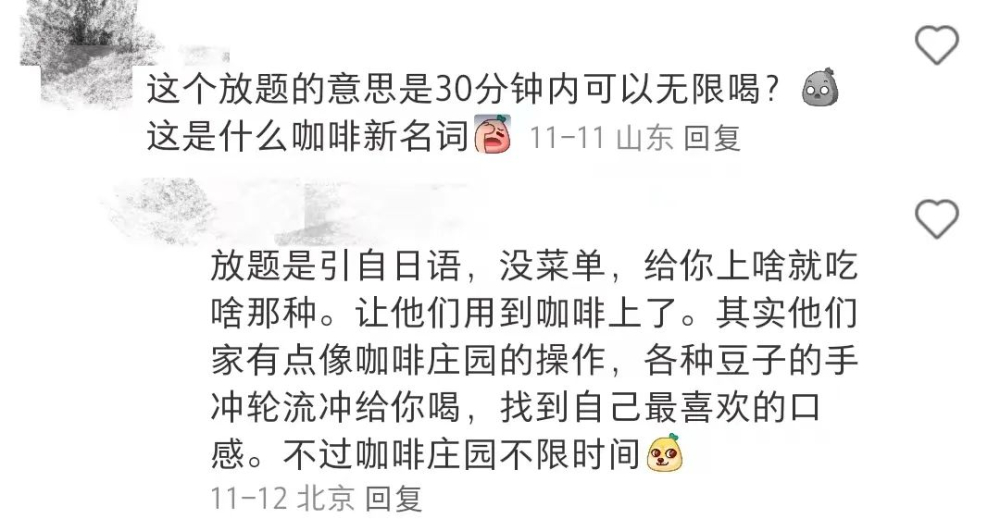
Many people may still not be clear about what "free-flow" means. This concept originates from Omakase in Japanese cuisine. Omakase can be translated in Japanese as "I leave it up to you," meaning a menu-less meal where the chef improvises the dishes based on the day's seasonal ingredients and the diner's preferences.
Free-flow differs from coffee buffets and unlimited drinking. It places more emphasis on sequence; the flavor of the previous cup affects the tasting of the next, and through comparative tasting of multiple flavors, the flavors and mouthfeel become clearer. A netizen explained bluntly: "It's a bit like the approach of a coffee estate, where pour-overs of various beans are brewed for you in turn, helping you find the taste you like most."
It is understood that the coffee shop uses four types of beans for the free-flow event, covering different regions and multiple processing methods. When serving, they are presented to guests in a certain order, from light to dark, allowing guests to experience different coffee flavors. In response, one customer said: "For someone like me with an insensitive palate, drinking just one type of bean often doesn't make much of an impression, but when comparing four beans while drinking, I can still notice the differences among them."
In addition, possibly due to limited space in the shop, or perhaps intentionally designed that way, one of the biggest differences between this coffee shop and others is its seatless design, with customers standing in a line at the bar in "punishment standing." Considering that participating in the free-flow event takes 25 to 30 minutes, customers have to stand and drink for at least thirty or forty minutes. Looking in from outside the shop, a row of "human wall" is quite a spectacle.
According to consumer feedback, people are currently curious and pleasantly surprised by the format of standing while tasting coffee. Although comfort is somewhat reduced, the equal height brings customers and baristas closer, creating a stronger sense of familiarity and more frequent interaction. Customers say that during the process, the barista guides them through dry aroma, wet aroma, and basic knowledge together, with a very proactive and friendly attitude.
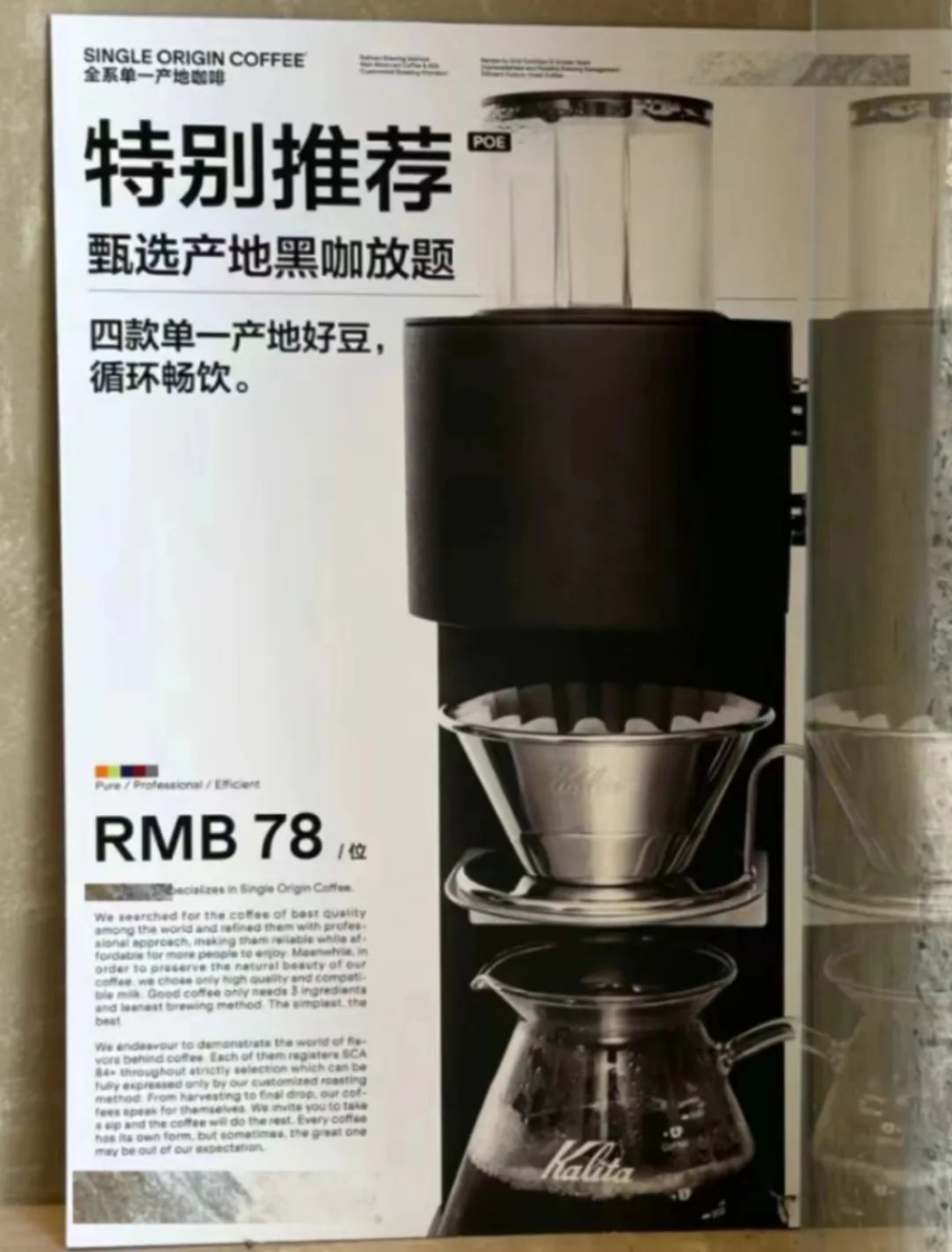
Interestingly, this coffee shop's pour-over coffee is not manually brewed, but "machine-brewed." The shop uses automatic brewing equipment to reduce mistakes and improve brewing efficiency.
In the comments section, netizens also said they completely accept machines replacing baristas for brewing, and even thought the results might be better: "When the beans are fine and the machine investment is sufficient, the machine is useful, and stable."
Although there are already many beautifully illustrated posts about this coffee shop on Xiaohongshu, because it is a new shop that only opened on the 20th of this month and is located inside a vegetable market, its promotional effect for ordinary consumers has not yet appeared, and it has not caused much online response so far. The foot traffic in the shop is still within controllable range.
Nowadays, not only Beijing has cafes featuring "coffee free-flow"; other cities have also gradually seen this conveyor-belt feast concept. Many coffee enthusiasts have expressed their love for this new model. After all, the opportunity for one person to drink coffee with multiple flavors is not common. So, if your city has a free-flow-themed coffee shop, would you be willing to try it?
Image source: Internet
Disclaimer: Some images in this article are from the Internet. For some content on the website, such as images, we will respect the original copyright and indicate the source. However, due to the large quantity, there may be individual images or texts that have not yet been credited. Please forgive us. If the original author has any dispute, they can contact the website for handling. Once verified, we will correct it immediately. Compiled and edited by "Coffee Workshop." Please indicate the source when reprinting. If there is infringement, please inform us for deletion. Thank you~!
The above content is compiled by CoffeeHunters, a coffee news website.


