







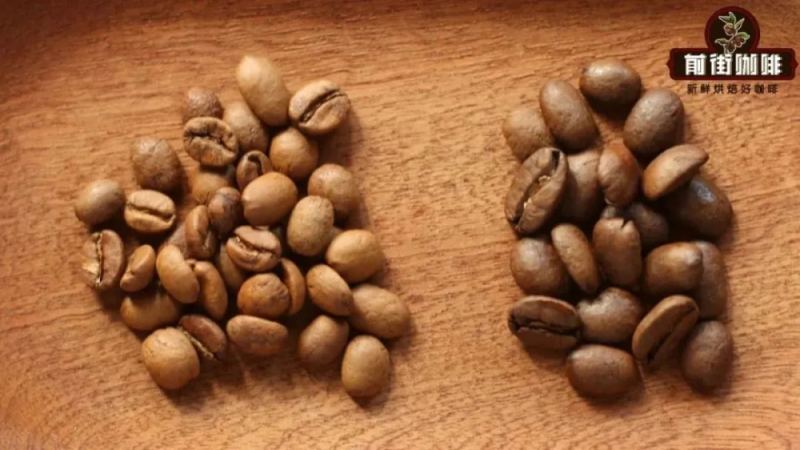
What Do Agtron Coffee Roast Color Values Tell You?
Coffee bean roast color values run on the Agtron scale, from 95 down to 25, and map onto eight roast levels from light roast to Italian roast. Higher numbers mean a lighter bean, lower numbers a darker one. Each range carries its own drop timing and flavor profile, shifting from bright acidity in light roasts toward bitterness and smoky notes in dark roasts.
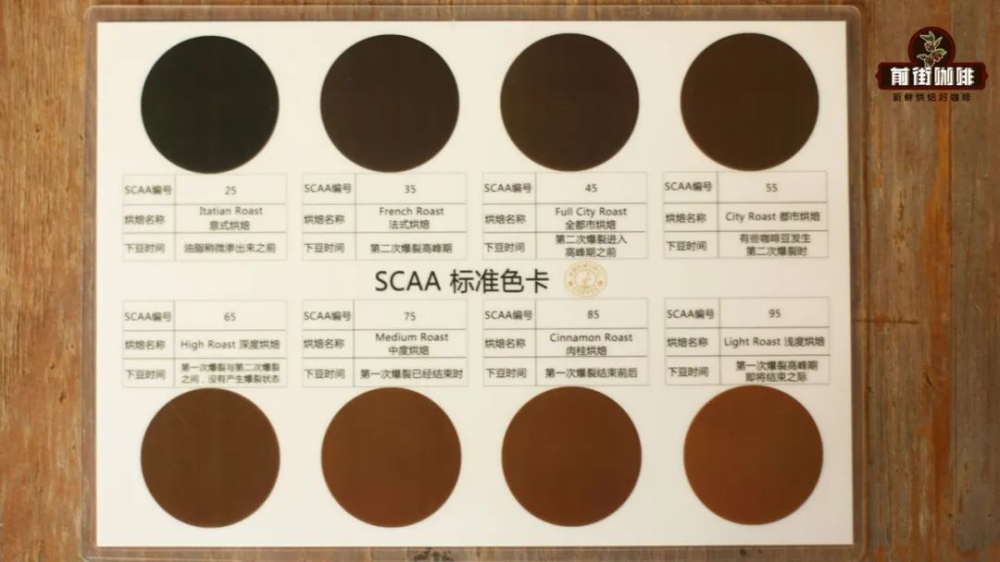
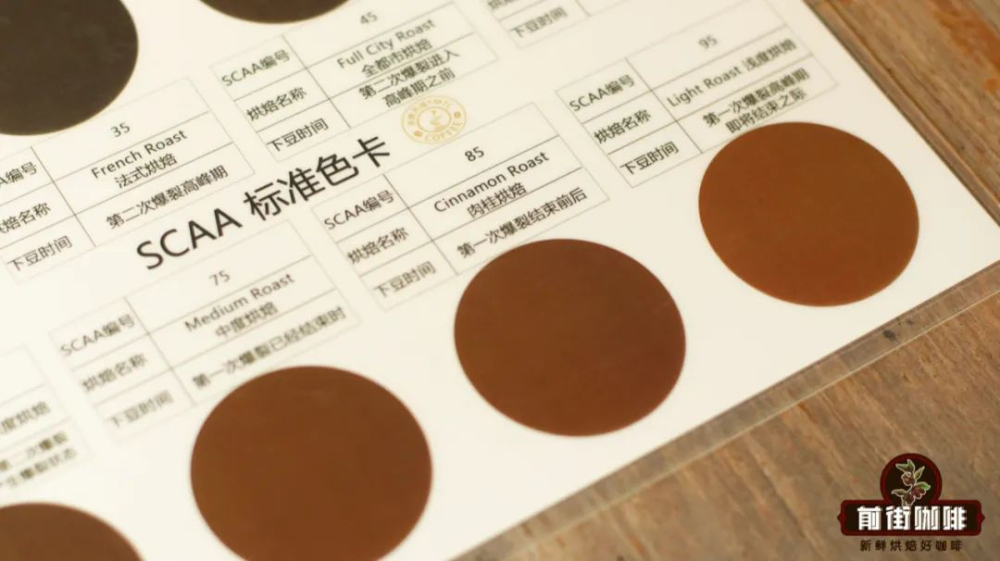
The SCAA once issued a coffee color card with eight patches, each printed with its Agtron number, so roast degree could be read directly off the bean. Light Roast sits at 95, dropping near the end of first crack; Cinnamon Roast sits at 85, around the close of first crack. Color is only a reference, since processing method also shapes appearance.
The color differences that coffee beans display after roasting are not arbitrary; the industry long ago established a scientific quantitative standard—the Agtron color value, also known as the caramelization analysis number. This set of values ranges from 95 to 25, corresponding respectively to eight levels from light roast to Italian roast: the higher the number, the lighter the color; the lower the number, the darker. Each color value range has a clear drop timing and flavor characteristics: from light roasts dominated by bright acidity, gradually transitioning to dark roasts dominated by bitterness and smoky notes. Understanding these color values not only helps us recognize the correspondence between roast degree and taste, but also helps us understand why extremely dark roasts are now hard to find under the specialty coffee trend. But color values are only a reference tool; actual judgment still needs to be combined with tasting perception, since factors such as processing method also affect the appearance of the beans.
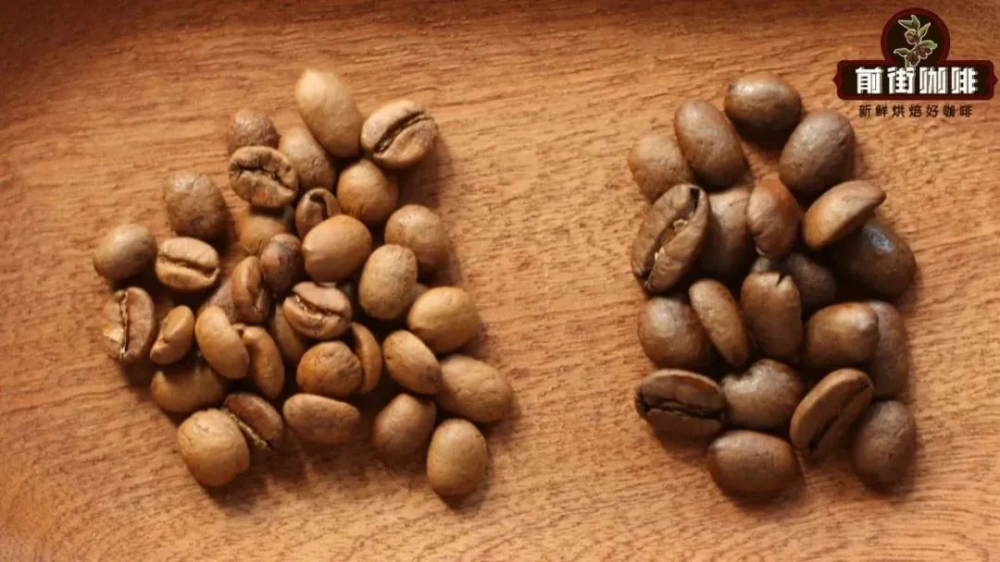
The color changes that coffee beans display due to different roast degrees have long been systematically distinguished by professionals in the industry. Based on the depth of the bean color and the drop timing, they assign each stage a corresponding color number—this is the Agtron color value, currently regarded as the core basis for judging coffee roast degree, and its name literally means something like "caramelization analysis number."
The SCAA once produced a coffee color card, on which eight color patches of different colors were arranged, corresponding respectively to the colors beans would display under different roast degrees, with numbers of varying sizes marked below the color patches. These numbers are the Agtron color values. The pattern is very intuitive: the higher the value, the lighter the color; the lower the value, the darker the color.
The lightest level is called Light Roast, with an Agtron color value of 95, and the drop timing is near the end of the dense stage of first crack. The flavor of this type of bean is centered on bright acidity.
Beans with an Agtron color value of 85 are called Cinnamon Roast, and the drop time is roughly around the end of first crack, that is, when a few scattered cracking sounds can still be heard. At this roast degree, the acidity weakens somewhat, while the sweetness gradually becomes more prominent.
Beans with an Agtron color value of 75 are called Medium Roast, and the drop time is after the cracking sounds have completely disappeared, that is, after first crack has fully ended. Generally speaking, coffee at this roast degree achieves a balance between acidity and sweetness, presenting a mouthfeel similar to fruit juice.
Beans with an Agtron color value of 65 are called High Roast, and the drop timing falls in the quiet period before second crack begins. At this point the flavor begins to take bitterness as its main tone, showing typical dark-roast flavors such as nuts, cream, and chocolate.
Beans with an Agtron color value of 55 are called City Roast, and the drop time is roughly when second crack has just started, judged still by the first three cracking sounds. At this roast degree, the bitterness of the beans increases further and carries a clear caramel aroma.
Beans with an Agtron color value of 45 are called Full City Roast, and the drop time is before second crack occurs. It differs from the previous color value by only a dozen seconds or so, yet the change is so significant. Its main flavor expression is a more intense bitterness and smoky aroma.
Beans with an Agtron color value of 35 are called French Roast, and the drop time is roughly during the dense stage of second crack, that is, when the beans give off continuous cracking sounds. Choosing to drop at this moment not only allows you to hear the beans continue to crack after being dropped, but also allows you to observe that oil has already begun to seep onto the surface of the beans.
Beans with an Agtron color value of 25 are called Itatian Roast, and the drop time is roughly after second crack ends (that is, after the dense sounds have passed). At this point the coffee beans are black and glossy, even to the point of being reflective, because oil has already permeated the bean surface in large amounts. At this time the flavor presented by the beans begins to carry an obvious rancid-oil smell.
From the drop descriptions corresponding to the color values, it can be summarized that coffee beans dropped in the three color value ranges of 95, 85, and 75 all have acidity of varying degrees as the dominant overall taste. By the time the color value reaches 65 and below, bitterness begins to take over the main direction of the taste, because as the point when second crack is about to begin approaches, the acidity has already dissipated to almost nothing.
French Roast at a color value of 35 and Italian dark roast at a color value of 25 are now already very hard to encounter on the market, because after the rise of the specialty coffee wave, the public's preference gradually shifted from extremely dark roasts to light roasts.
However, the purpose of Front Street sharing color value knowledge today is to help everyone understand this concept; it does not need to be applied to daily judgment. After all, processing methods such as honey processing and anaerobic processing all affect the color of the beans, causing cognitive deviations. If color values are rigidly applied, it becomes difficult to reach consensus in communication and instead creates disagreement.
Therefore, as Front Street says, we only need to judge the depth of the beans based on the flavor felt during tasting. Those dominated by acidity can be classified as light roast, while those dominated by bitterness can be classified as dark roast.
Front Street Coffee
No. 10, Bao'an Qian Street, Yandun Road, Dongshankou, Yuexiu District, Guangzhou City, Guangdong Province
The above content is compiled by CoffeeHunters, a coffee news website.


