







How do you brew unfamiliar coffee beans without wasting them?
Build one adaptable brewing framework instead of testing every variable on each new bag. Start by sorting the bean into light roast or dark roast, then set grind, water temperature and dripper from that slot. Front Street Coffee applies just two brewing plans across more than thirty beans on its menu.
Dose, water amount and pouring technique stay fixed, so only the roast level drives adjustments. Processing method and variety are treated as secondary variables layer on top, which keeps a distilled coffee approach practical. The goal is a reasonable first plan that limits the chance of a ruined, costly brew.
When you bring home a bag of coffee beans you've never tried before, many coffee lovers feel lost: what temperature should the water be? How fine should the grind be? Especially when the beans are expensive, one failed brew means real money wasted. Front Street Coffee has distilled a simplify-it-all approach from practice—rather than trial-and-error on every new bean one by one, it's better to first build a highly adaptable brewing framework, then match each bean to its slot based on its characteristics. This article will focus on the roast-level classification method, breaking down in detail the core differences between light and dark roasts in grind, water temperature, and dripper choice, and further explore the variables introduced by processing method and bean variety, helping you quickly lock in a preliminary plan when facing unfamiliar beans and minimizing the chance of a disaster.
Whenever you get a coffee bean you haven't tried before, many friends worry about how to brew it, unsure what water temperature to set or how fine to grind. Especially with pricier beans, a botched brew is a big loss!! So today, Front Street is here to talk about how to first put together a preliminary brewing plan when you encounter these unfamiliar beans.
Many people's approach might be: take this bean and repeatedly trial-and-error, testing different grind sizes, water temperatures, and coffee-to-water ratios one combination at a time. That's not unworkable, but it makes the brewing plan very complicated, so the first step we should take is: simplify the brewing framework (approach) as much as possible.
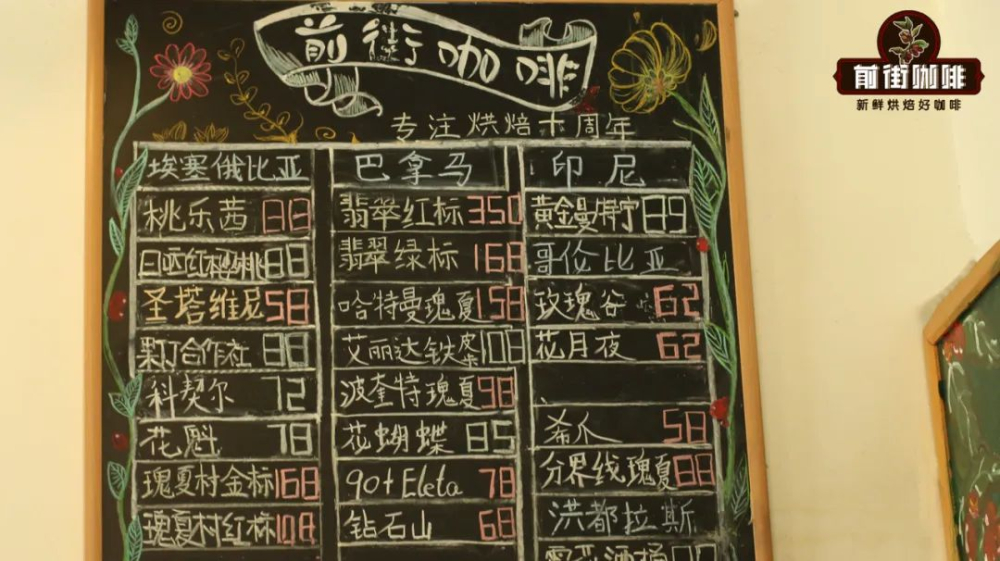
Once we simplify the brewing approach to focus only on the few parameter variables with the biggest impact, we can more quickly draft a more reasonable brewing plan when facing a brand-new coffee bean. Friends who visit the shop can see on Front Street's blackboard menu that it lists a full thirty-plus different coffee beans.
But the point isn't how many kinds of beans there are—it's that facing these dozens of beans, Front Street uses only two brewing plans. In other words, Front Street groups them into two major categories: one is light roast, one is dark roast. These two plans are extremely adaptable and can basically extract the flavor characteristics of most beans well.
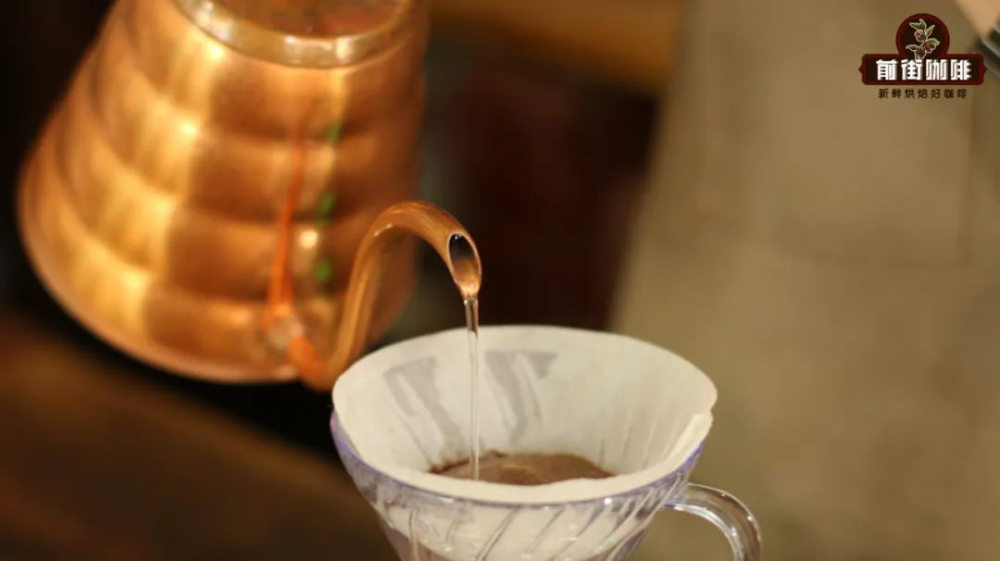
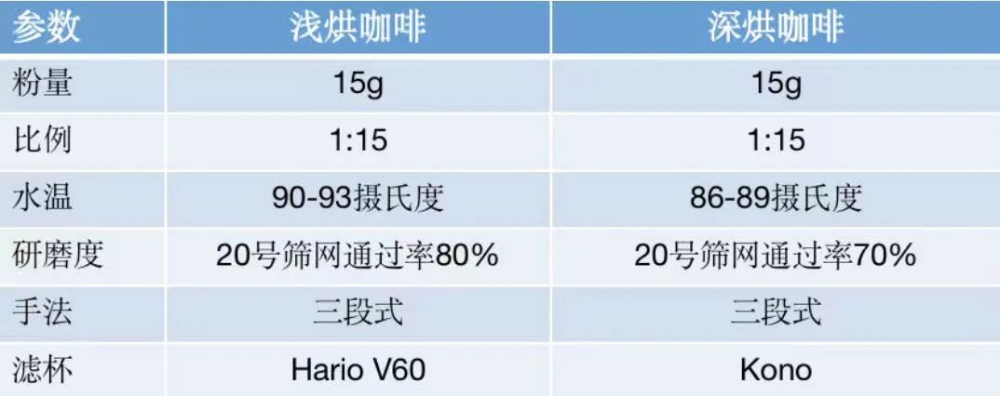
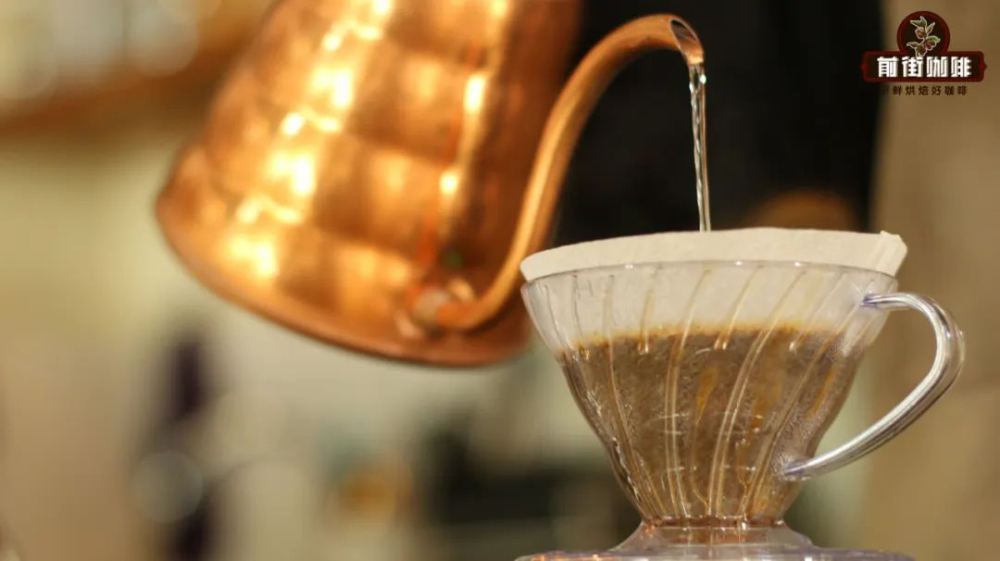
The dose, water amount, and brewing technique all stay the same, which helps us form fixed operational habits and also improves fault tolerance. The only difference is adjusting water temperature, grind size, and dripper according to the bean's characteristics. Light-roast beans, because of the light roast level, have a harder bean structure and are more resistant to extraction, so we grind them finer and brew with a higher water temperature. But if such parameters stretch the extraction time too long, it's easy to over-extract, so we pair them with the faster-flowing V60 dripper.
Dark-roasted coffee beans have a brittle structure and loose texture, and are prone to over-extraction. So we use a coarser grind and a not-too-high water temperature to brew, thereby reducing extraction intensity. If we still used a V60, the coffee would extract extremely quickly, and we'd most likely end up with an under-extracted cup. So we switch to the slower-flowing Kono dripper, whose ribs are only at the very bottom, so the flow rate isn't too fast. Most importantly, the Kono dripper makes the brewed coffee taste fuller-bodied.
You can start by sorting into categories: first, organize and categorize the coffee beans you've encountered before by their characteristics, then create a highly adaptable brewing plan for each category—the simpler the better. Once you have a highly adaptable brewing plan, the second step is to determine which category an unfamiliar coffee bean's characteristics belong to, slot it in, and directly apply that category's plan. For example, Front Street uses a plan divided by roast level, so you only need to determine the bean's roast degree.
When Front Street identifies beans, we generally first look at the flavor description on the label. For example, floral, fruity—those fresher flavors—belong to the light-roast direction. If it's chocolate, nutty, caramel—those descriptions lean toward dark-roast beans. But if you get a bag of beans with no description at all, then you can only judge by the appearance color. Light-roast beans are usually between light brown and brown, while dark-roast beans are mostly between dark brown and black. Different light-roast beans↓
Different dark-roast beans↓
As your brewing experience accumulates, you'll find that under the same roast level, between two beans with different processing methods, anaerobic-processed beans often flow faster than traditionally processed beans. So on the basis of the original plan, we can grind anaerobically processed coffee beans a bit finer. And among the same roast level and the same processing method but different bean varieties, some varieties are more resistant to extraction than others. That's right! We're talking about Geisha! So we can create a separate category specifically for "Geisha variety."
And so on—once you've accumulated enough, you can directly list the corresponding brewing plan just by glancing at the label (the bean)~ What's listed here is only a preliminary brewing plan, with the goal of maximizing fault tolerance for the first brew of a brand-new bean! Afterward, you can make fine adjustments based on the rough data from the brew—striving for perfection is always good~ - END - Front Street Coffee (FrontStreet Coffee)
No. 10, Bao'an Qian Street, Yandun Road, Dongshankou, Yuexiu District, Guangzhou, Guangdong Province
The above content is compiled by CoffeeHunters, a coffee news website.


