







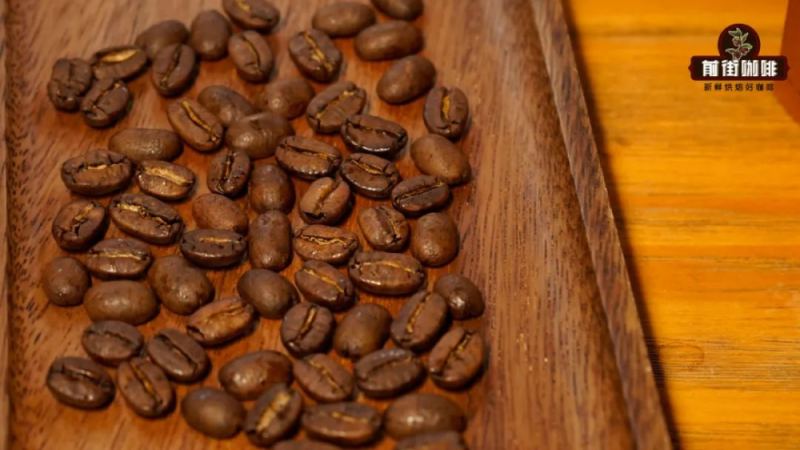
Counting Beans: How Many Yirgacheffe Beans Weigh 15 Grams?
At 15 grams, bean counts differ by variety. Counting three 15-gram samples each of Ethiopia Yirgacheffe, Jamaica Blue Mountain No. 1, Brazil Yellow Bourbon, Panama Emerald Green Label Geisha, and Golden Mandheling gives a usable range for pour-over when no electronic scale is on hand. Yirgacheffe beans are uneven in size, since Ethiopian grading removes defects rather than sorting by screen size.
Blue Mountain No. 1 is a washed Typica with a screen size of 17 to 18, a defect rate below 3 percent, and a growth area defined by the CIB, so its beans run larger and more uniform than Yirgacheffe. Count by hand on a dry surface, take the middle of three samples, and treat the number as an estimate. A spoon or a marked scoop offers a second check.
In the daily routine of pour-over coffee, an electronic scale is certainly important, but occasionally you may find yourself without one on hand. At such times, how to roughly judge the amount of 15 grams of coffee beans becomes a practical question. Front Street Coffee shares a rather unique approach—counting the beans directly. Coffee beans from different origins and varieties vary noticeably in size, so the number of beans for the same weight also differs. This article selects five representative coffee beans—Yirgacheffe, Blue Mountain No. 1, Brazil Yellow Bourbon, Panama Emerald Green Label Geisha, and Golden Mandheling—weighing three sets of 15-gram samples for each and counting them, to arrive at a fairly reliable range of bean counts for everyone to reference when without a scale.
When brewing pour-over coffee, if you don't have an electronic scale nearby, how can you roughly judge the amount of 15 grams of coffee beans? Front Street Coffee is here today to share a rather unconventional method—counting the beans directly.
Have you ever wondered how many beans 15 grams of coffee, commonly used for brewing, actually corresponds to? Coffee beans from different origins vary in size. Front Street Coffee has selected several representative varieties commonly seen in daily life and counted them one by one to see exactly how many coffee beans 15 grams contains.
For this count, Front Street will weigh three sets of 15-gram samples for each type of bean, thereby arriving at a bean count range that is fairly close to reality.
Ethiopia Yirgacheffe Daily Bean Washed Heirloom
Ethiopia is the "birthplace" of coffee, and the coffee beans produced there are usually labeled by variety as "local heirloom." The country's coffee bean grading is not based on size but only removes defective beans, so bean sizes are uneven. Across three different samples from the same origin, the approximate bean counts are as follows:
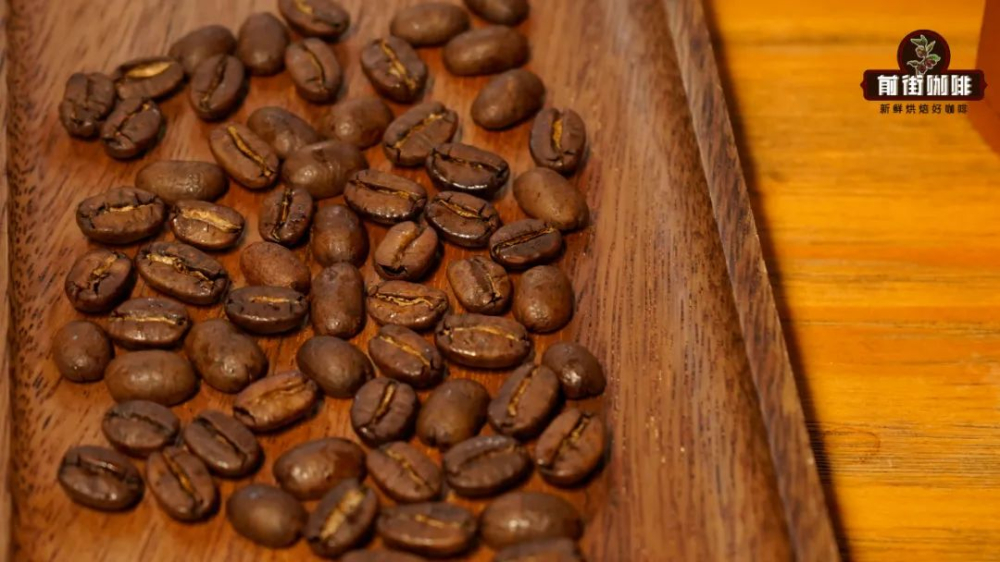
Jamaica Blue Mountain No. 1 Washed Typica
Blue Mountain coffee is surely familiar to everyone. This "king" of the coffee world from the last century is planted with Typica, one of the world's most recognized specialty coffee varieties, and only washed processing is used for the green beans. Only green beans produced within the specific area delineated by the CIB, with a screen size between 17 and 18, and a defect rate below 3%, are eligible to be called "Blue Mountain No. 1." Group A and Group C differ by only one bean.
Brazil Queen's Estate Natural Yellow Bourbon
Having discussed the representative of Typica, we naturally come to the other half of the specialty coffee variety world—the Bourbon family. This time Front Street selected Brazil Queen's Estate Yellow Bourbon for the bean count. Brazilian green coffee grading is based on defect count, green bean size, and flavor evaluation, so this bean's particle size is relatively uniform.
| Sample | Group A | BGroup | CGroup |
| Bean Count | 112 beans | 108 beans | 110 beans |
Panama Emerald Estate Green Label Washed Geisha
Having discussed the "king" of the last century, we cannot fail to mention the "ceiling" of today's coffee varieties—Geisha. This variety was first discovered by Panama's Emerald Estate and sparked a global planting craze. For this reason, Front Street chose Panama Emerald Green Label for weighing and counting beans. Compared with most everyday beans, Panama Geisha has a long, narrow bean shape and a unique appearance with extremely high recognizability, so there is no need to worry at all about it being passed off as another variety.
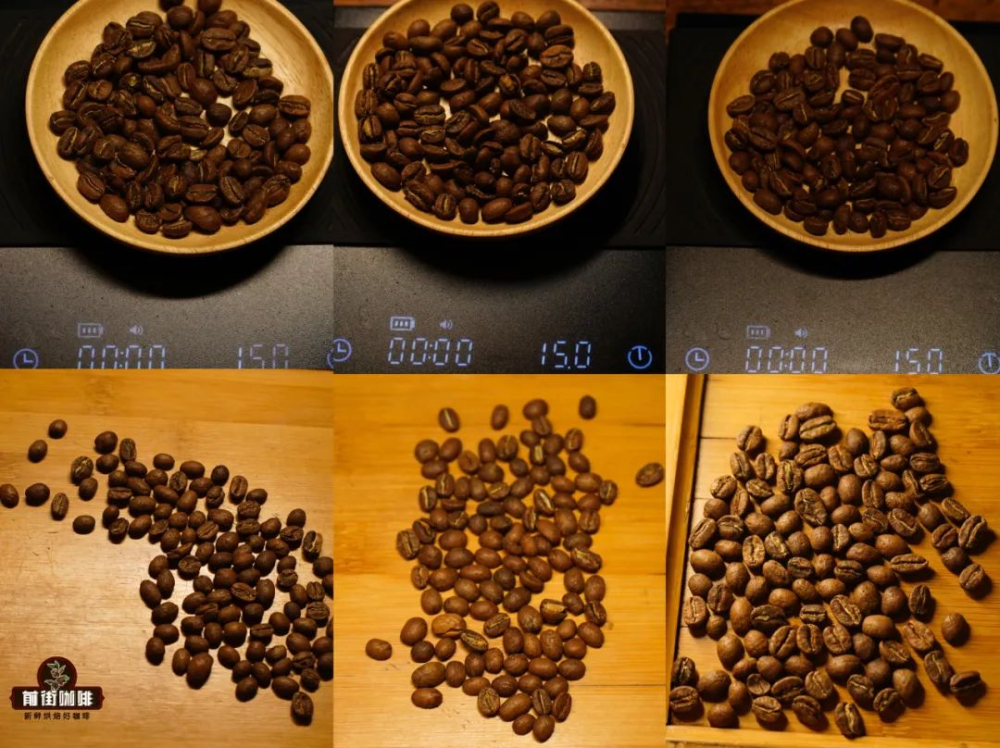
The daily grading of Panamanian coffee beans is based on green bean hardness, with the highest level being SHB, meaning an altitude of no less than 1400 meters. According to Emerald Estate's own grading system, Green Label is grown at an altitude between 1600 and 1800 meters, far above Panama's official highest grade standard, so the beans are especially plump and large.
Indonesia Golden Mandheling Wet-Hulled Ateng
After counting the pure Arabica beans, Front Street also wanted to see how many beans 15 grams of Indonesian coffee with a small amount of Robusta genes contains, so Front Street PWN Golden Mandheling was chosen for the count. This bean uses the Ateng variety. After strict screening, the Yellow Mandheling specification is 18 screen or above, with fewer than 3 defective beans (in a 300g green bean sample), belonging to the highest grade G1, darker green in color, and regular flat beans in shape.
| Sample | AGroup | BGroup | CGroup |
| Bean Count | 97 beans | 93 beans | 96 beans |
Front Street Coffee
No. 10 Bao'an Qian Street, Yuexiu District, Guangzhou, Guangdong Province
The above content is compiled by CoffeeHunters, a coffee news website.


