








Why Did Yemeni Coffee Production Fall So Far?
Yemen's annual coffee production has fallen to roughly 0.1% of the global total, and specialty lots are rarer still. War since 2015 has damaged transport routes and infrastructure, driven up fuel and food costs, and fueled inflation that wiped out family incomes. Qat cultivation and water scarcity have taken more farmland and held back coffee processing at the same time.
Yemen was the first country to grow coffee as a large-scale crop, and its beans still come from the western highlands, often above 2,300 meters. The port of Mocha gave the world both the term mocha and the moka pot as a tribute. Improved coffee processing methods, including newer fermentation approaches, are now being tried to protect the remaining output.
Yemen was once a pioneer of the global coffee trade, and the name of the port of Mocha remains a classic symbol in the coffee world to this day. Yet this country, the first to cultivate coffee as a crop on a large scale, rarely appears on everyday coffee lists today. Frequent wars, the encroachment of qat cultivation, and water scarcity that has held back processing methods once reduced Yemen's annual coffee production to just 0.1% of the global total, with specialty beans even rarer. This article reviews Yemeni coffee's historical standing and flavor characteristics, analyzes the multiple reasons for its decline, and introduces the alchemy processing method that has emerged in recent years, offering a fresh understanding of this rare and niche coffee-producing country.
Everyone is familiar with Ethiopian coffee, but many people don't know that in the 17th century, the first Yemeni coffee was shipped to Europe from the ancient small port of Mocha, and Ethiopia, across the sea from Yemen, also sold its coffee abroad via Mocha. Yemeni Mocha can be called the originator of the world coffee trade, and the term mocha coffee derives from this. Historically, the word mocha was once used directly as a synonym for coffee, and today's mocha coffee and moka pot are meant as a tribute to Yemen.
Yemen was the first country in the world to produce coffee on a large scale as a crop. Coffee is mostly grown at an average altitude above 2,300 meters, and high-quality Yemeni coffee has a unique flavor: complex Middle Eastern spice notes interwoven with ripe fruit, winey aromas, and cocoa, with a full body and a long, sweet finish.

Yemeni coffee once had glorious days, but its decline continues to this day, for reasons that come from multiple directions:
1. Yemen has limited areas suitable for growing coffee, and has faced continuous conflict since 2015.
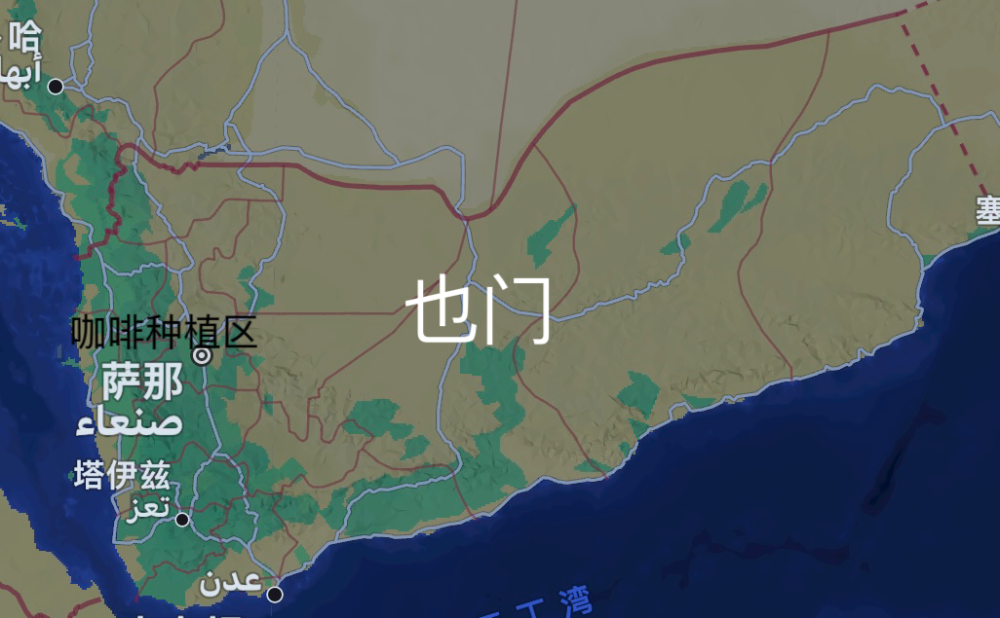
Yemen's coffee-growing areas are almost entirely concentrated in the western highlands, relying on sunshine, rainfall, and a distinctive soil. After war broke out in 2015, transport routes and transportation infrastructure, including fuel and food supplies, were severely damaged, the cost of travel for local people rose sharply, goods struggled to move in and out, and the country faced severe inflation; countless families lost their sources of income; government public departments could not pay wages; and large numbers of people were displaced, leaving them no time to attend to the development of the coffee industry.
2. Competition from local cultivation of the narcotic qat.
Because the world coffee market is unstable and coffee prices tend to be low, Yemeni coffee farmers found that growing qat could bring greater returns, so most switched to cultivating qat. According to 2012 data, Yemen's coffee output was only 198 tons, while qat output reached as high as 190,800 tons. By 2016, Yemen's coffee production accounted for only 0.1% of the global total, and that was just commercial beans; among them, specialty coffee beans were so scarce as to make up only 0.0001%.
3. Lack of good coffee processing methods, with very few beans reaching specialty coffee grade.
Yemen is the world's only fully natural-process coffee-producing country. Yemen's climate is extremely dry, and coffee is mainly grown in the western highlands, where average annual rainfall is only 400 to 750 millimeters, far below the 1,500 to 2,000 millimeters that Arabica ideally needs. Because of water scarcity, farmers still cannot introduce the more advanced washed method.
Coffee farmers spread the harvested cherries out to dry on the rooftops of stone houses built into the mountainsides, and during sun-drying they must turn them with wooden rakes just as when drying rice, to ensure every bean dries evenly. After about twenty days the coffee is fully dried, and then the outer pulp and skin are removed to extract the beans; the steps of removing the pulp and hulling rely entirely on crude stone-mill equipment. Yemeni coffee is rich, complex, untamed, and full-bodied, with powerful fermented flavors and lower acidity, plus an uncertainty factor that often lurks within—the timing of the season's rainfall—making it unpredictable.
At present, only a few coffee shops in the country have the chance to taste Yemeni coffee. In recent years Yemen has also been continuously developing and optimizing coffee cultivation, appearing more and more frequently on the specialty coffee stage, and a new type of special processing method has emerged, bearing a name that sounds powerful and mysterious—alchemy processing: this method requires placing whole cherries or depulped cherries into a tank, adding different inert gases (carbon dioxide, nitrogen, etc.) to the tank, combining 10 bar (pressure) / 145 psi (pressure) with temperature control, gas regulation, and drying management techniques to process the green beans.
Yemeni coffee is currently a relatively rare and niche coffee on the market, and in the future everyone will have more opportunities to encounter Yemeni coffee.
- END - Front Street Coffee
No. 10, Bao'an Front Street, Yandong Road, Dongshankou, Yuexiu District, Guangzhou, Guangdong Province
The above content is compiled by CoffeeHunters, a coffee news website.


