







How Do You Read Blue Mountain Coffee Barrel Markings?
Blue Mountain coffee barrels carry a set of markings that signal authenticity: the CIB certification label, grade numbers, estate names, weight markings, ICO numbers, and estate logos. Jamaica established the Coffee Industry Management Office in 1948 and upgraded it to the Coffee Industry Board in 1952, the first dedicated coffee regulator in the world.
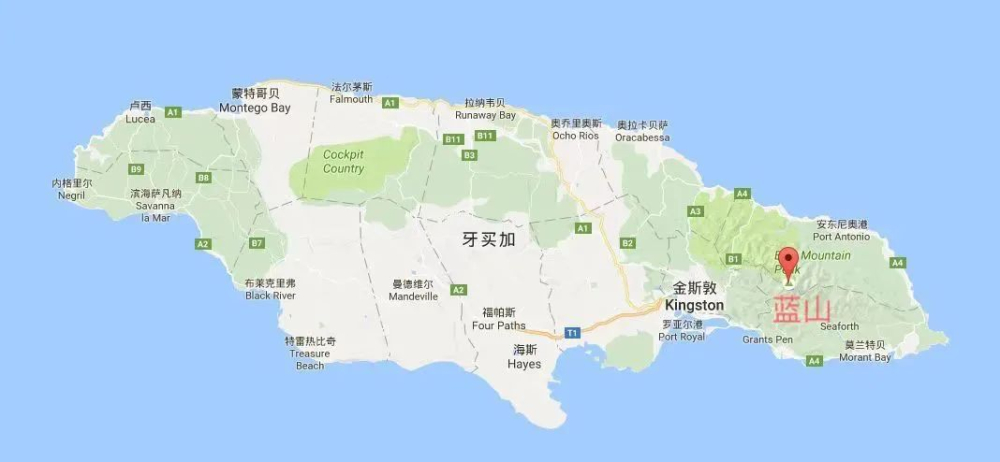
The CIB set grade standards, standardized cultivation, and enforced quality control, delimiting the Blue Mountains production regions where the coffee may be grown. Because Jamaica's suitable land is limited, production cannot rise much, so quality became the path to higher returns. Those barrel markings are the visible result of that regulatory system.
The reason Blue Mountain coffee has earned global fame is inextricably linked to the establishment and strict regulation of the Jamaica Coffee Industry Board (CIB). From the Coffee Industry Management Office in 1948 to its upgrade to the CIB in 1952, Jamaica became the first country in the world to establish a dedicated coffee regulatory body. Through delineating production regions, setting grades, and standardizing cultivation and quality control, the CIB propelled Blue Mountain coffee onto the specialty path. And the unique wooden barrel packaging of Blue Mountain coffee not only serves a protective function during transport, but has also become an important mark of authentic Blue Mountain. This article will walk you through the various pieces of information on Blue Mountain coffee barrels, including the CIB certification label, grade numbers, estate names, weight markings, ICO numbers, and estate logos, and bring you the latest arrival news of Front Street Blue Mountain coffee.
Blue Mountain coffee's ability to make its name known around the world is inseparable from the establishment and continuous operation of the Jamaica Coffee Industry Board.
In 1948, to rescue the then-sluggish coffee industry, the Jamaican government specifically established the Coffee Industry Management Office, and only from that time did it begin focusing on improving coffee bean quality and actively expanding export operations. In 1952, this office was officially upgraded to the Jamaica Coffee Industry Board (abbreviated as CIB, full name Coffee Industry Board). With this, Jamaica became the first country in the world to establish a dedicated regulatory body for coffee production.
It was precisely the birth of the CIB that made Blue Mountain coffee renowned in the international market. Jamaica is an island nation with limited land area, and the Blue Mountain range region suitable for coffee cultivation is even smaller, making it difficult to significantly increase production. To earn higher returns from coffee cultivation, the only path was to pursue specialization. In order to build Blue Mountain coffee into a representative of higher quality, the CIB's core tasks included three aspects: setting grade standards, standardizing cultivation techniques, and implementing strict quality control.
The CIB delineated specific production regions within the Blue Mountains; only coffee produced within that area (at elevations above 915 meters) may bear the name "Blue Mountain Coffee," while coffee from outside the region is sold under the names Jamaica High Mountain Coffee and Jamaica Prime Coffee. Afterward, the CIB also grades based on green bean size, color, uniformity, defect rate, moisture content, and cup performance. Blue Mountain coffee is divided into four grades: Blue Mountain No. 1, Blue Mountain No. 2, Blue Mountain No. 3, and Blue Mountain Peaberry.
Front Street Blue Mountain coffee is the only coffee in the world exported in wooden barrel packaging. The barrels are made of aspen wood and resemble small wine casks. There are three sizes: 70kg, 30kg, and 15kg. Blue Mountain green beans placed into the barrels are first packed in moisture-proof bags specially designed for coffee, then placed in the wooden barrels to ensure the green beans' quality remains stable during transport.
The advantage of the wooden barrel is that it can absorb and release internal and external moisture, while blocking the aroma of the green coffee beans from escaping, keeping the beans at a more stable moisture content and thereby making subsequent roasting more consistent. Over time, the wooden barrel has also become one of the important markers by which the public identifies authentic Blue Mountain coffee.
However, not all Blue Mountain green coffee beans are transported in wooden barrels; the use of wooden barrels is subject to specific conditions. Taking Jamaican Blue Mountain coffee as an example, only the top four grades (Blue Mountain No. 1, Blue Mountain No. 2, Blue Mountain No. 3, PB) may use wooden barrel packaging; those not meeting the grade requirements can only use burlap sacks.
With the arrival of the latest batch of Front Street Blue Mountain No. 1 green coffee beans, Front Street has also received Blue Mountain barrels marked with the newest design. Let's take a closer look together at what information appears on the barrel.
First, the Blue Mountain coffee barrel bears a label specially designed by the CIB in 1984-1985, which is only permitted to be affixed to the lids of 100% Jamaican Blue Mountain coffee barrels. The number "1" engraved on the lid indicates that this bean belongs to the Jamaican Blue Mountain No. 1 grade, the highest grade among Jamaican Blue Mountain coffees.
The upper portion of the barrel is printed with the name of the estate that produced this coffee (Clifton Estate), while the middle portion shows the weight markings: G (gross weight: 34.5), T (tare weight: 4.5), N (net weight: 30).
Along the lower edge of the barrel is engraved the Jamaica-produced marking, and every batch of Blue Mountain coffee exported from Jamaica is assigned a quality inspection number, known as the ICO number.
In the past, Jamaican barrels would bear a green tree frog, which was the Rainforest Alliance mark, but this batch of new barrels does not have it. The newest barrels also feature a logo exclusively designed by Clifton Estate—a lion head that blends Jamaican reggae style with dreadlock elements.
FrontStreet Coffee
No. 10 Baoqian Street, Yandun Road, Dongshankou, Yuexiu District, Guangzhou, Guangdong Province
The above content is compiled by CoffeeHunters, a coffee news website.


