







Is Yunnan Coffee Arabica, and What Is Catimor?
Small bean coffee is another name for Arabica, the species with the smallest fruit among the three coffee species people originally cultivated. Yunnan coffee, commonly sold as Yunnan small bean, refers to Arabica grown in the province. Its history runs from French missionaries who planted trees in Zhukula Village, Binchuan County, to border communities in Ruili County.
Over time, old varieties such as Typica and Bourbon were largely replaced by Catimor, which is also an Arabica variety. That replacement is why Catimor belongs within the Arabica family even though it is not Typica or Bourbon. The shift helped Yunnan coffee raise its quality and earn a place on specialty coffee menus in recent years.
In recent years, the quality of Yunnan coffee beans has been steadily rising, and more and more specialty coffee shops have added Yunnan beans to their menus. People habitually refer to them collectively as "Yunnan small bean." So what exactly does small bean coffee refer to? And what variety transitions has Yunnan small bean gone through? This article starts with the definition of small bean coffee, traces the historical thread of Yunnan coffee from early missionary introduction and successful trial planting in Baoshan to the large-scale replacement of old varieties by Catimor, and answers the common question of whether Catimor belongs to Arabica. At the end, it also recommends two representative products—Front Street Yunnan Small Bean and Front Street 2013 Sun-Dried Typica—to help coffee lovers find a starting point for experiencing the authentic taste of the Yunnan growing region.
In recent years, the quality of Yunnan coffee beans has continued to improve, and many specialty coffee shops have added Yunnan beans to their menus, usually under the collective name "Yunnan small bean." This naturally raises the question: what kind of coffee actually qualifies as small bean coffee? And what exactly does Yunnan small bean coffee refer to?
What Exactly Is Small Bean Coffee?
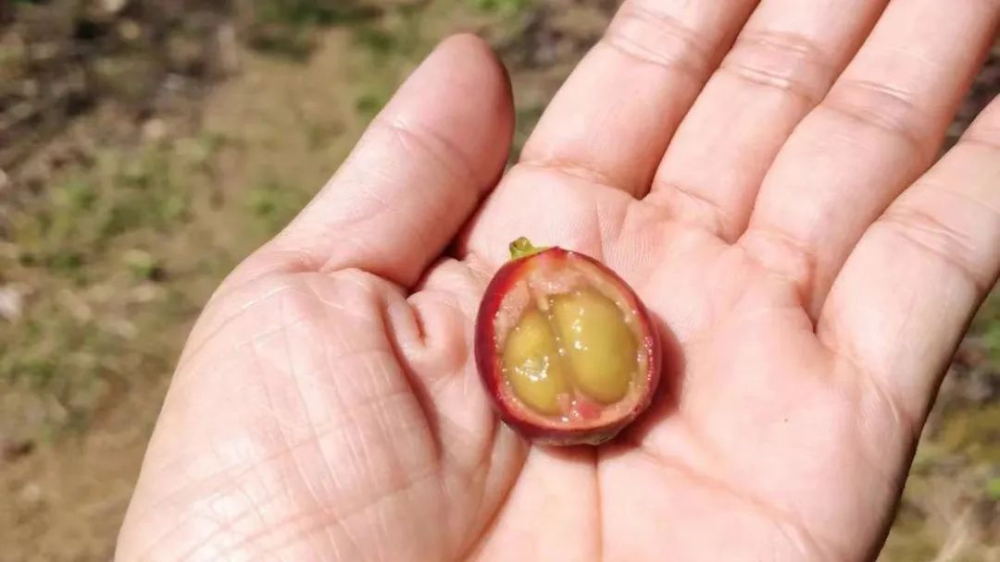
Small bean coffee is actually another name for Arabica. The reason Arabica got the name "small bean" is mainly that it is the smallest-fruited among the three native coffee species (this refers to the size of the coffee fruit, not the size of the coffee beans inside the fruit).

At this point, everyone should have a general idea: Yunnan small bean coffee refers to Arabica coffee grown in Yunnan, right? That's right! However, there are indeed some differences between the Yunnan small bean of the past and the Yunnan small bean of today.
The Past and Present of Yunnan Small Bean Coffee
In the early twentieth century, coffee was introduced into Yunnan Province along two routes. One route was brought in from Vietnam by French missionaries, who planted it in Zhukula Village, Binchuan County, and taught the local villagers how to grind and brew it. The other route was introduced by Jingpo border people into Nongxian Village, Ruili County. Because the red fruits produced by the coffee trees were very pleasing to the eye, people at the time planted coffee trees in their own courtyards and treated them as ornamental plants. At that time, coffee had not yet become widely known in China, and the scale of cultivation was quite limited.
It was not until early 1952 that experts conducting social surveys identified the red fruits in farmers' courtyards as the "small bean coffee" mostly produced in South America. They then purchased a large quantity of fresh cherries and brought them back to Lujiangba in Baoshan City for breeding and cultivation, and established China's first small-scale coffee planting base there.
Thanks to Yunnan's superior geographical conditions and suitable climate, the cultivation of small bean coffee achieved great success, and its flavor gradually developed a unique style of "strong but not harsh, fragrant but not bitter, with a slight fruity aroma," making it quite popular in international markets. At that time, China was in the period of developing a planned economy after the founding of the PRC, and China existed as a coffee supply region for the Soviet Union and Eastern European countries (Cuba was responsible for supplying sugar), which drove the development of Baoshan coffee, with the planting area once reaching more than 50,000 mu. By this point, Yunnan small bean coffee had become widely renowned, and what people called Yunnan small bean at that time referred to Arabica varieties such as Typica and Bourbon grown in Yunnan.
Unfortunately, the good times did not last long. In the 1960s and 1970s, Sino-Soviet relations deteriorated, and Yunnan's role as a coffee bean supply region for the Soviet Union disappeared along with it, and Yunnan's coffee planting industry gradually fell silent. It was against this background that the name "Yunnan small bean coffee" began to spread.
Even though Yunnan's "old varieties" are now rarely seen on the market, they have been replaced by new varieties that inherited the name "Yunnan small bean coffee."
By the 1980s, major coffee-producing regions around the world were hit by coffee leaf rust, causing large-scale production declines, and major coffee buyers urgently needed to develop new, previously undeveloped coffee origins. In 1988, Nestlé hoped to purchase a batch of low-cost coffee bean raw materials for producing instant coffee, so it strongly promoted the development of Yunnan's coffee agriculture, introduced Catimor 7963 from the Portuguese Coffee Rust Research Center (CIFC) for trial planting, and in the following years continuously introduced different Catimors for breeding attempts, but later Catimors never matched the yield of the original 7963.
These Catimors were originally bred for disease resistance and as instant coffee raw material, with no high requirements for flavor, so much so that when it comes to flavor, they are almost inseparable from several less-than-ideal descriptors: low acidity, nuttiness, cocoa, and earthy notes. In exchange, they offer extremely high yields and strong disease resistance. Under the same management level, Typica yields only about one-third of Catimor, which is also why many Typica and Bourbon coffee beans are priced relatively high.
Catimor
Catimor is a hybrid of Caturra and Timor. Among them, Caturra is a pure-blooded Arabica variety, while Timor is a natural hybrid of Arabica and Robusta. Therefore, from the perspective of genetic identification, Catimor, which has three-quarters Arabica ancestry, naturally belongs to the Arabica species. Precisely because it carries one-quarter Robusta genes, it produces more fruit than ordinary Arabica, is easy to grow, and is less susceptible to disease. Its drawbacks are equally obvious—the book "The Craft of Specialty Coffee" mentions that coffee from Asian growing regions carries a hint of "devil's aftertaste," and this is the reason.
This wave of variety replacement reached its peak between 2010 and 2011 as Brazilian coffee bean prices climbed to their highest point. During this period, Yunnan coffee beans also entered their historical peak, but it quickly faded.
To this day, Catimor accounts for ninety percent of Yunnan's total production. Today's Yunnan small bean has fully inherited the identity of the original Yunnan old-variety Arabica and has become synonymous with Yunnan Catimor. The coffee farmers who still insist on growing "old varieties" such as Typica and Bourbon today do so more because of the twists and turns of this variety transformation.
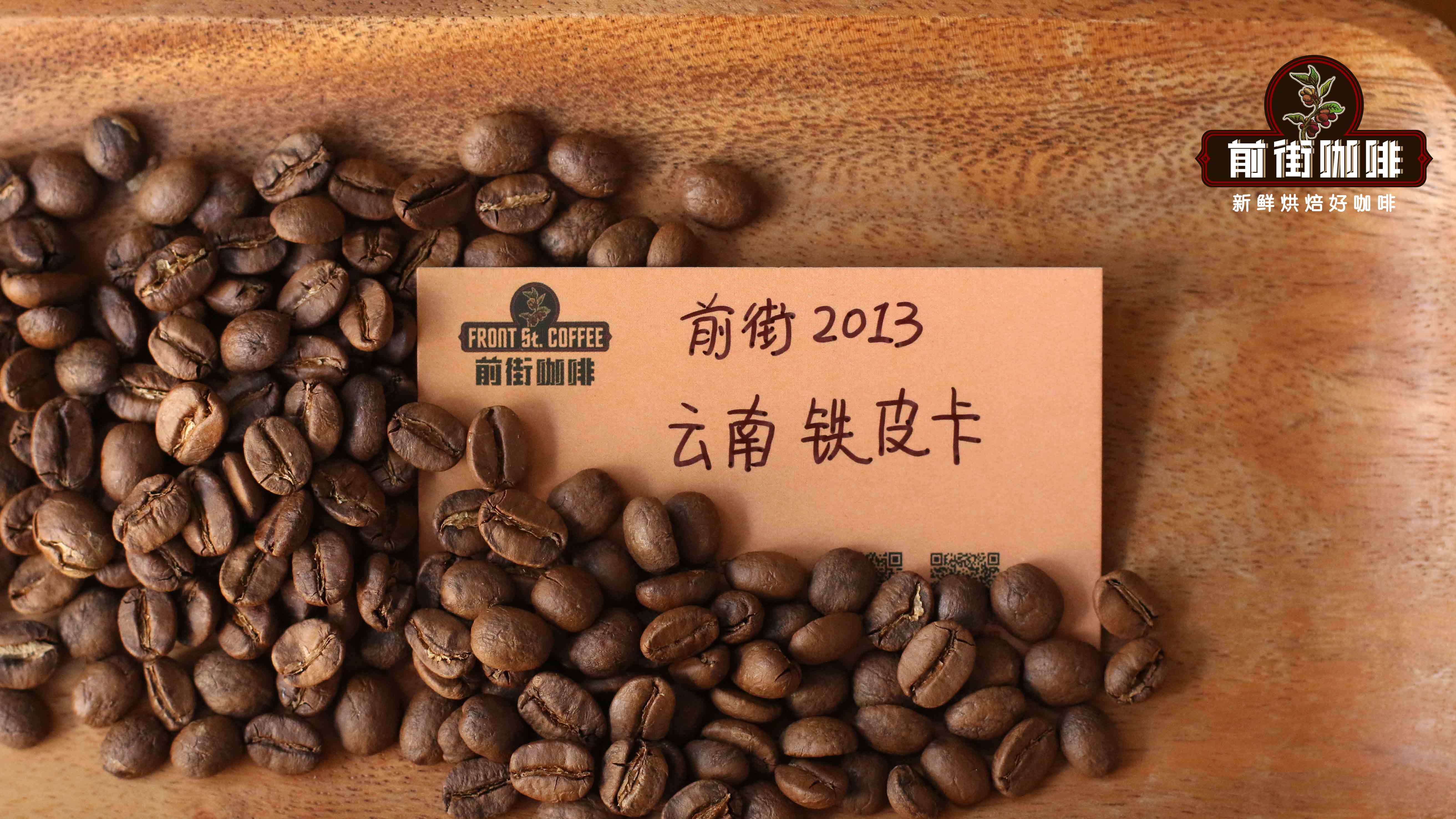
So if you want to taste the most representative Chinese specialty coffee flavor today, your first choice is Front Street Yunnan Small Bean, because its variety is precisely the most common local Catimor, and it uses washed processing and medium roasting, allowing you to feel the authentic taste of the growing region most directly; if you want to drink the classic small bean coffee taste, then you must buy Front Street 2013 Sun-Dried Typica. It is grown in a fine location at an altitude of 1,300 meters at Front Street Estate and, after medium roasting, presents a balanced profile of nuts, dried apricots, chocolate, and black tea.
The above content is compiled by CoffeeHunters, a coffee news website.


