








Why Are Coffee Trees Bred Under Numbers Like 74110?
Variety 74110 is an Ethiopian coffee selection bred by the Jimma Agricultural Research Center and released as one of the first lines resistant to coffee anthracnose, a disease that followed an outbreak after 1970. It is a numbered member of Ethiopia's broader heirloom population, the roughly ten thousand native types the government groups under a single umbrella name rather than identifying individually.
Anthracnose cut yields on affected coffee trees by 20 to 30 percent, and in severe cases by 70 to 80 percent. The Harrar and Yirgacheffe areas east of the East African Rift Valley were hit hardest, while trees west of the valley suffered less. Rather than relying on repeated pesticide spraying, breeders sought resistant local material, and 74110 became a regular on the Ethiopia Cup of Excellence stage.
In the world of specialty coffee, varieties named after numbers are becoming increasingly common, and 74110 is one of the most closely watched. It comes from Ethiopia, the birthplace of coffee, was bred by the Jimma Agricultural Research Center, and is one of the pioneer varieties in the fight against coffee anthracnose. This article will walk you through the origin of the name 74110, the background of its discovery, its plant characteristics and flavor profile, while also sorting out Ethiopia's unique approach to variety breeding and the concept of "heirloom," and looking at how this variety frequently appears in COE competitions. Front Street Coffee explores the story behind this number with you.

As the specialty coffee industry continues to evolve, the number of coffee varieties that have been identified and given names is conservatively estimated to be in the hundreds. I wonder if you have noticed that quite a few of them are named with numbers, such as 74110 and 74112. Today Front Street will talk with you about a regular on the Ethiopia COE stage—74110.
Before getting to know 74110, it is necessary to first understand the term "heirloom." Ethiopia is the birthplace of coffee, and the number of varieties it possesses is roughly around ten thousand. On the one hand, the varieties are simply too numerous and complex to be identified and distinguished one by one through genetic testing, so only the experience of coffee farmers can provide a rough judgment; on the other hand, in order to protect these native and unknown varieties and prevent coffee-growing countries from rushing to obtain them, the local government uniformly calls them "Heirloom."
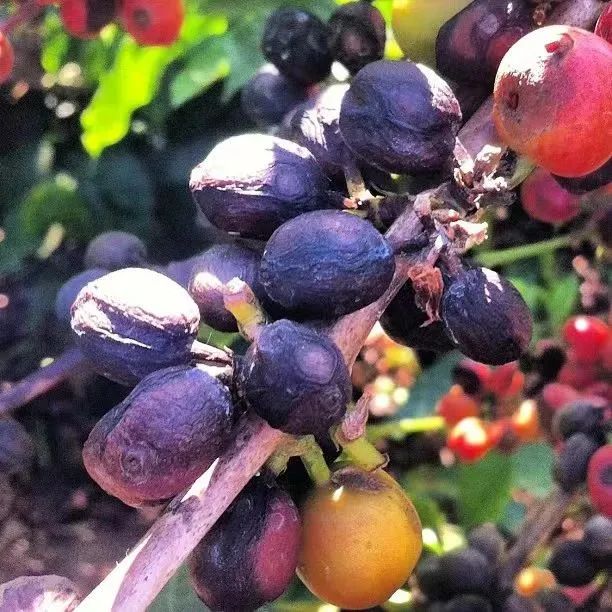
After 1970, coffee anthracnose broke out in Ethiopia. After ripe berries and green berries were infected, water-soaked spots would appear on their surface, then the lesions would sink in, the color would slowly turn dark brown and grayish black, and eventually they would die on the tree or even drop. This disease causes a 20%–30% reduction in yield for coffee trees, and in severe cases even 70%–80%. At that time, the Harrar and Yirgacheffe producing regions on the eastern side of the East African Rift Valley were especially hard hit, while coffee trees on the western side were relatively less affected.
Simply spraying pesticides is not a long-term solution; the fundamental remedy lies in finding local varieties that carry disease-resistance genes. As the birthplace of coffee, it has unique advantages in searching for disease-resistant gene varieties. The Jimma Agricultural Research Center (JARC), located on the western side of the East African Rift Valley, began forming a "bean-searching team," collecting the seeds of more than 600 coffee trees in the forests west of the East African Rift Valley, and through scientific identification and field trials by experts, screening out varieties resistant to anthracnose. And 74110 was precisely one of the first 13 new anthracnose-resistant varieties released by JARC.
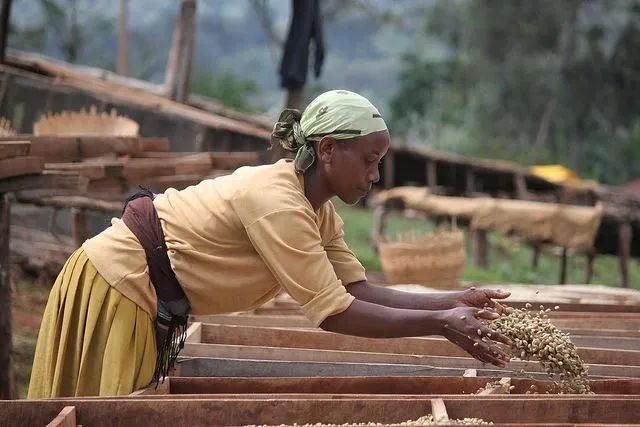
74110 is a code given by JARC, in which "74" represents the year of discovery, and "110" is the experimental sample number. Therefore, 74110 is a clearly defined single variety.
The 74110 tree is short and compact, with relatively small leaves, fruit, and beans, a green tip, short internodes, and high yield. In terms of flavor, 74110 shows citrus acidity and light floral notes, carrying the typical taste of the Ethiopian producing region. To borrow the description from Mr. Han Huaizong's "The Fourth Wave of Specialty Coffee"—a fruit bomb—which fully shows how wonderful its flavor is.
Since its discovery in 1974, 74110, due to its strong disease resistance and ability to adapt to different soil and water conditions, has become one of the most widely planted modern varieties in Ethiopia today (the other being 74112), and it is also the number one variety in demand for improving modern varieties. With vigorous promotion and widespread planting, 74110 has repeatedly appeared on Ethiopia's COE ranking lists. Between 2020 and 2022, 74110 won no fewer than twenty awards in total.
- END -
Front Street Coffee (FrontStreet Coffee)
No. 10, Bao'an Qian Street, Yandun Road, Dongshankou, Yuexiu District, Guangzhou, Guangdong Province
The above content is compiled by CoffeeHunters, a coffee news website.


