







How Do You Judge Coffee Grind Size While Brewing?
Coffee grind size has no single agreed descriptor, so brewers fall back on three systems: the grinder setting number, everyday visual analogies like caster sugar, and sieve calibration. Front Street quantifies grind through sieving rate with a No. 20 standard sieve, which lets a brewer adjust particle size before the brew instead of guessing cup by cup.
Each approach has limits. A setting such as 7 on an EK-43 or 26 clicks on a C40 only helps someone with the same grinder, since models, installation and maintenance all shift actual particle size. Visual analogies are easy to share but imprecise, while sieve calibration gives a repeatable number and helps you dial in with fewer test beans.
In coffee brewing, the coarseness of the grind directly affects the extraction, but there has long been a lack of unified standards for how to describe and judge grind size. Some people use caster sugar as an analogy, some rely on grinder settings, and others, like Front Street, quantify it through sieving rate. These methods each have their pros and cons, but the ultimate goal is to help us adjust the grind to the right range before brewing. This article will systematically sort out three common expression methods—the setting reference method, the visual analogy method, and the sieve calibration method—analyze their respective limitations and applicable scenarios, and introduce in detail the operation process of the No. 20 standard sieve used by Front Street, helping you find the most suitable grind parameters with fewer beans.
For a long time, there has been no unified and clear descriptive standard for the coarseness of coffee grounds. Therefore, when people discuss grind size, all kinds of expressions appear—some use "caster sugar" as an analogy, some are used to directly stating the setting number on the grinder, and others, like Front Street, quantify it through sieving rate. Although these methods each have certain limitations, their goal is the same: to help everyone understand the particle size of coffee grounds more intuitively.
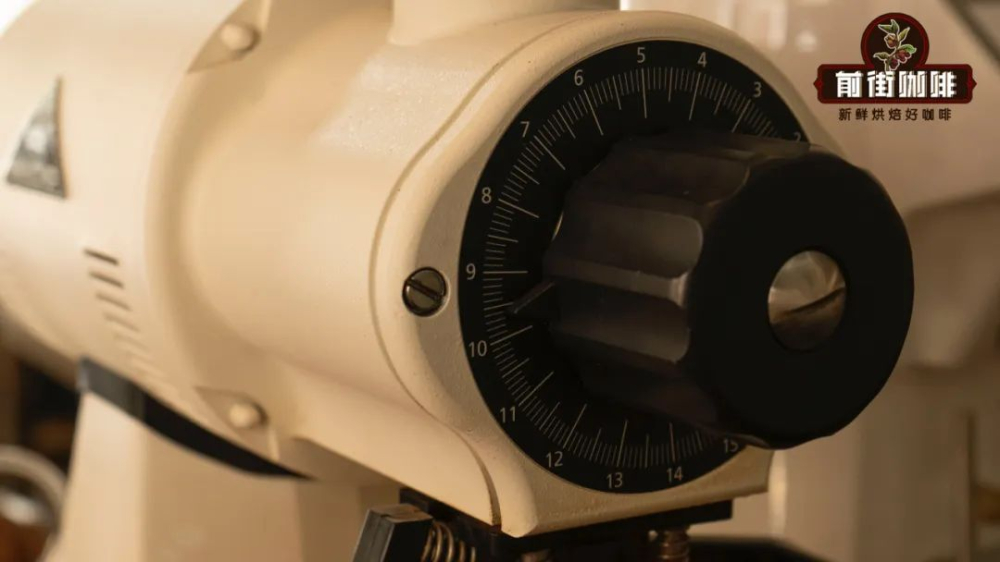
Setting Reference Method This method directly cites the grinder's setting value to indicate the coarseness of the coffee grounds, usually using currently popular and widely applicable models as references. For example, setting 7 on an EK-43, 26 clicks on a C40, and so on...
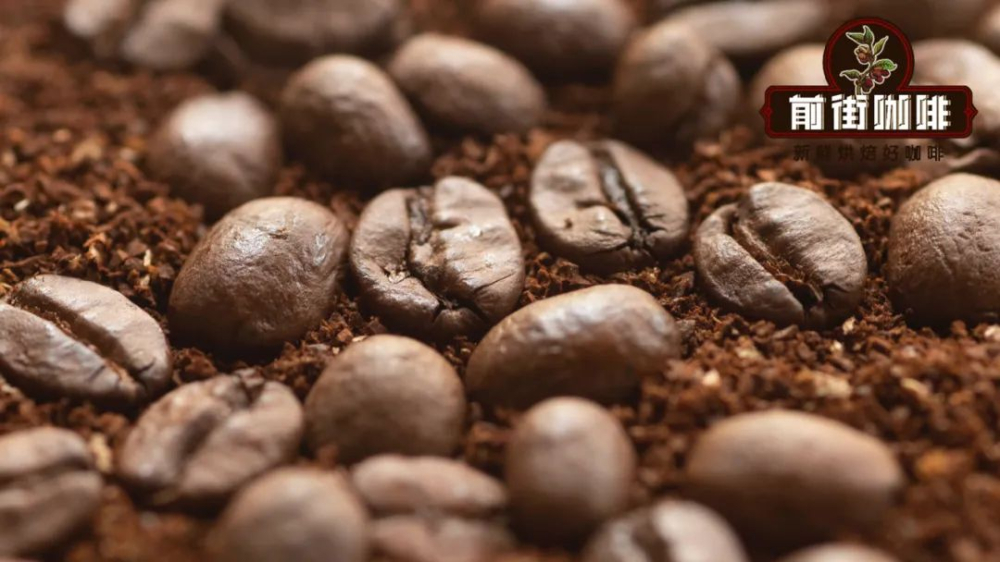
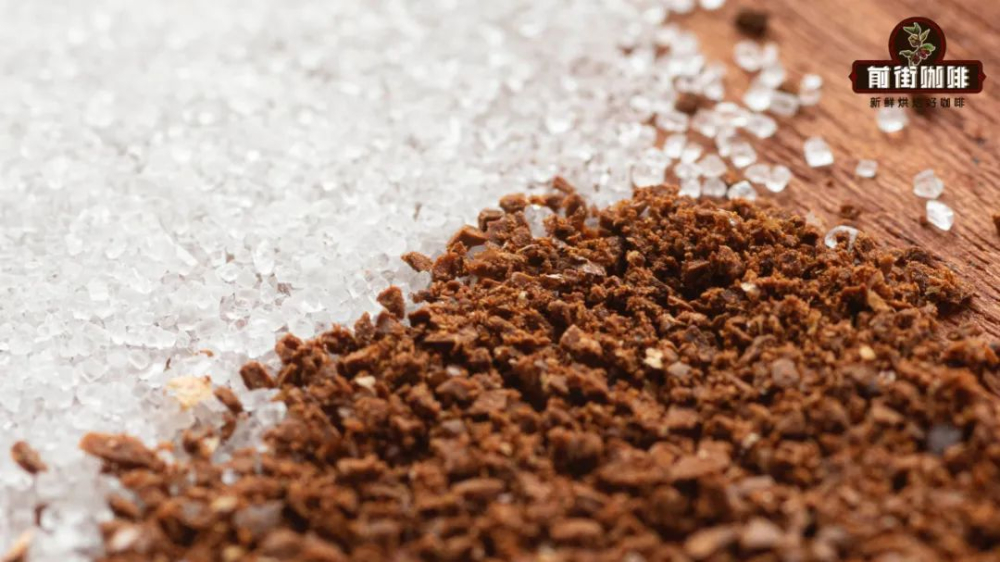
The drawbacks of this reference method are quite obvious. There are many types of grinders on the market, and the probability that a buyer happens to own the same model is not high. Different models of grinders have different grinding values, and even if the settings are the same, the particle size of the ground coffee will differ. Even for the same model of equipment, due to differences in installation, use, and maintenance, the same setting value is likewise difficult to use as a unified standard. And if the two parties hold different grin ders , applying this reference method will be even more difficult . Visual Analogy Method The visual analogy method uses common objects from daily life to compare the grind coarseness of coffee grounds. Coarse sugar and caster sugar are the most commonly used adjectives for grind size.
This kind of description can most directly make people think of the coarseness of the grind, but this is also a "not very reliable" way of describing it, because the human eye has difficulty distinguishing differences between tiny objects. When our eyes are drawn to certain focal objects, it is easy to ignore other details. For example: using a hand grinder to grind a portion of relatively fine coffee grounds, there will more or less be some particles that look relatively large, and these particles are likely to attract your gaze , making you mistakenly think this is a "coarse sugar" grind, when in fact it is a grind of "caster sugar" particles. Your eyes misled your judgment, which invisibly increases the probability of error. So when making a preliminary judgment of grind size, you can spread the coffee grounds out and observe the whole, minimizing the error rate. Sieve Calibration Method This is the method that appears most often in Front Street articles, mainly used to calibrate grind size judgment for cupping and pour-over. Front Street uses a No. 20 standard sieve with an aperture of 0.85mm. This sieve is not used to sift out fines; its core purpose is to judge grind size.
Its advantage lies in strong reproducibility: as long as the sieving rate is determined, different grinders can also find the same grind size. The downside? It's a bit hard on the person... The specific operation method is: take 10g of coffee beans (or a multiple of 10, for easier calculation; the more powder, the more precise the data), choose a grind setting and grind, then pour the ground coffee into the sieve, and then shake it! Shake it horizontally left and right!!! Shake until the particles no longer visibly fall (usually takes 3–5 minutes). Then weigh the fallen particles, divide the obtained powder weight by the total powder weight, and you can calculate the sieving rate.
For example: We use 10g of powder, and the passed-through powder weight is 8g, so the sieving rate is 80%. If you want to reach 90%, you can increase the sieving rate by adjusting to a finer grind. No matter which reference method is used, the parameters given are ultimately intended to reduce the trial-and-error cost when brewing newly encountered beans. For example, coarse sugar size, or an 80% sieving rate through the sieve—these can help us roughly adjust the grind to the appropriate range before brewing, and then, combined with the flow rate during brewing and the extraction time, we can ultimately use fewer coffee beans to adjust to the grind parameters most suitable for them.
Front Street Coffee (FrontStreet Coffee)
No. 10 Bao'an Front Street, Yandun Road, Dongshankou, Yuexiu District, Guangzhou, Guangdong Province
The above content is compiled by CoffeeHunters, a coffee news website.


