








Why Does SOE Coffee Usually Taste More Acidic?
Single Origin Espresso, or SOE, tends to taste sour because it is pulled from beans of one origin and usually roasted lighter to preserve the flavors of that specific growing region. Early espresso was always single origin by default, since transport and information were limited and people simply brewed whatever grew nearby.
Blending coffee later became common through war-driven international trade, as mixing two or more origins could balance flavor and mask defects, sometimes including Robusta for crema or cost reasons. The shift back toward SOE, marked by the 2007 WBC competition, put roast level and acidity retention at the center of the discussion.
Have you ever wondered why a cup of SOE always seems to carry a distinct acidity? SOE stands for Single Origin Espresso, which refers to espresso extracted from coffee beans of a single origin. It differs fundamentally from espresso blends in terms of flavor presentation and roasting choices. This article will start from the historical origins, trace the evolution of espresso from single origin to blends and then back to SOE, and, in light of the pivotal event at the 2007 WBC competition, analyze in depth the root cause of why most SOEs tend to be acidic—the influence of roast level on the retention of acidity—to help you more clearly understand the positioning and selection logic of these two types of espresso beans.

In the early stages of coffee development, espresso had no distinction between "blends" and "SOE," because what people used at the time was originally single-origin beans. In an era of inconvenient transportation and limited information, everyone could only choose locally grown varieties to make espresso. However, in that period, control over bean quality was not strict, and the extracted coffee was often not refined enough, easily exposing more obvious defects. It was not until war-driven international trade that the practice of blending gradually emerged.
Blend Espresso, as the name suggests, is made by mixing two or more kinds of beans. Coffee beans from different origins and varieties each have their own flavor characteristics, and combining them in certain proportions can better highlight, enrich, and balance the final extracted espresso, taking the taste to an even higher level. For example, many commercial beans include Robusta, perhaps because of its rich crema or perhaps to reduce costs. But Robusta itself carries some less pleasant flavors, so other beans are needed to suppress these defects and ultimately obtain a balanced-performing espresso bean.
The full name of SOE coffee is "Single Origin Espresso," referring to espresso obtained by extracting coffee beans from a single origin. This method can maximize the display of the unique flavors formed by that origin's growing environment, soil conditions, climate factors, and so on.
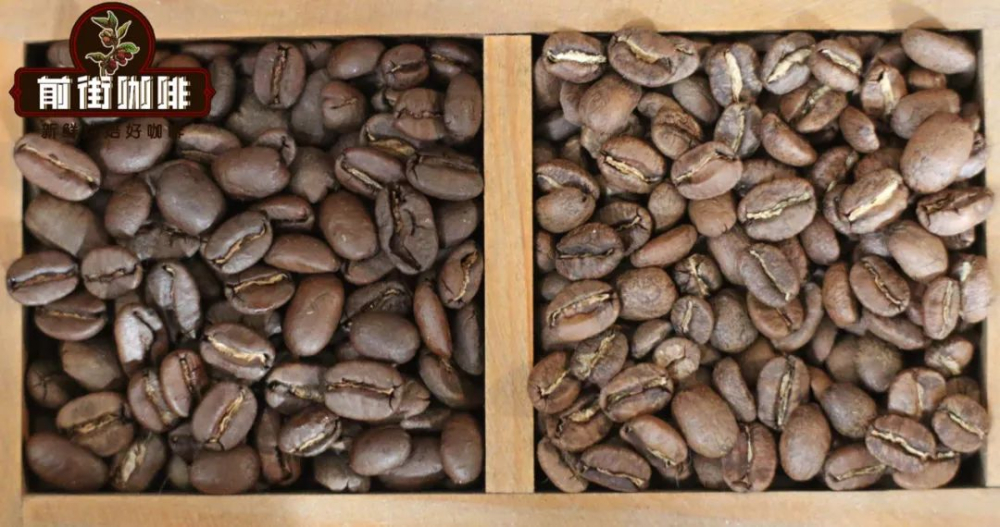
The first signs of SOE's arrival
Specialty coffee is the core concept of the third wave of coffee. This wave not only values the quality of the coffee beans themselves, but also emphasizes that coffee should present unique and excellent flavors. Single-origin coffee happens to possess extremely strong expressiveness and can carry the spiritual core of this wave, so various kinds of single-origin coffee emerged one after another, with pour-over coffee being the most prominent.
As time passed, the trend toward specialization gradually penetrated into the core territory of the second wave—the field of espresso. At this point, SOE officially took the stage.
SOE begins to show its edge
Traditional espresso had long been dominated by blended beans, and baristas at that time continuously studied and explored the direction of blending in order to possess a unique blend recipe. It was not until the 2007 World Barista Championship (abbreviated as "WBC," full name "World Barista Championship") that James Hoffmann won the championship with SOE, like the sudden emergence of Jay Chou in the Chinese-language music scene, instantly overturning everyone's understanding—it turned out that single-origin beans could also be used to make espresso, and the flavor was so outstanding! From then on, people had a completely new understanding of beans used for espresso: as long as the beans themselves are excellent enough, there is no need for a complex blend recipe to make a uniquely distinctive good coffee.
Back to the main point: why do most SOEs have acidity?
Different beans present different flavors. For example, there is Huakui, a medium-light roast SOE rich in floral and fruity notes, or Mandheling, a medium-dark roast that highlights dark chocolate and spice flavors. But when a shop already has a traditionally dark-roasted blended bean with rich caramelized aroma, if it then introduces an SOE, the merchant often considers product-line diversification from the customer's perspective and therefore chooses medium-light roasted beans with different flavor expressions. Compared with dark roasting, medium-light roasting allows the beans to retain more acidity and taste sweeter and more mellow. This is the reason most SOEs tend to be acidic.
- END -
Front Street Coffee (FrontStreet Coffee)
No. 10 Baoqian Street, Yandun Road, Dongshankou, Yuexiu District, Guangzhou, Guangdong Province
The above content is compiled by CoffeeHunters, a coffee news website.


