








What Does Yunnan Coffee Taste Like Across Its Regions?
Yunnan coffee is dominated by Catimor, a variety carrying Robusta genes, and its flavor spectrum leans toward nuts, citrus, and sugars according to the Yunnan Coffee Flavor Map Atlas. Baoshan and the washed processing method are the usual entry-level choices for anyone trying the region for the first time.
The story began in 1892, when French missionary Tian Deneng sowed seeds brought from Vietnam in Zhukula Village and taught locals to grow, grind, and brew. Later, Nestlé promoted large-scale Catimor cultivation, and today Yunnan still works through variety and processing challenges on its path toward specialty coffee.
Yunnan, as China's representative coffee-producing region, has long drawn attention for the flavor and variety evolution of its small-bean coffee. This article begins with Front Street Coffee's recommended bean "Front Street 2013" and traces the history of Yunnan coffee from missionary introductions to Nestlé's promotion of large-scale Catimor cultivation. It analyzes the flavor characteristics that Catimor brings due to its Robusta genes, and, drawing on the Yunnan Coffee Flavor Map Atlas, outlines Yunnan coffee's flavor spectrum, which is dominated by nuts, citrus, and sugars. The article also explores why the Baoshan region and the washed processing method serve as entry-level choices, as well as the variety and processing challenges Yunnan coffee faces on its path toward specialty coffee.

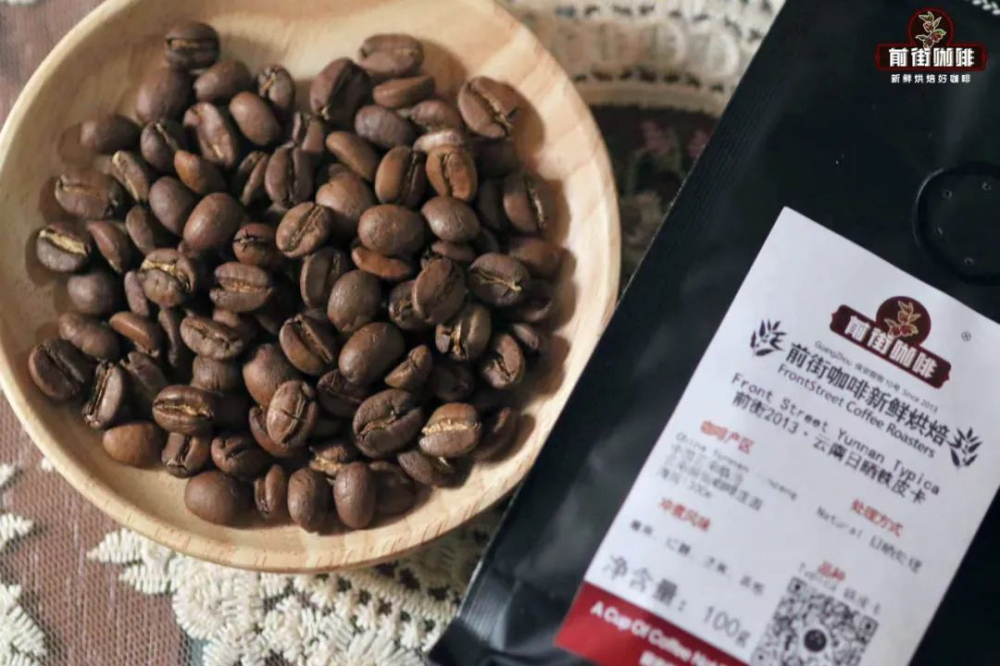
"Would you like to try our Yunnan bean—Front Street 2013? This is a coffee we grow in Yunnan." When baristas at Front Street Coffee face indecisive customers staring at a fully chalked-up bean menu, this is often their recommendation. Some customers' eyes light up the moment they hear it's a Yunnan bean; curious ones follow up: "What variety is your Yunnan bean? What processing method was used?" When told it's a sun-dried Typica, most customers place an order with the mood of trying something new.
Why do some customers specifically ask "What variety? What processing method?" As the representative of Chinese coffee, what kind of journey has Yunnan small-bean coffee actually been through? If you want to know how the story goes, let Front Street break it down.
The Legendary History of Yunnan Coffee
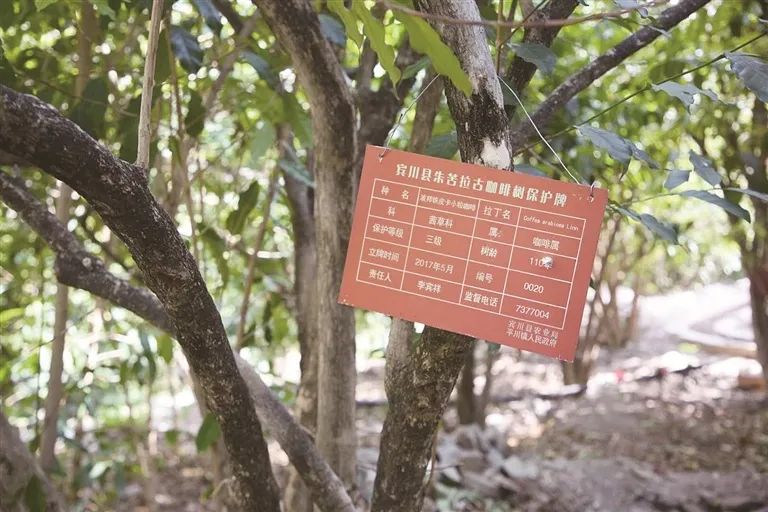
When it comes to the history of Yunnan coffee, one cannot fail to mention that French Catholic missionary—Tian Deneng. In the 18th year of the Guangxu reign of the Qing Dynasty (1892), Tian Deneng sowed coffee seeds brought from Vietnam in Zhukula Village, Yunnan, and taught the local villagers how to grow, grind, and brew coffee.
In the 1950s and 1960s after the founding of New China, coffee cultivation began to spread and be promoted on a large scale in order to supply the Soviet Union and the socialist brother countries of Eastern Europe, with products uniformly purchased and handled by the state. This brought an opportunity for the scaled development of Yunnan's coffee industry.
In 1970, coffee-growing countries in South America such as Brazil suffered from coffee leaf rust, causing production to plummet and directly impacting global coffee bean prices. To reduce dependence on South American producing regions, international coffee companies began looking for new growing areas that could diversify risk, such as Africa and Asia.
In the 1980s, amid the wave of China's reform and opening up, Nestlé established a joint venture in China and supported the development of the local coffee industry through means such as launching coffee cultivation projects. Starting in 1992, Nestlé established a Coffee Agriculture Department to specifically guide and research the improvement and cultivation of Yunnan coffee (highlight this), and purchased coffee at prices based on the U.S. futures market.
As reform and opening up deepened, the third wave of specialty coffee gradually spread from overseas into China, and Yunnan's coffee-growing industry began its exploration of specialty coffee. The government introduced special support policies and led improvements in breeding, cultivation, and processing techniques, gradually raising coffee quality and yield.
The Current State of Yunnan Coffee
Today, with specialty coffee shops blooming everywhere, Yunnan coffee appears on bean menus more and more commonly. So what exactly is the quality of Yunnan specialty coffee beans now? The unique flavor of a producing region is inseparable from its geographical and natural conditions, its main cultivated varieties, and its mainstream processing methods.
Yunnan small-bean coffee—the "small bean" refers to what we commonly call the Arabica species. Remember the point highlighted earlier: Nestlé established a Coffee Agriculture Department to specifically guide and research the improvement and cultivation of Yunnan coffee. Under Nestlé's influence, coffee farmers cut down their original old varieties (such as Typica) and switched on a large scale to the lower-cost, higher-yield Catimor, which also planted the seeds for Yunnan's later path of specialty exploration.
Catimor is not a pure Arabica variety. It is a hybrid of Timor and Caturra, and Timor carries Robusta genes. This gives the coffee tree stronger disease resistance, higher yield, and lower cultivation requirements. But because it carries about one-quarter Robusta genes, the coffee's flavor becomes less refined, its aroma is not as rich as pure Arabica, and under rough green bean processing, bitterness easily intensifies, with astringency and a rather pungent musty taste appearing.
In the past, Yunnan coffee beans were mainly used to make instant coffee, and the fruit was handled very casually after picking. After embarking on the specialty path, new attempts were also made in handling coffee fruit. In addition to traditional sun-dried and washed methods, steps such as honey processing, anaerobic fermentation, and enzymes have gradually increased. But the popularity of various processing methods in Yunnan coffee today is largely because what is grown is originally the Catimor variety, equivalent to a "shortcut" to highlight the flavor of post-processing methods without changing the variety or altitude.
After years of exploration on the specialty coffee path, Yunnan coffee's flavor has also trended toward stability. According to the Yunnan Coffee Flavor Map Atlas published by Torch Coffee Lab in 2021–2022, Yunnan coffee is dominated by nuts, citrus, and sugars in dry aroma, wet aroma, and flavor; in addition, grains, chocolate, and herbs are also flavor descriptors with no small share; in a few producing regions, woody-toned flavor descriptors can also be seen.
Why Choose Baoshan and Washed? Front Street believes that the general flavor profile of Yunnan coffee today comes from the Catimor variety that has been cultivated for many years and is the most widely distributed, so Front Street chose a washed Catimor from Baoshan as an entry-level everyday bean.
As mentioned earlier, in the 1950s and 1960s, Yunnan coffee also experienced a wave of development opportunities, when coffee trees were planted on a large scale in Baoshan. As the first coffee to go abroad, Baoshan small-bean coffee has also won many honors internationally.
Compared with other producing regions, Baoshan, through many years of coffee cultivation and production, has accumulated richer growing experience. Although most coffee-growing areas long ago switched to Catimor, in some old estates or old planting sites, old varieties preserved from the past can still be found, which has also preserved more variety choices for Yunnan on the specialty coffee path.
Among the many processing methods, Front Street believes that the washed method allows one to taste a coffee bean's original flavor more fully, letting everyone better understand the terroir of a producing region, so a washed batch from the traditional processing methods was chosen.
Summary
The biggest problems for Yunnan coffee on the specialty path are two: first, a lack of highly expressive varieties; second, coffee beans under traditional processing methods lack competitiveness, while coffee beans with innovative processing methods are becoming more and more "magical." How exactly will the regional flavor of Yunnan change, and what kind of path will it take? Let's give Yunnan a little more time and see whether Yunnan coffee can bring more surprises.
- END - Front Street Coffee
No. 10 Baoqian Street, Yandun Road, Dongshankou, Yuexiu District, Guangzhou, Guangdong Province
The above content is compiled by CoffeeHunters, a coffee news website.


