







How Do You Fix Sour Iced Pour-Over Coffee?
Iced pour-over often tastes sour and thin because a smaller coffee-to-water ratio and melting ice dilute the cup, cutting extraction short. Sweet compounds release mostly in the mid-to-late stages, so they may never dissolve before brewing ends. Grinding finer, adding pour stages, and keeping the brew time up let more sweetness reach the cup before the ice chills it.
Front Street Coffee tested this with Costa Rica Strawberry Candy beans, using a finer grind, more pouring stages, and cooling over ice to reach a full body with clear dried-fruit sweetness. Water flow rate matters too: a fast, heavy pour shortens contact time. Since coffee extracted in small concentrated amounts needs care, treat any recipe as a starting point and adjust to the beans.
Iced pour-over coffee often faces issues of under-extraction and weak sweetness due to a reduced coffee-to-water ratio and dilution from ice. Starting from extraction principles, this article analyzes how to capture more sweet compounds in iced pour-over by adjusting grind size, the number of pouring stages, and the coffee-to-water ratio. Using Front Street Coffee's Costa Rica Strawberry Candy coffee beans as a demonstration, Front Street Coffee tested techniques such as finer grinding, increasing the number of pouring stages, and cooling over ice, ultimately achieving an iced coffee with full flavor and clear dried-fruit sweetness. The article also explores the impact of water flow rate on extraction and emphasizes that brewing recipes are not universal formulas, encouraging coffee enthusiasts to try diverse approaches.
Compared to hot pour-over, iced pour-over often uses a smaller coffee-to-water ratio to obtain a more concentrated coffee liquid, which is then cooled and diluted with ice cubes. To compensate for the reduced extraction yield caused by less water, the grind size is usually set slightly finer than for hot pour-over.
Even though iced pour-over parameters already lean toward increasing extraction yield, in terms of extraction completeness, it is still equivalent to a hot pour-over missing its final stage—essentially in a state of "under-extraction." So when the same beans are brewed as hot pour-over and iced pour-over, the former typically excels in body, sweetness, complexity, and aftertaste.
So a friend asked Front Street Coffee: Is there a method that makes iced coffee both rich enough and sweet, without over-extracting? This is indeed a tall order, but it is certainly worth discussing in depth.
Front Street Coffee has explained many times that the three tastes—sourness, sweetness, and bitterness—are released in large amounts at different points in time, with sweet compounds often dominating in the mid-to-late stages. Iced pour-over uses less water and shorter brew time, so sweet compounds may not have had time to dissolve before extraction ends. To capture the sweetness of coffee during brewing, one must find ways to increase the extraction of sweet compounds—that is, to give them more time to dissolve into the water, thereby raising their proportion in the overall flavor.
To capture coffee's sweetness, it's best to choose beans that are low in bitterness and acidity, with rich fruity and fermented aromas, such as Front Street Blackberry, Front Street Huakui, Front Street Sidra, Front Street Mozart, and others.
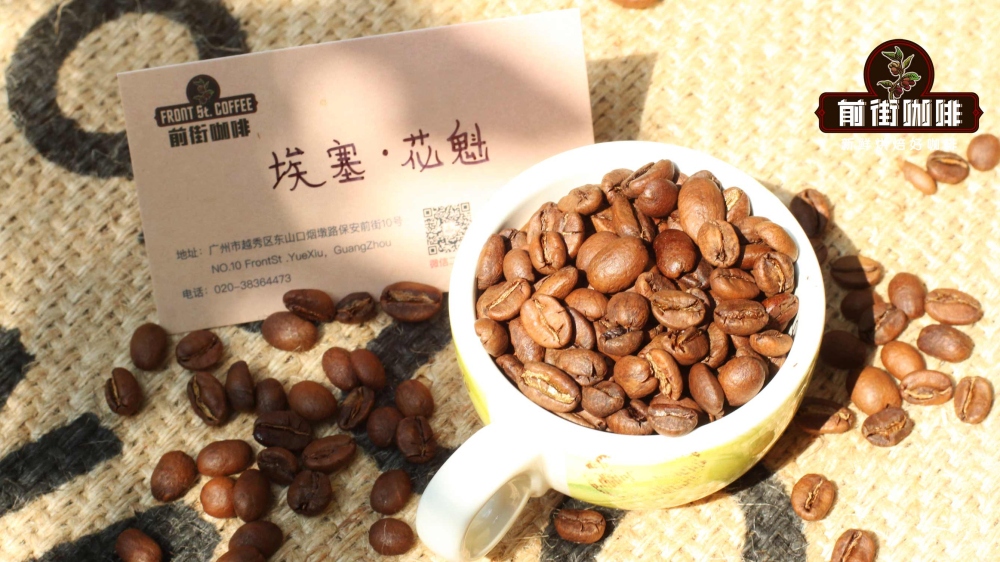
This time, Front Street Coffee used Costa Rica's Front Street Strawberry Candy coffee beans as a demonstration. This is a unique Geisha blend with flavors of strawberry gummy candy, ripe tropical fruit, and raisins. Its sweetness is highly recognizable, making it perfect for making iced pour-over in the summer.
Front Street Coffee first tried adjusting the grind finer (EK43 setting 8.5), hoping to extend the extraction time (the daily production grind setting is 9.5). With a finer grind, the water flow slows down, and the extraction time does indeed lengthen. However, overly fine particles led to excessive extraction yield. After dilution and cooling with ice cubes, the coffee's aroma and sweetness did not improve; instead, a slight over-extracted bitter aftertaste appeared. Clearly, grinding too fine is not advisable.
Next, Front Street Coffee tried a different approach: increasing the number of pouring stages. After blooming, with the same coffee-to-water ratio, more stages mean more times the coffee bed is washed and agitated, a longer total extraction time, and more compounds released at each stage. But with more stages, the water amount per stage decreases accordingly, making it even harder to execute during iced brewing. Therefore, it's necessary to appropriately increase the distributable water—that is, widen the coffee-to-water ratio to 1:12. With more water, concentration decreases, and direct dilution with ice can make it taste weak. So Front Street Coffee adopted a more luxurious rapid cooling method: passing over ice.
Test parameters: 91°C, 15g coffee grounds, total water 180g, grind size EK43 setting 9, four-stage pouring: 30g + 50g + 50g + 50g.
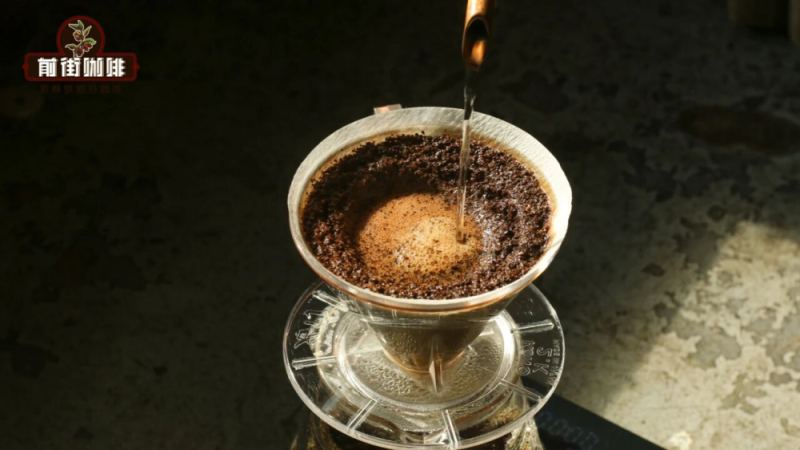
In terms of technique, Front Street Coffee also tried adjusting the water flow rate to enhance compound extraction. First, bloom with 30g of water for 30 seconds, then pour the first stage to 80g, circling from the center in a coin-sized loop, using a small flow to dig out the bubbles;
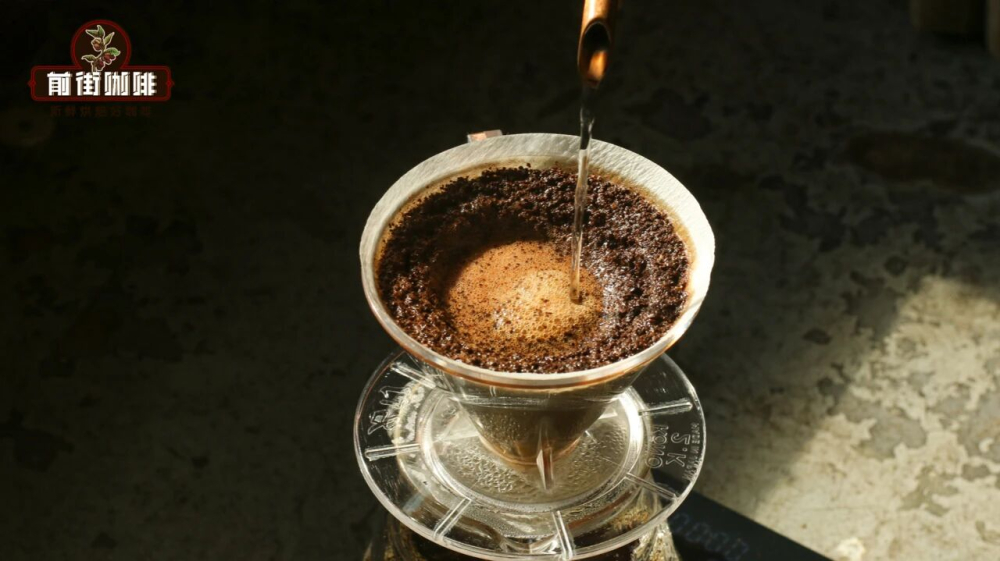
For the second stage, pour to 130g, again using a small flow in outward circles, trying to wash all the coffee grounds; for the final stage, pour at a fixed center point with a higher flow, pouring to 180g. Stop pouring at 1 minute 35 seconds, and the total drip-through time is 2 minutes 05 seconds.
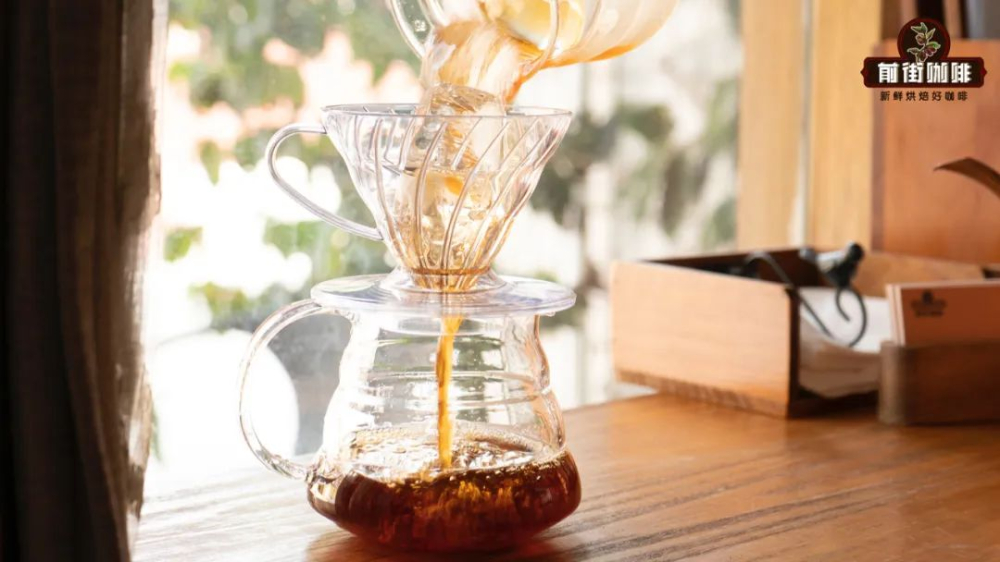
Pour the extracted hot coffee over a large amount of hard ice cubes, agitating repeatedly until the temperature drops to around 5-10°C, finally obtaining about 200g of iced coffee liquid.
Then pour the coffee into a pre-chilled ice cup to maintain the cold mouthfeel. The Strawberry Candy brewed this way has a very full flavor, a smooth mouthfeel, and a very clear dried-fruit sweetness. The fermented aroma resembles fruit wine, interwoven with hints of floral notes, and the aftertaste lingers in the mouth for a long time.
Of course, the approach tried here is merely an adjustment based on Front Street Coffee's extraction logic and understanding of this bean's flavor—it is not an absolute standard answer. Front Street Coffee believes that there is no universal brewing formula in the world. The meaning of pour-over lies in trying a different brewing method each time, gaining new extraction perspectives, and thereby appreciating coffee's more diverse flavor aesthetics.
The above content is compiled by CoffeeHunters, a coffee news website.


