








When Can You Tell Pour-Over Coffee Will Pool?
Water pooling in pour-over coffee usually shows itself before the pour finishes, and three moments give early warning. Watch the bloom: fresh beans and darker roasts expand into a pronounced burger shape and rarely clog, while stale or light-roasted beans barely react and are more likely to pool. Foam behavior after the bloom and the water level drop before the final pour are the other two checkpoints.
If clogging looks likely, stop pouring in wide circles so grounds are not washed to the dripper edges, raise the coffee bed level so more grounds cling to the wall and thin the bed, or use a stronger stream to break up the clogged layer. When all else fails, cut off the flow and accept the higher concentration and missing flavors that follow.
One of the most headache-inducing problems in pour-over coffee is water pooling. Once clogging occurs at the tail end of brewing, the coffee's flavor often turns bitter and hard to swallow. In fact, before the pouring is finished, there are several time windows where you can predict in advance whether pooling will happen. As long as you master these judgment methods, you can adjust your pouring strategy in time and avoid ending up in a passive position. This article will focus on three key time points—the degree of expansion during blooming, the foam performance when pouring after blooming, and the speed of water level drop before the final pour—to explain one by one how to identify the risk of pooling and give corresponding countermeasures. It will also introduce the ultimate solution when all methods fail—cutting off the flow—and how to handle the problems of overly high coffee concentration and missing flavor after cutting off the flow.
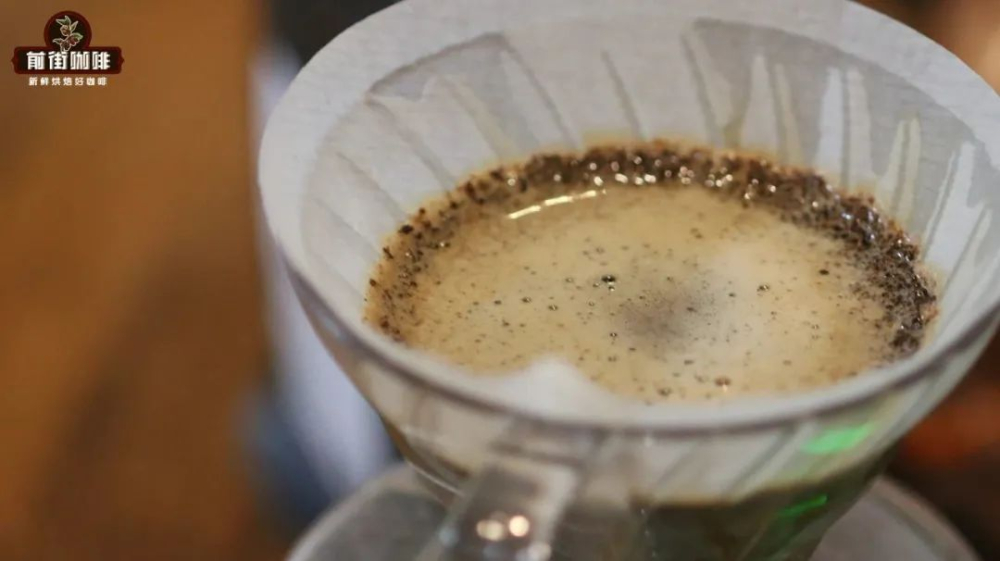
If you already notice signs that pooling may occur before the pouring is completed, there is quite ample room for remedy. For example, you can change your pouring technique and no longer pour in large circles, to prevent washing down the coffee grounds at the edges and worsening the clogging; you can also raise the water level of the coffee bed so that more grounds adhere to the wall of the dripper, thereby reducing the overall thickness of the coffee bed; in addition, you can use a stronger stream of water to stir up the already clogged coffee bed again.
In the actual brewing process, there are three time points that can be used to predict whether pooling will occur.
The first point is the performance during the blooming stage. The degree to which the coffee bed expands to form a "hamburger" is affected by both the freshness of the coffee beans and the roast level. The fresher the coffee beans, the more pronounced the degassing expansion during blooming; conversely, if the coffee beans are not fresh enough, almost no obvious reaction can be seen during blooming. In terms of roast level, dark-roasted beans expand more and easily puff up into a full "hamburger"; light-roasted beans are harder and expand relatively less, sometimes even not very noticeably.
Coffee that expands obviously during blooming is very likely not to have a pooling problem. If it does not expand obviously, it is more likely to become clogged and pool at the tail end of brewing. Therefore, Front Street suggests that when pouring afterward, the circling amplitude should not be too large, and the water level of the coffee bed should be raised appropriately.
The second point is the state of the foam when pouring after blooming ends. If the foam is darker in color (brownish yellow) and relatively abundant, then there is basically no need to worry about clogging and pooling.
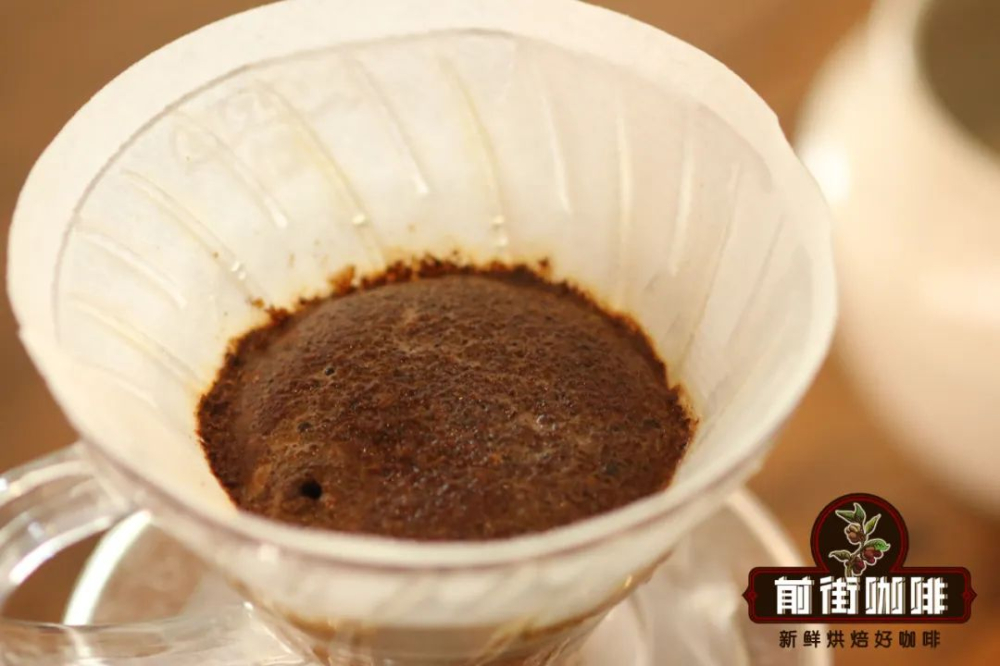
However, if the foam is lighter in color (yellowish white), thin in texture (with only a thin layer of foam attached to the surface), or even has hollow spots, this indicates that most of the coffee grounds have already settled on the coffee bed and are likely to block the drainage holes. In this case, if the current pour has not yet ended, you can increase the water flow to stir the coffee bed, while minimizing the circling range as much as possible to avoid washing the coffee grounds at the edge of the dripper downward.
The third point is to observe the speed at which the water level drops before the final pour. If the drainage speed is relatively slow at this stage, then during the final pour you need to use a stronger stream of water to churn the coffee bed.
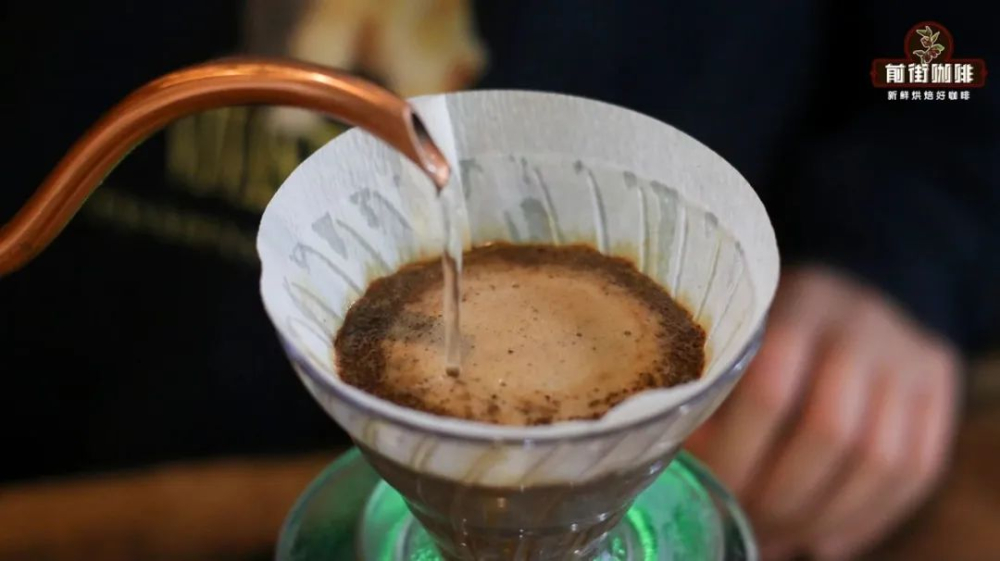
Of course, if the above three methods cannot solve the problem of clogging and pooling, then only the last trick remains—cutting off the flow. Cutting off the flow can indeed effectively avoid negative flavors such as bitterness produced at the tail end, but the cost is higher coffee concentration and a lack of flavor layering. The problem of overly high concentration can be solved by bypassing with 10 to 20 milliliters of clean water to dilute it. As for the loss of flavor, it is necessary to trace back to the root cause of the clogging and pooling, so as not to repeat the same mistake next time.
The above content is compiled by CoffeeHunters, a coffee news website.


