







Can Pouring Technique Really Change Acidity in Coffee?
Flow rate, circling speed, and circling path are the three variables that decide how a pour-over extracts. A thick, fast pour takes less time and pushes the coffee bed higher, so water passes through more quickly. The result tends to be brighter acidity coffee with clearer layering, while body is reduced. A slow, gentle stream does the opposite.
Front Street classifies flow below 4 grams per second as small, above 7 grams per second as large, and the middle band as medium, a reference standard rather than a rule. No pouring style is inherently better; what matters is matching the technique to the beans and the target flavor. Adjusting flow and circling lets a barista steer the acid of coffee toward fruity and sweet or fuller and rounder.
The reason pour-over coffee is called "hand-poured" lies in the act of pouring water itself. Every barista has a different pouring style, and these differences directly influence the final flavor in the cup. There is no hierarchy among pouring methods—what matters is whether they match the beans and the target flavor. Before developing a personal style, it is necessary to first understand how different pouring techniques specifically affect extraction results. Drawing on Front Street's practical experience, this article analyzes three variables—flow rate, circling speed, and circling path—to examine how each changes coffee's layering, acidity, sweetness, and body, and offers actionable combined pouring strategies to help you find the balance between fruity sweet-and-sour notes and a rich, full body.
However, if you want to take a pour-over to a more refined level, the question of pouring style is ultimately unavoidable. After all, the essence of pour-over coffee lies in the "hand" part. It can be said that as many baristas as there are, there are as many pouring habits—no one method is inherently better or worse than another, only more or less suitable. Before you have honed your own pouring style, it is essential to first understand how different pouring methods steer the direction of coffee's flavor.
Flow Rate When Pouring
Some prefer a slow, gentle pour, taking their time with a very small stream; others are accustomed to bold, sweeping pours, finishing in one go with a thick stream; and some take the middle road, with a flow that is neither large nor small.
There is no hard boundary between large and small flow rates—it is more of a relative concept. For ease of description, however, Front Street classifies flows below 4 grams per second as small, above 7 grams per second as large, and between 4 and 7 grams per second as medium. This is merely a reference standard provided by Front Street; you are free to define it according to your own understanding.
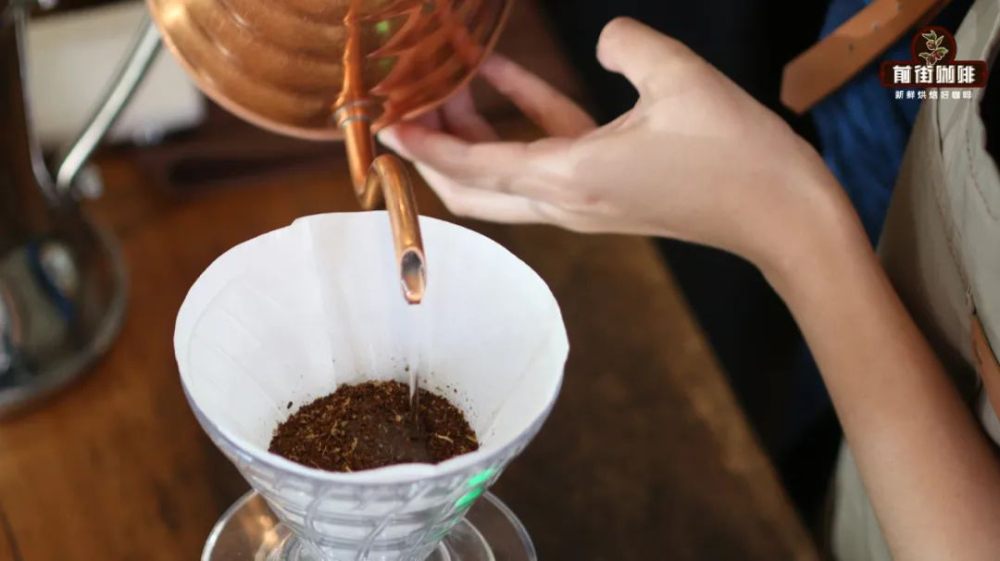
The most direct effect of flow rate is on the time extraction takes. Given the same total water volume, pouring with a large flow takes less time, while the coffee bed (water level) is pushed higher, and water passes through the bed more quickly.
As a result, coffee brewed with a large flow tends to have more distinct layering and brighter, more lively acidity, but correspondingly, body is compromised—it may taste thin and weak. Coffee brewed with a small flow, on the other hand, has a more solid, full mouthfeel and clearer sweetness, though it also risks off-flavors and muddiness.
Circling Speed When Pouring
Nowadays, pour-over almost always involves circling, because in a conical dripper, pouring along concentric circles is the best way to suppress turbulence.
The falling stream of water is essentially a tool for agitating the coffee bed, and circling speed corresponds to agitation intensity. Fast circling means stronger agitation of the bed, which naturally extracts more coffee compounds; conversely, slow circling means weaker agitation and a slightly lower extraction yield.
When the agitation rhythm is faster, the coffee's flavor layers are richer and more varied. When the agitation rhythm is slower, the coffee tastes softer, smoother, and cleaner.
The Size of the Circling Path
Regarding the circling path, many beginners are unclear about the difference between circling wide and circling narrow, and don't understand why some baristas pour in large circles while others only make small ones.
When circling wide, most of the coffee grounds are directly hit by the water stream, making it easier for aromas and flavor compounds to be released. Coffee brewed this way appears light, layered, and pleasantly smooth. But wide circles also easily collapse the coffee wall, resulting in a thin body, watery mouthfeel, and weak flavor.
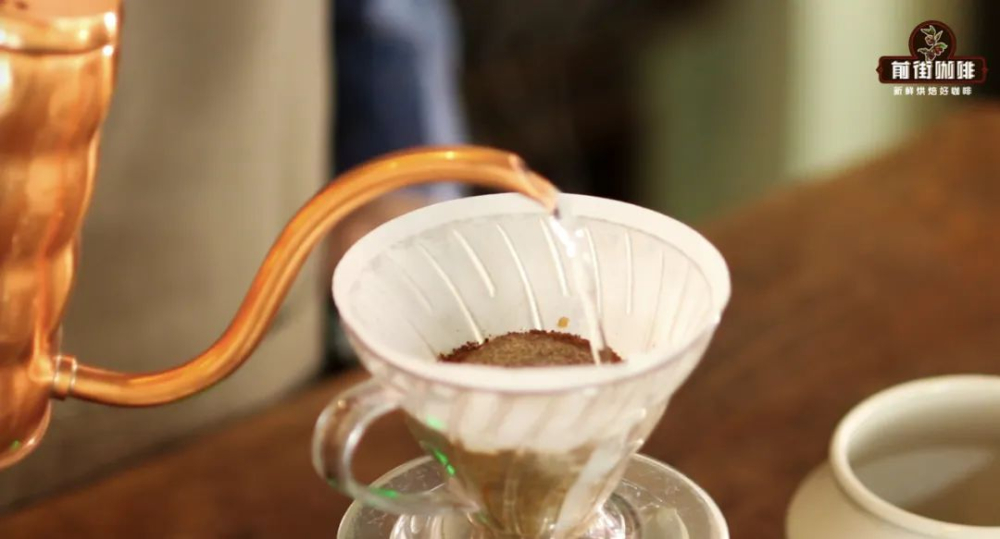
When circling narrow, the coffee grounds on the outer ring that are not directly hit by the stream accumulate against the filter paper, making the coffee wall thicker. Coffee brewed this way has more concentrated, intense, and full flavor.
Only by first understanding where each pouring style leads flavor can you design a targeted pouring plan. For example, if you want to highlight the coffee's sweet-and-sour fruity notes and rich layering without making the body thin, you could arrange it this way: use a medium-to-large flow with fast wide circling for the first half, then switch to a small flow with slow narrow circling for the second half, combining the strengths of both techniques.
The above content is compiled by CoffeeHunters, a coffee news website.


