







How Does Staged Pouring Water Volume Change Yirgacheffe Flavor?
Staged pouring looks simple, but shifting the water volume in each stage changes the cup. Using Yirgacheffe Gutingting as a sample, three comparative experiments were run with dose fixed at 15 grams, a 1:16 ratio, medium-fine grind, and 91 degrees Celsius water, changing only the second and third stage water volumes.
The three schemes were: second stage greater than third, the two equal, and second less than third. The tests tracked the direction of acidity, sweetness, mouthfeel, and aftertaste, and also pointed to how the coffee bed wall height against the water level affects extraction uniformity, giving reference points for adjustment in practice.
Pour-over coffee's staged pouring seems simple, but in reality, even slight changes in the water volume of each stage leave a mark in the cup. Many friends new to pour-over often wonder: how exactly should the water volume be divided after blooming? Where will different distribution schemes lead the flavor? Front Street took Yirgacheffe Gutingting as a sample and designed three comparative experiments, fixing the dose at 15 grams, the coffee-to-water ratio at 1:16, medium-fine grind, and water temperature at 91 degrees Celsius, changing only the water volume ratio between the second and third stages, to observe the direction of acidity, sweetness, mouthfeel, and aftertaste. The experiment also revealed the potential effect of the relationship between the height of the coffee bed wall and the water level on extraction uniformity, and provides reference ideas for flexible adjustment in actual practice.
Staged pouring often confuses beginners: how much water should be poured in each stage? What changes will differences in the water volume of each stage bring to the coffee's flavor?
To more clearly show the influence of water volume distribution on flavor direction, Front Street arranged a set of comparative experiments to help explain. The experiment used a three-stage pouring scheme. It should be explained in advance that three-stage means the total pouring is divided into three stages, including blooming; if the three-stage pouring does not include blooming, it is customarily called "three-cut flow," with the actual number of pours being four stages.
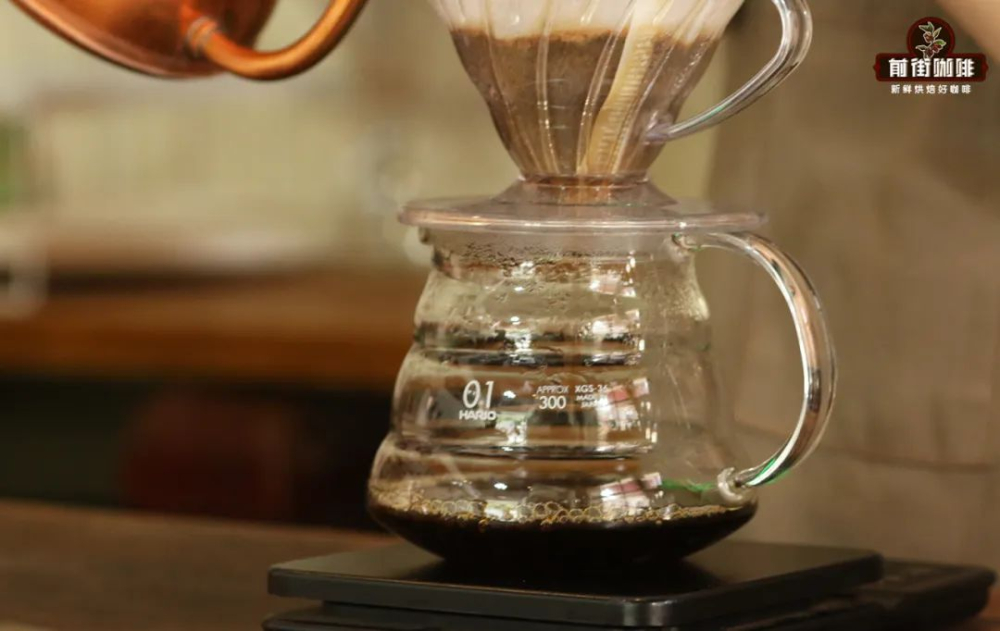
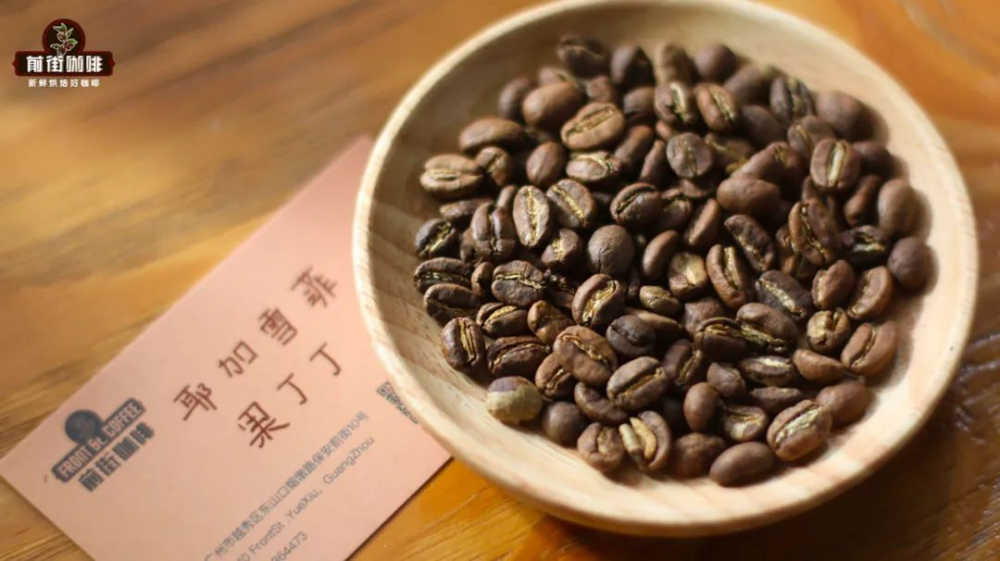
Under the three-stage structure, after deducting the water used for the first-stage bloom, what truly needs to be distributed is the second and third stages. The three comparative schemes set by Front Street were: in the first group, the second-stage water volume was greater than the third stage; in the second group, the second-stage and third-stage water volumes were equal; in the third group, the second-stage water volume was less than the third stage. The experiment selected Yirgacheffe Gutingting, with a dose of 15 grams, a coffee-to-water ratio of 1:16, medium-fine grind (80% passing through a No. 20 sieve), and a water temperature of 91 degrees Celsius.
The specific water volumes for each group were as follows. First group: 30 milliliters for blooming, 130 milliliters for the second stage, 80 milliliters for the third stage. Second group: 30 milliliters for blooming, 105 milliliters for the second stage, 105 milliliters for the third stage. Third group: 30 milliliters for blooming, 80 milliliters for the second stage, 130 milliliters for the third stage. The extraction times of the three groups were about 2 minutes 12 seconds, 2 minutes 03 seconds, and 2 minutes 10 seconds respectively, with little difference. The flavors of the three differed, but all retained this bean's floral aroma, citrus acidity, and green tea sensation. Below, Front Street ranks them from several dimensions.
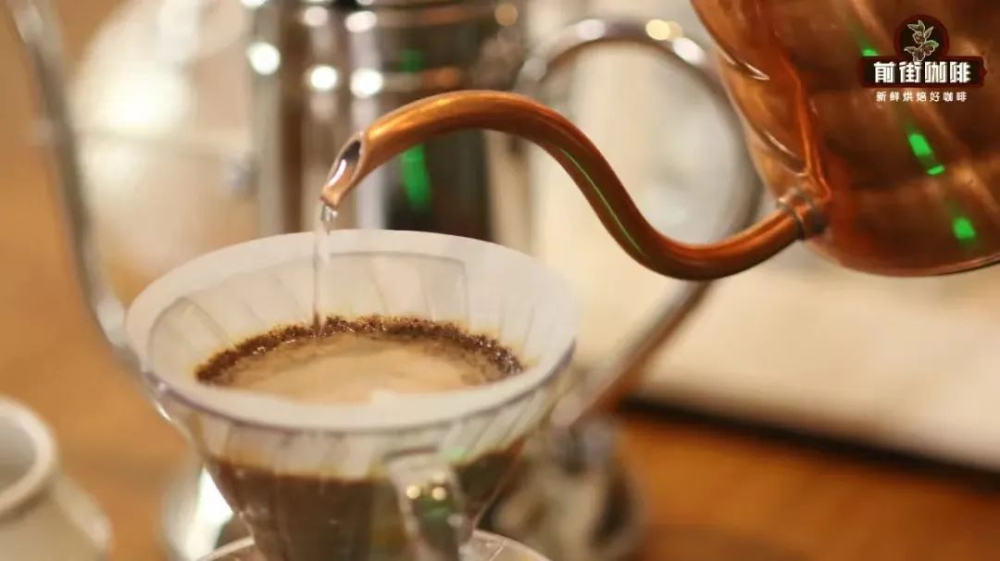
Acidity performance: the first group was better than the second group, and the second group was better than the third group. Sweetness performance: the second group was the best, followed by the third group, and the first group was the weakest. Mouthfeel performance: the second group was the best, the first group was next, and the third group was the weakest. In terms of aftertaste, the three were close, and it was hard to distinguish which was superior.
Simply put, during pouring, the water flow agitates the coffee bed, thereby improving extraction efficiency. Changing extraction efficiency at different time periods leads to different flavor results. If more water is distributed in the earlier stage, the later stage naturally has less, and the coffee more easily shows lively acidity, with an overall style leaning fresh, light, and bright. Conversely, when more water is distributed in the later stage, sweetness and mouthfeel improve somewhat, with an overall direction toward balance, body, and steadiness. However, too much water in the later stage may also bring a thin mouthfeel. Take this experiment's Gutingting as an example: it is high in altitude, lightly roasted, and the beans are relatively hard.
During brewing, the coffee grounds easily accumulate on the coffee bed, so the coffee bed wall can usually only form during the pour immediately after blooming. In the third group, because the second-stage water volume was relatively small, the water level was lower, and the coffee bed wall was correspondingly lower. When more water was poured in the third stage, the water level easily rose above the previously formed coffee bed wall, and the water above the coffee bed wall flowed directly away from the edge of the dripper, so the coffee's mouthfeel naturally seemed thin.
Therefore, when planning water volume distribution, the water level factor must also be considered. Suppose you want to highlight sweetness and want to concentrate the water in the later stage, but in actual operation the water level may exceed the coffee bed wall. At this time, you can temporarily split the later-stage pouring into two pours, which can avoid a thin mouthfeel. Of course, this also shows that the original water volume distribution was not reasonable enough and needs to be replanned. Finally, if you pay attention to publicly available pouring schemes, you will find that most are anchored to water volume ratios of "6 before, 4 after" or "7 before, 3 after."
The above content is compiled by CoffeeHunters, a coffee news website.


