







How Luckin Coffee turned Valentine's Day into Singles' Day
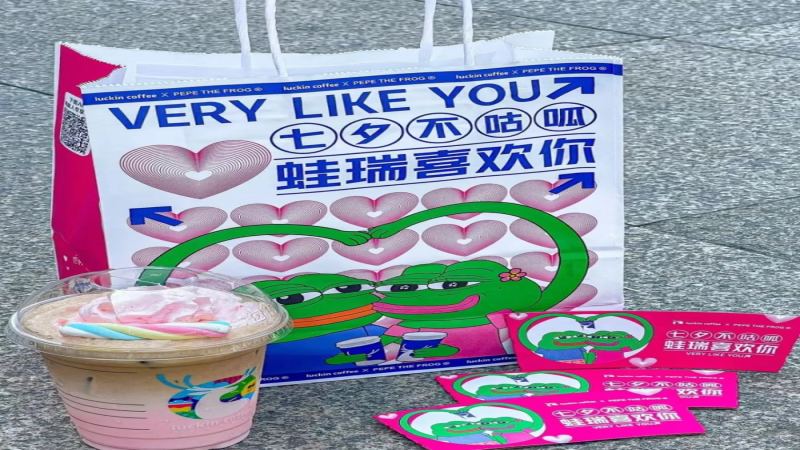
Luckin Coffee ran a Valentine's campaign aimed at single customers rather than couples. Partnering with the Line Dog character, it launched the Thorned Rose Latte and Lovesick Red Bean Latte, borrowing a meme from a hit stand-up comedy show. Limited-edition paper bags and stickers became collectibles, pushing the collaboration into wide circulation among young consumers.
The approach continues a pattern that began with the Qixi collaboration featuring the Lonely Frog, when self-deprecating slang for singles had already spread online. By leaning into that humor instead of sweet romance, Luckin reaches the roughly 20 to 35 year old single group, turning a greeting-card holiday into a moment those customers feel addressed.
Valentine's Day has always been the prime battlefield for brands' sweet marketing campaigns, but Luckin Coffee has taken a different path, turning Valentine's Day into something that feels more like "Singles' Day." From last year's Qixi collaboration with the "Lonely Frog" to this year's partnership with the "Line Dog" to launch the "Thorned Rose Latte" and "Lovesick Red Bean Latte," Luckin continues to engage young people with self-deprecating humor. This article will take a deep dive into the product logic behind this reverse marketing wave, the cultural memes it draws from, and why it precisely hits the psychological needs of the 20-35 year old single consumer group. Meanwhile, you're also welcome to follow the Coffee Workshop official account and Front Street Coffee's WeChat account qjcoffeex for more professional coffee knowledge and specialty bean information.
Professional coffee knowledge exchange. For more coffee bean information, please follow Coffee Workshop (WeChat official account: cafe_style)
For more specialty coffee beans, please add our private WeChat Front Street Coffee (FrontStreet Coffee), WeChat ID: qjcoffeex
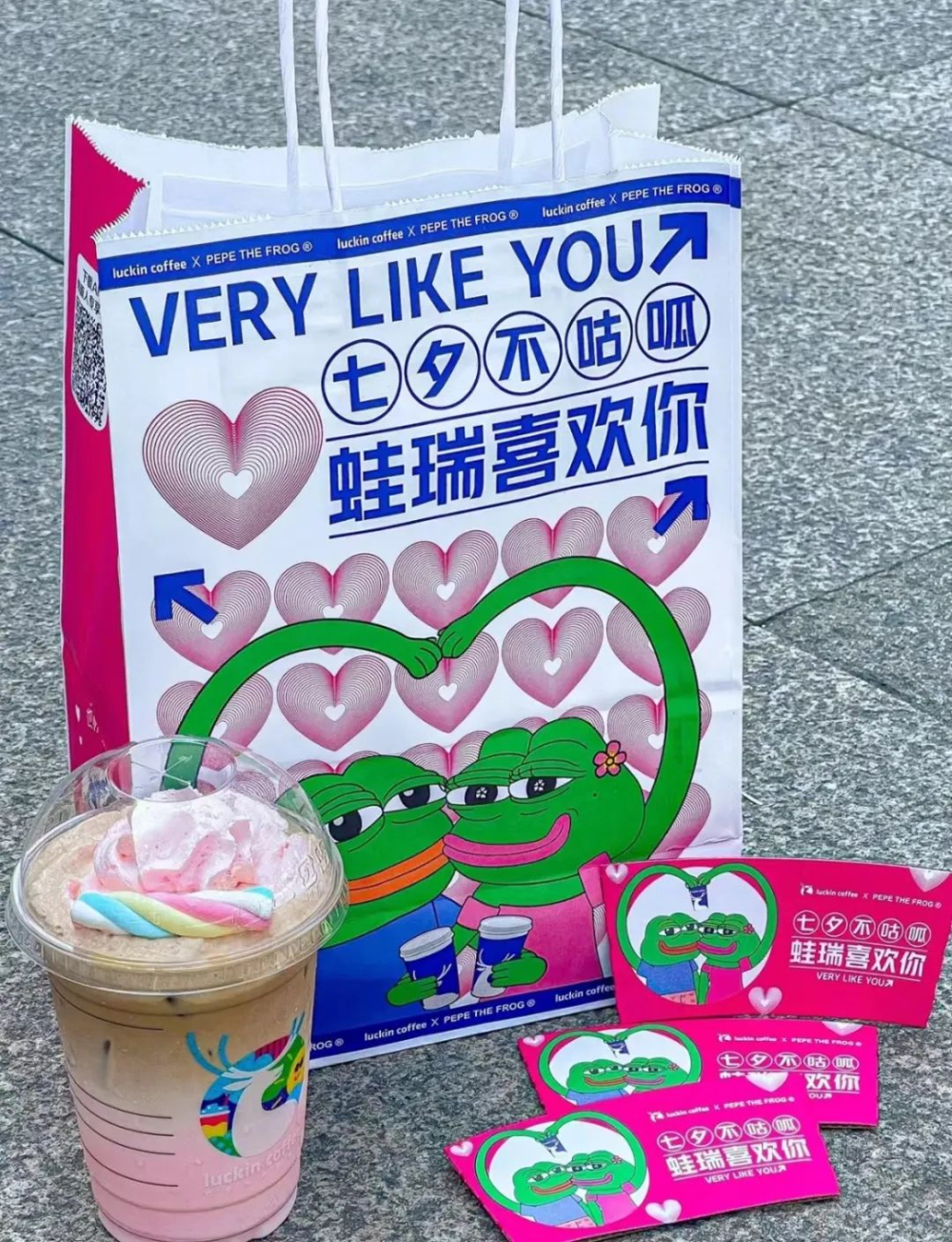
No one knows exactly when it started, but Valentine's Day marketing is no longer all about chasing pink bubbles filling the screen. Ever since Luckin brought in the "Lonely Frog" for a collaboration last Qixi, it seems that during every one of these sweet holidays, Luckin is always intentionally or unintentionally giving single people a little extra care.
As early as the year before, self-deprecating internet slang terms for singles like "gugua" and "mudan" had already gone viral for a while. By last Qixi, Luckin simply went the opposite direction, teaming up with Pepe the Frog to play with memes, prompting many netizens to sigh, "So heartbreaking, but I love it."
This year's Valentine's Day continues the same playbook. Luckin has joined hands with the hugely popular "Line Dog" while borrowing a meme from a previously hit stand-up comedy show, launching the "Thorned Rose Latte" and "Lovesick Red Bean Latte," literally turning Valentine's Day into a "Singles' Day" vibe.
As soon as the collaboration was announced, the limited-edition paper bags and stickers immediately became items that netizens were chasing after. After all, who can resist adorable little trinkets?
The Line Dog is now practically a permanent resident in girls' WeChat sticker collections. That little white Maltese dog is just like us in everyday life — spacing out alone, feeling down, sad, angry... but as soon as it's with its good friend or someone it likes, that little golden retriever, it immediately switches into a clingy, playful mode.
Although this campaign is titled "The Love Story of the Fixer Dog," Luckin has actually played reverse marketing quite steadily. On one hand, the product names are sweet with a hint of something off; on the other hand, the promotional messaging directly declared that Luckin has a "dog" this Valentine's Day.
The inspiration for "Thorned Rose" comes from a self-deprecating bit by He Guangzhi on last year's "Rock & Roast Season 4": "It seems like the more beautiful something is, the crueler it is to this world. Every time I think of that, I suddenly realize what a thorned rose I really am." However, this product specifically notes "this product has no thorns," meaning they hope everyone can be like a rose without thorns — gentle and likable.
"Lovesick Red Bean" is taken from Wang Wei's poem "Lovesickness," symbolizing "I miss you." But here's a fun fact: the biggest difference between the real lovesick bean and the red bean is that the lovesick bean is toxic... eating it is roughly equivalent to being poisoned by love. Of course, this product only uses red bean syrup.
According to research data, Luckin's consumer base is mainly concentrated between the ages of 20 and 35, with single young people accounting for over sixty percent. This group generally holds an optimistic attitude toward being single, but at the same time wants to be seen and yearns for self-expression.

From the Lonely Frog all the way to the Thorned Rose, it's not hard to see that today's young people have a fairly high level of acceptance of their single status, and they also really enjoy their time alone, which is why a wave of single self-deprecation has gradually swept across the internet.
If a brand wants to win over more young consumers, following their preferences is the most effective path. Playing with memes just right and sparking resonance — the results naturally follow.
Luckin's reverse marketing strategy can be said to have firmly captured the hearts of its core customer base. A holiday style that should have followed a sweet and lovey-dovey route gets switched into a teasing mode, creating a slight sense of incongruity for consumers without going overboard.
This not only raises consumers' expectations for each themed campaign and product but also strengthens brand awareness. At the same time, the product names themselves give young people an outlet for self-expression.
The reason stand-up comedy is so popular is that many of its observations reflect the real situations of contemporary young people — it's just that few would voluntarily say them out loud. Performers use witty humor to complete the "ranting about life" on behalf of these young people. The same logic applies to products: people don't buy them really for the taste, but more to seize an opportunity to express themselves.
Image source: Internet
The above content is compiled by CoffeeHunters, a coffee news website.


