







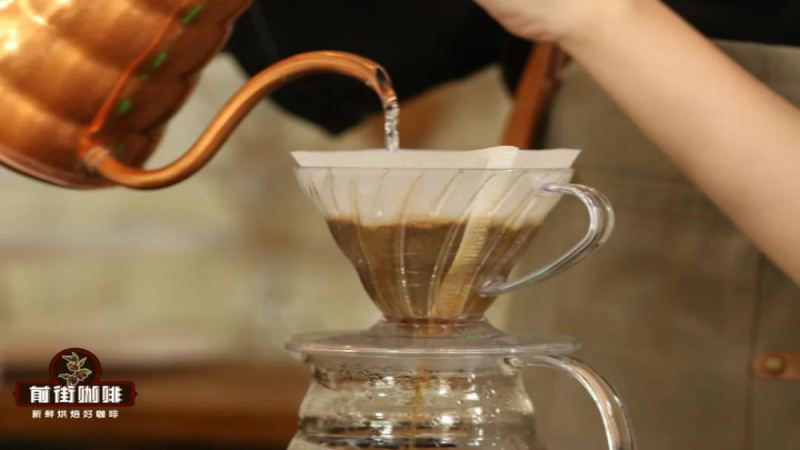
Does a one-gram change matter in coffee brewing?
Changing coffee dose by one gram while keeping water at 225 milliliters shifts the ratio and therefore the extraction yield and concentration. With a 15-gram dose at 1:15, the water comes to 225 milliliters. At 14 grams the ratio tightens toward 1:16 and extraction rises; at 16 grams it loosens and concentration rises instead.
The recommended range sits between 1:15 and 1:16, so a single gram stays workable but does move flavor. A larger ratio value lowers extraction yield and raises concentration, while a smaller value does the opposite. Adjusting grind so coffee particles behave consistently helps keep daily results steady after a dose change.
Among the many variables in pour-over coffee, the coffee-to-water ratio is always the key parameter determining the flavor direction. Front Street Coffee usually recommends a reliable range of 1:15 to 1:16; once you get used to it, 15 grams of coffee with 225 milliliters of water becomes almost the default operation. But in reality, we may not always be that precise—sometimes there's a gram more or a gram less of coffee. If the amount of water poured remains unchanged, and only the coffee dose deviates by 1 gram, will the taste of the coffee show a noticeable difference? This article uses three comparative brewing experiments with 14 grams, 15 grams, and 16 grams to analyze the effect of slight coffee dose adjustments on extraction yield and concentration, and provides parameter adjustment suggestions after coffee dose changes, to help you achieve consistent results in your daily brewing.
Among the various parameters that influence coffee flavor, the coffee-to-water ratio is usually one of the first elements that needs to be decided. Front Street Coffee generally recommends using a relatively conservative range like 1:15 or 1:16. Over time, when we consistently use 15 grams of coffee grounds and brew at a 1:15 ratio, the water amount naturally comes to 225 milliliters.
However, daily coffee brewing isn't like competition where you can be precise to the tenth of a gram every time. For example, if a bag of beans happens to have only 14 grams left, or has 1 to 2 grams more than a single serving, we often just brew it as one portion, and some friends might habitually still pour 225 milliliters of water. So, under the condition of unchanged water, does a 1-gram difference in coffee dose have a big impact on coffee taste?
Unchanged Water, Increased/Decreased Coffee Dose = Changing the Coffee-to-Water Ratio
With all other parameters locked in, simply increasing or decreasing the coffee dose most directly changes the coffee-to-water ratio. (Coffee-to-water ratio = coffee dose : water amount) And what the coffee-to-water ratio regulates is exactly the extraction yield and concentration: the larger the ratio value, the lower the extraction yield and the higher the coffee concentration; conversely, the smaller the ratio value, the higher the extraction yield and the concentration decreases accordingly. When extraction yield and concentration shift slightly, will the coffee flavor change along with them?
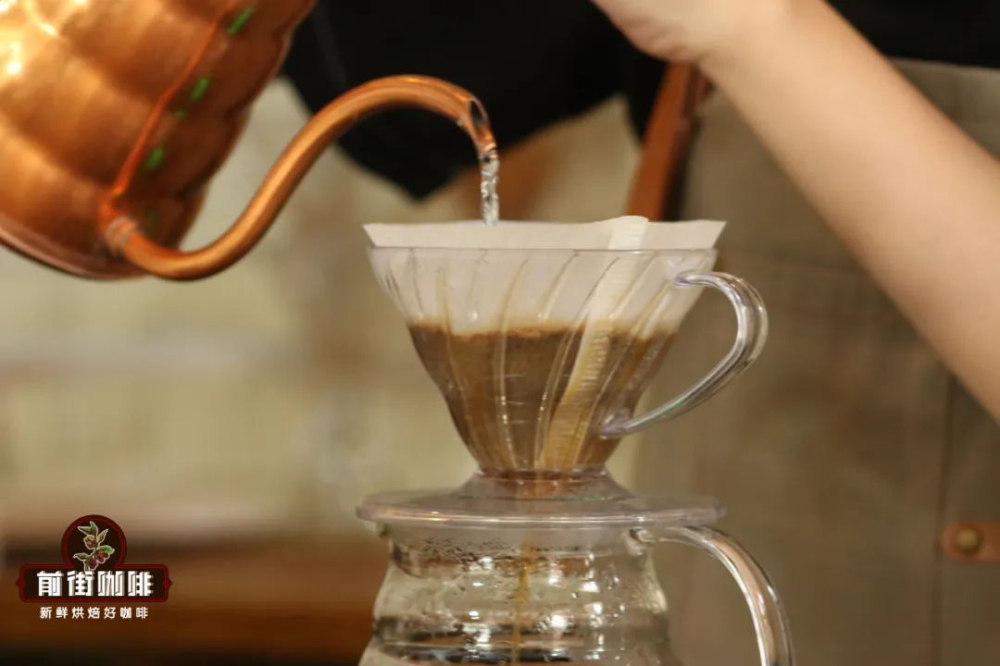
Changing Only 1 Gram of Coffee Dose
Front Street Coffee weighed out 14 grams, 15 grams, and 16 grams of coffee grounds respectively, all "treated as" 15 grams for extraction, with the same 225 milliliters of water poured, corresponding to coffee-to-water ratios of approximately 1:16, 1:15, and 1:14. This time, Papua New Guinea Paradise Bird coffee beans were selected, uniformly using a Hario V60 01 dripper, with the grind size set at EK-43s 10 setting, and water temperature at 90°C.
The brewing used a three-stage pour: the first stage poured 30 milliliters of water for blooming, with a blooming time of 30 seconds; the second stage poured water to 125 milliliters, with a 10-second pause in between; the third stage continued pouring until 225 milliliters. The drawdown completion times for the three pots of coffee were 1 minute 56 seconds, 1 minute 58 seconds, and 1 minute 58 seconds respectively; the measured concentrations were 1.04–1.28%, 1.34–1.40%, and 1.52% respectively.
It's not hard to see that as the coffee dose gradually increases and the coffee-to-water ratio becomes smaller, the coffee's mouthfeel becomes heavier and more concentrated, but this actually reduces the clarity of various flavors.
So Front Street Coffee believes that when we increase the coffee dose and want the coffee flavor to perform as usual, we should honestly increase the water amount accordingly, thereby stabilizing extraction.
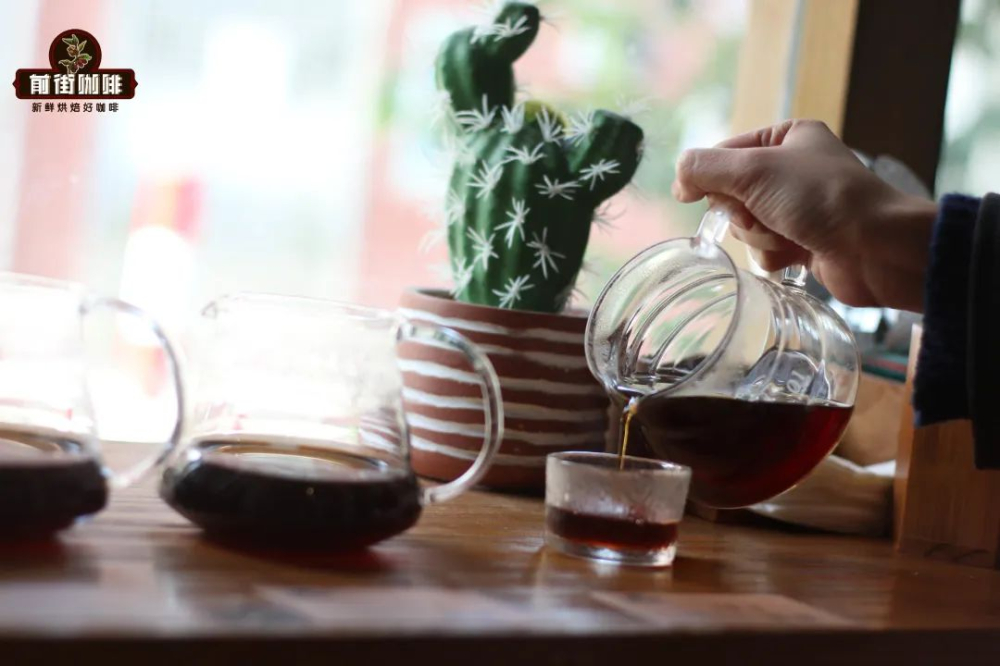
If there is a small reduction in coffee dose, we can also adjust just one parameter to coordinate. When the coffee dose is 1–2 grams less than usual, if not reducing the water amount, you can appropriately use a finer stream of water poured onto the coffee bed to extend the coffee-water contact time, or adjust the grind size finer to reduce the space between coffee particles, making the water flow down more slowly, which similarly achieves the effect of increasing extraction concentration and flavor. Here Front Street Coffee does not recommend raising the water temperature—if the temperature is too high, the coffee easily releases bitter and burnt substances, especially for medium-dark roasted coffee beans, where the taste is masked by bitterness and the aroma is hard to bring out.
For professional coffee knowledge exchange and more coffee bean information, please follow Coffee Workshop (WeChat public account: cafe_style)
For more specialty coffee beans, please add the private WeChat of Front Street Coffee (FrontStreet Coffee), WeChat ID: qjcoffeex
The above content is compiled by CoffeeHunters, a coffee news website.


