







How Much Water for a 10g Mandheling Drip Coffee Bag?
A 10-gram drip coffee bag brews well with roughly 150 to 180 milliliters of hot water, poured in three stages: a short bloom, a main pour, and a final top-up. That range keeps the cup balanced rather than thin or muddy. Water temperature around 90 to 95 degrees Celsius works for most bags, including medium-roast Mandheling, and the pour should stay slow and steady.
Strength is easy to adjust without a scale. Too weak, use less water or steep longer; too strong, add hot water or shorten the contact time. For iced brewing, use less hot water and pour it directly over ice. A medium-light Yirgacheffe bag brings floral and bright fruit notes, while a medium-roast Brazil bag leans nutty and creamy.
Drip coffee bags have become the daily go-to for many coffee lovers thanks to their advantage of requiring no complicated equipment and being able to brew a cup of drip black coffee on the spot. But simple doesn't mean careless—how much water is the right amount? How exactly do you perform the three-stage pour? And how should you adjust the parameters for iced brewing? This article uses a 10-gram drip bag as an example to explain in detail the coffee-to-water ratio, pouring technique, and water flow control points for both hot and iced brewing scenarios, while also offering actionable adjustment ideas for when the taste is too strong or too weak, and recommending several seasonal drip bags in different flavor profiles from Front Street Coffee to help you easily find the cup that suits you.
With Spring Festival approaching, many coffee lovers have already started stocking up for the holiday, picking out a bag or two of their favorite beans to brew slowly at home. And for those who don't want to fuss with various equipment or memorize a bunch of parameters, drip coffee bags are undoubtedly the most hassle-free choice.
Drip bags have been about convenience since day one
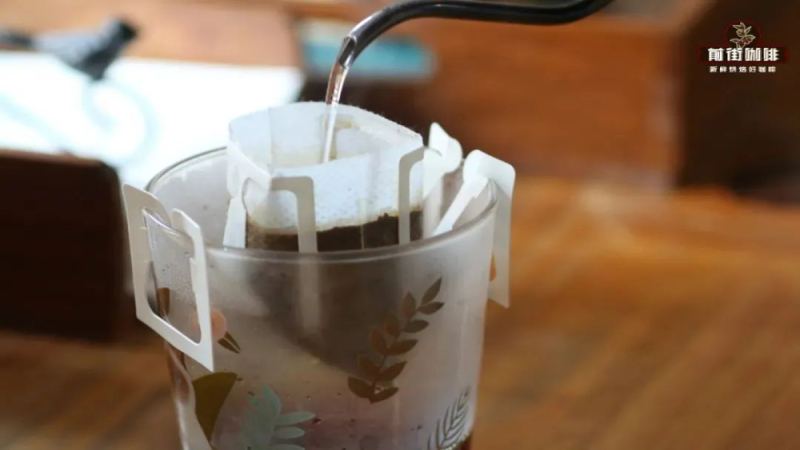
Drip coffee bags use drip extraction, and the original design was inspired by tea bags with hanging strings. The inventor's intent was to recreate the effect of pour-over drip brewing by pre-sealing ground coffee into non-woven filter bags, with cardboard supports on both sides that let the filter bag hang steadily above the cup rim. Since the coffee is pre-ground and there's no brewing equipment to assist, the flavor expression does take a bit of a hit. But what people value is precisely that "subtraction" aspect—anytime, anywhere, quickly getting a cup of drip black coffee.
Since what we're after is the simplest drip method, there's naturally no need to haul out the electronic scale and thermometer used for pour-over and complicate the process. Brewing a drip bag only requires a kettle of hot water, a cup with a taller body, and a drip bag—even the water amount can be eyeballed.
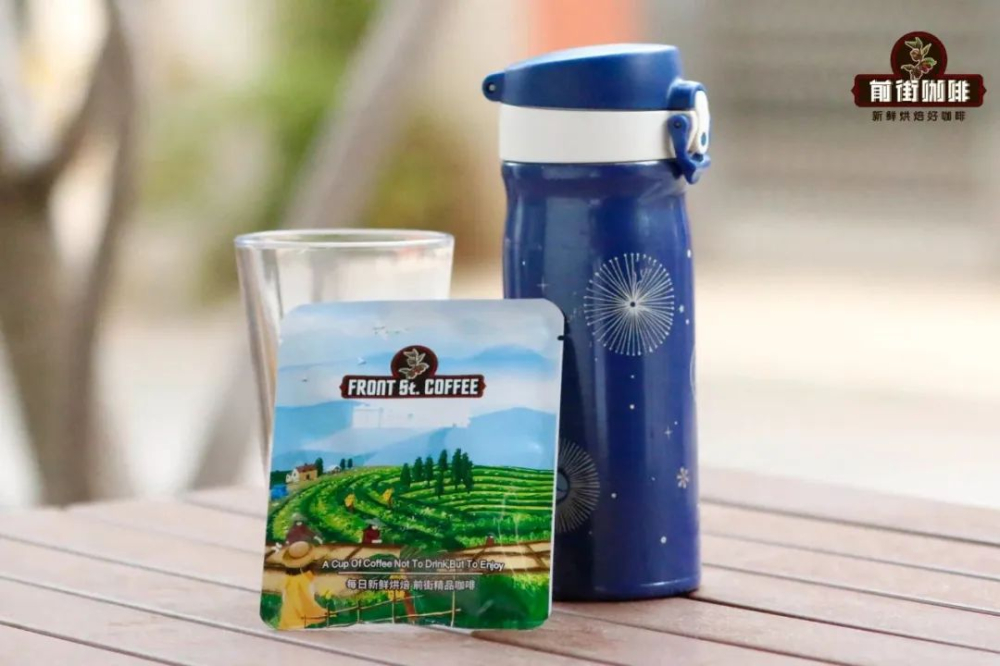
The flavor direction of a drip bag is determined by the coffee beans themselves. If you prefer acidity, you can choose the Front Street Coffee. Yirgacheffe seasonal drip bag, medium-light roast, with fresh floral notes and bright fruit acidity; if you like something neither sour nor too bitter, the Front Street Coffee. Brazil seasonal drip bag is recommended, medium roast, with interwoven nutty and creamy notes; if you want a rich, full-bodied mouthfeel, the Front Street Coffee. Indonesia Mandheling seasonal drip bag is more suitable, medium-dark roast, with prominent spice, dark chocolate, and caramel flavors.
Though the process is simple, the ritual still matters
The water amount for hot-brewed drip bags is fairly easy to gauge. Taking the drip bags from Front Street Coffee's stores as an example, each small bag is 10 grams; referencing the pour-over ratio of 1:15 to 1:18, simply pour in 150–180ml of hot water.
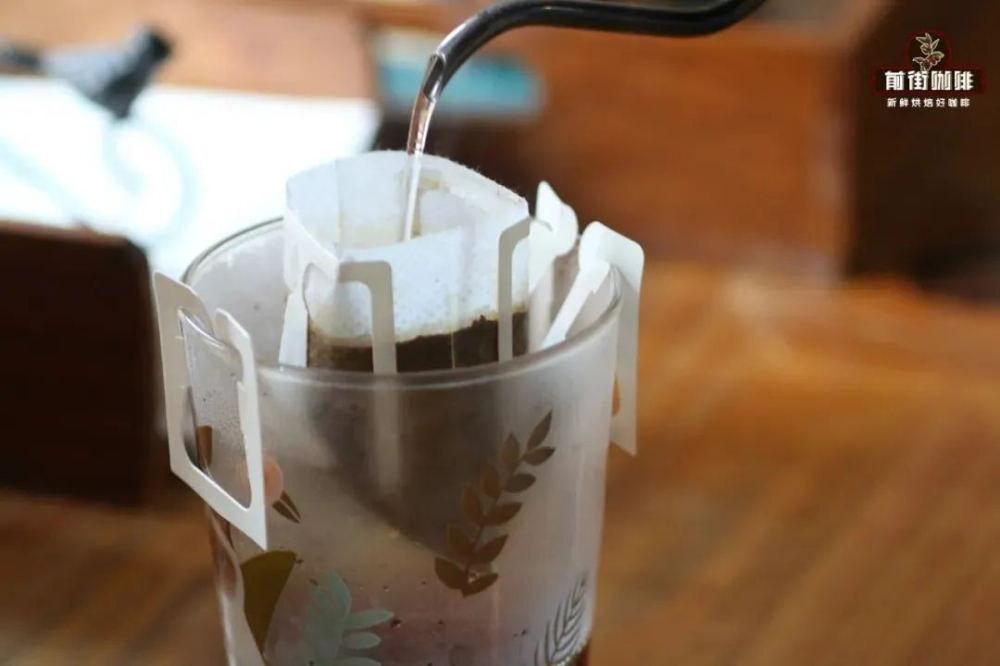
Generally, first pour a small amount of hot water to completely wet all the coffee grounds, filling to half the height of the filter bag for the first stage, and let it bloom for about ten seconds. Then pour water toward the center in two stages until the drip bag is eight-tenths full, waiting for the coffee liquid in the filter bag to finish dripping before adding more, until the final stage finishes filtering.
If you pour it all the way full in one go, the water pooling on top tends to bypass the coffee bed and flow straight out the side of the filter bag, making the coffee bland. After repeated testing, Front Street Coffee found that with the above three-stage pour, the whole process takes about a minute and a half, with a total water amount of roughly 150ml. If you prefer something lighter, you can add one more stage pouring to eight-tenths full, for a total of about 180ml.
How to adjust the water amount for iced drip coffee bags
When switching from hot pour-over to iced pour-over, you typically need to grind finer and replace part of the water with ice cubes—the same applies to drip bags. However, the grind size of commercially available drip bags is set for hot brewing, so you can only increase extraction concentration by adjusting the coffee-to-water ratio or extending the steeping time.
Referencing the iced pour-over ratio of 1:10, Front Street Coffee pours in 100g of hot water. The water amount for wetting the coffee bed stays the same; after blooming, the two stages are changed to five-tenths full, meaning three consecutive stages each poured to half the height of the filter bag, for a total water amount of about 90–105ml. Once all the liquid has finished dripping, pour it over ice to cool; when the cup wall becomes ice-cold to the touch, fish out any unmelted ice fragments to prevent further dilution. Based on Front Street Coffee's actual testing, the iced coffee brewed this way retains the beans' basic flavor profile, and the concentration is fairly moderate.
Front Street Coffee also noticed that some people directly soak the drip bag in hot water and then add ice to the concentrated coffee. If the steeping time isn't controlled well, this method easily leads to over-extraction, so it's not recommended. Rather than risk drinking bitter coffee, Front Street Coffee thinks it's simpler to just make cold brew—soak the ground coffee in cold water, seal it and refrigerate overnight, then use the drip bag's filter to separate out the grounds.
Keep the pouring point as close to the center as possible
During pour-over, the water stream acts to stir the coffee grounds; circling is meant to rinse the coffee bed more evenly and allow aromas and flavor compounds to be released more fully. When brewing drip bags, it's also best to pour in small amounts multiple times to improve extraction efficiency. Front Street Coffee recommends maintaining a small stream throughout; otherwise the filter bag fills up in just a few seconds, making subsequent pours harder to control—a gooseneck kettle helps us control the flow better.
Even when a drip bag is stretched to its maximum square shape, the coffee bed's surface area is only 3.5×3.5cm. If you pour in wide circles, the water easily lands on the filter bag and flows straight into the cup, naturally diminishing the flavor. Front Street Coffee recommends concentrating the water flow at the center, keeping the circling motion as small as possible—ideally within the size of a one-yuan coin.
The above content is compiled by CoffeeHunters, a coffee news website.


