








Where Do Arabica Coffee Beans Come From and How Does Robusta Differ?
Arabica dominates the specialty coffee market, while Robusta, or Coffea canephora, is rare on pour-over menus. A dark-roasted Vietnamese Robusta brewed as pour-over shows a plump, round bean with a straight center line and dry aromas of spice, roasted nuts, and baked bread. The cup moves through distinct changes from dry aroma to wet aroma and on into the mid-to-low temperature stages.
The two species split the global consumption market but differ in appearance, growing conditions, and flavor origin. Robusta's futures price runs at only a little more than half that of Arabica, yet it brings natural advantages in caffeine content and rich oils, which is why it appears in espresso blends. Vietnam is the largest Robusta producer, and where are robusta coffee beans grown matters for supply and price.
Robusta and Arabica have all but carved up the global coffee consumption market between them, yet in the world of specialty pour-over, Robusta is a rare sight indeed. This time, Front Street Coffee has deliberately brought out a dark-roasted Robusta from Vietnam, presenting its flavor profile in full through pour-over brewing, recording the taste changes from dry aroma and wet aroma through to the mid-to-low temperature stages. The article also sorts out the core differences between Robusta and Arabica in appearance, growing conditions, and the origins of their flavors, and explains Robusta's natural advantages in caffeine content and rich oils. If you're curious about what a pure Robusta pour-over actually tastes like, or want to understand why Front Street uses it in espresso blends, this piece will give you straightforward answers.

Of course Front Street keeps Robusta on hand too, though it doesn't usually bring it out unprompted—after all, there's a saying that circulates widely: every time you use Robusta, you risk losing a customer (purely a joke). First, a brief word on what Robusta is. Robusta is Coffea canephora, and together with Arabica it accounts for the vast majority of coffee people drink day to day. But in the specialty coffee world, Arabica is the absolute star, while Robusta is almost nowhere to be found. So if you walk into a coffee shop that focuses on pour-over and ask for 100% Robusta, the odds are actually very low.
Robusta hardly counts as a prized variety—its price on the futures market is only a little more than half that of Arabica. But precisely because it's rare in coffee shops, for those passionate about specialty coffee it becomes something of a novelty bean.
So Front Street decided to brew Robusta by pour-over and describe its true flavor performance. The Robusta Front Street selected comes from Vietnam, the world's largest Robusta-producing country, whose total coffee output accounts for about one-fifth of the world's supply.
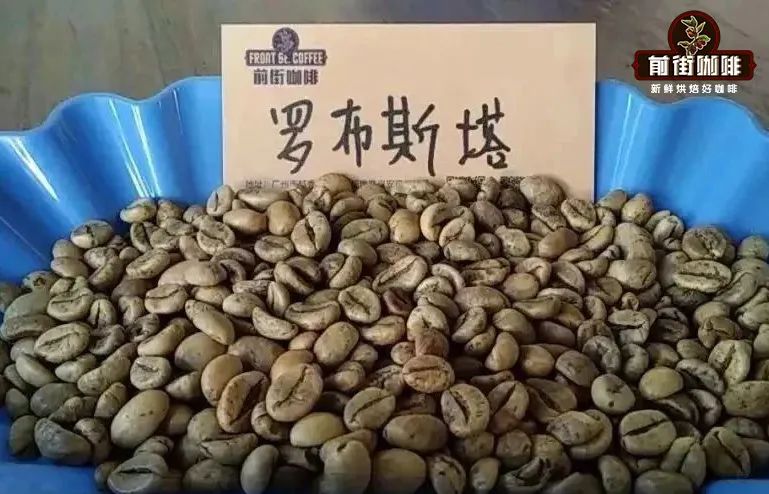
First, let's look at Robusta's appearance characteristics. Its center line takes a "straight line" form, and after roasting the bean expands very plumply, with a round, bulging shape a bit like a little steamed bun. In terms of dry aroma, it typically presents notes of spices, roasted nuts, and baked bread.
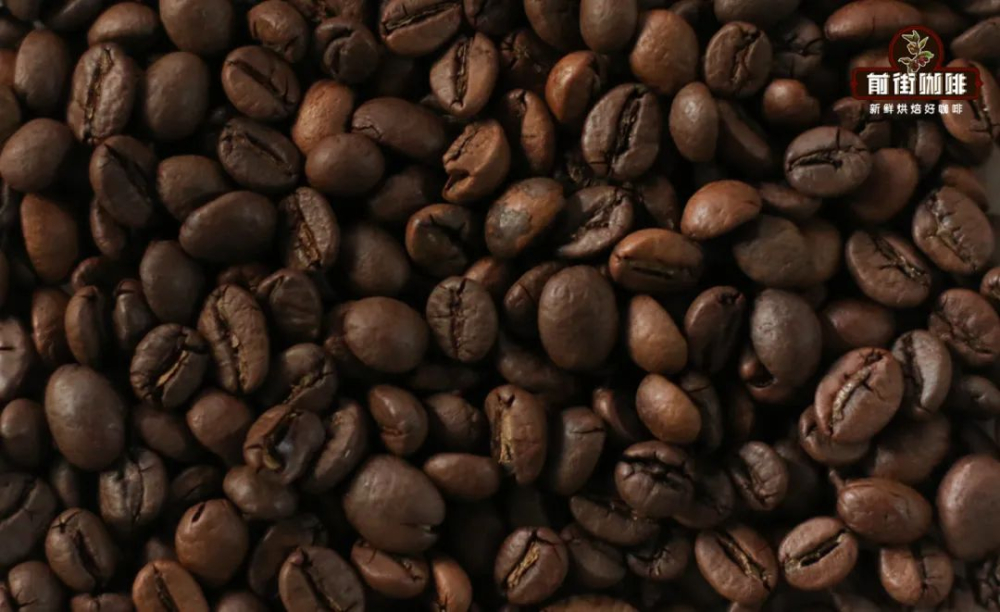
This Robusta from Front Street is dark-roasted, so the pour-over parameters are set according to a dark-roast approach.
Dripper: Kono dripper Dose: 15g Grind: medium-coarse (70% passing a No. 20 sieve) Ratio: 1:15 Water temperature: 87°C
The pour is divided into three stages in total. In the first stage, pour 30ml of water and bloom for 30 seconds—this bean's blooming and degassing performance is quite good.
In the second stage, pour 100ml in a clockwise circular motion, lifting the coffee bed as high as possible. Once the water level drops slightly, begin the third stage, again pouring 95ml in a clockwise circle, bringing the total poured water to 225ml. Once all the coffee in the dripper has finished dripping, the extraction is complete, for a total time of 2 minutes 20 seconds.
First, smell the wet aroma—it isn't especially prominent, though you can catch some hazelnut and caramel notes. On the first sip, the initial impression is that the flavor isn't strong, with no obvious burnt bitterness, but the grain flavor is very heavy, similar to a strong barley tea, with a solid, substantial taste and a fairly full body. At this stage the performance isn't exactly stunning, nor is it unpleasant—it's middling.
By the time you drink it at the mid-to-low temperature stage, a rubbery smell rushes into the nasal cavity first, and right after that the grain flavor becomes even more prominent, with low cleanliness and an earthy, bitter finish.
Robusta's flavor really isn't very appealing, because Robusta contains more of the bitterness sources such as chlorogenic acid and caffeine than Arabica, which dooms Robusta to be inherently more bitter than Arabica. What's more, Robusta is usually grown below 800 meters in altitude, so in cleanliness and flavor complexity it naturally can't match high-altitude Arabica. Of course, higher-quality Robusta does exist—such beans have a relatively cleaner flavor—but the main character still leans toward peanut butter, walnut, hazelnut, wheat, caramel, and the like.
Of course, Robusta has its own strengths too—for instance, higher caffeine content and richer oils, which can deliver a full-bodied mouthfeel. Used on its own, Robusta's flavor may leave something to be desired, so Front Street's Robusta is used for blending with Arabica. This bean is Front Street's commercial espresso blend, combining Arabica from Brazil and Colombia with 10% Robusta; the resulting espresso is both rich in crema and full of flavor.
Finally, if you really want to try 100% Robusta, you can go to some department stores with an international section, where imported coffee beans are stocked. Years ago, Front Street bought a bag of Vietnam Trung Nguyen No. 1 Robusta; when opened, the beans were glossy and shiny, giving off a milky fragrance (I later learned that condensed milk and sugar were added during roasting), and it smelled very pleasant. The espresso it pulled had thick, fine crema, and everything was wonderful—until you down it in one gulp, and that taste hits you like a shock straight to the soul... You simply have to experience it for yourself.
The above content is compiled by CoffeeHunters, a coffee news website.


