







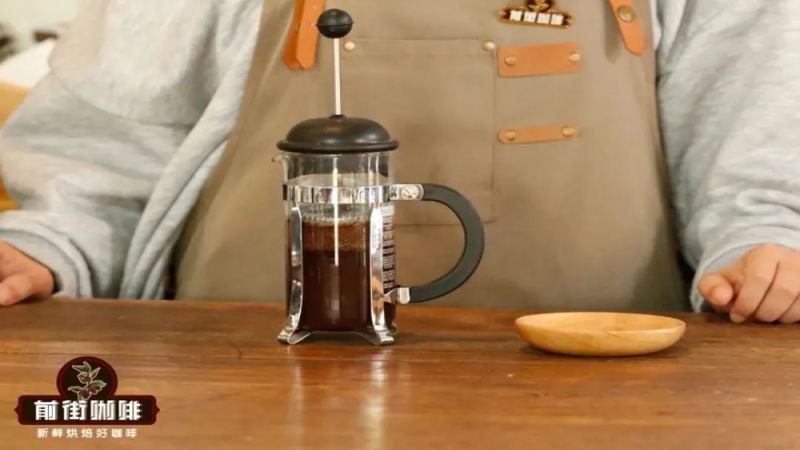
French press coffee: grind, steeping time and coffee boiling
For French press brewing, Front Street Coffee recommends a coarse grind with a pass-through rate of about 70% on the China No. 20 standard sieve, roughly the texture of coarse granulated sugar. The steeping time differs between medium-light and medium-dark roasts, water temperature sits slightly higher than for pour-over, and the conventional coffee-to-water ratio is 1:16.
The French press originated in France and works much like brewing tea: hot water contacts the grounds, steeps, then the plunger filters them out. It needs no pouring technique, which is why it suits daily use, but grind, time, temperature and ratio still decide the cup. Coffee boiling and what sugar is used for coffee are separate matters, since immersion extraction controls the flavor here. Cleaning and maintenance details are also covered.
The French press, with its low operating threshold and no need for precise pouring techniques, has become the preferred brewing device for many coffee enthusiasts in their daily routine. But what seems like a simple immersion extraction actually involves grind size, steeping time, water temperature, and coffee-to-water ratio, all of which directly affect the final flavor in the cup. Front Street Coffee, drawing on practical experience, has outlined the recommended ranges for several key parameters in French press brewing: the sieve pass-through rate for coarse grinding, the steeping time differences between medium-light and medium-dark roasts, a water temperature setting slightly higher than pour-over, and the conventional 1:16 coffee-to-water ratio. It also discusses the compatibility of coffee beans with different roast levels for the French press and reminds readers of easily overlooked details in daily cleaning and maintenance, helping everyone consistently brew a balanced and delicious cup of French press coffee.
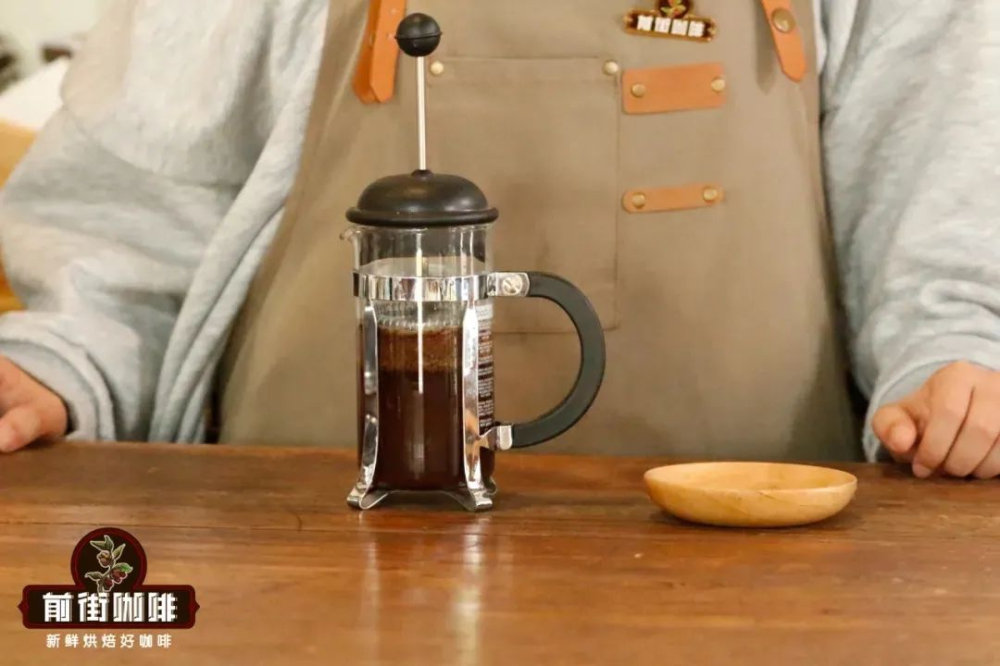
Among various brewing devices, the French press is arguably the least fussy to operate—no need to practice pouring techniques or manage complex variables—so many people who want to keep things simple choose it as their go-to for making coffee.
The French Press originated in France. Structurally, it is simply a cylindrical container with a lid, and a metal filter attached to a rod in the center of the lid that can be pushed up and down to separate the coffee grounds from the liquid, thereby controlling the extraction level. Its working principle is quite similar to brewing tea—hot water contacts the coffee grounds and steeps for a period of time, then the plunger is pressed down to filter out the coffee. Although making coffee with a French press is indeed convenient, Front Street Coffee has also received quite a few complaints from people saying their brews never turn out quite right.
How coarse should the grind be? How long should it steep? How hot should the water be? What ratio should you use?
Looking at the standard instructions for French press, most recommend a coarse grind. Front Street Coffee suggests using a grind size where the China No. 20 standard sieve has a pass-through rate of 70%, roughly equivalent to the texture of coarse granulated sugar.
Using a coarse grind has two advantages: first, there is more margin for error during extraction; second, it reduces the production of very fine particles from grinding. The metal filter mesh of a French press typically has openings between 80 and 300 micrometers—you can see with the naked eye that the holes are fairly large, and fine particles easily pass through the mesh into the coffee liquid, making it cloudy. Of course, if you prefer a more layered and complex flavor, you can also try a finer grind, but you will need to shorten the steeping time accordingly to prevent over-extraction.
Steeping time is a variable that can be flexibly adjusted with a French press. Since there is no manual stirring involved, steeping time becomes one of the key factors determining the extraction yield. All else being equal, the longer you steep, the fuller the body tends to be, but it also becomes more prone to bitterness, astringency, and woody notes from over-extraction. Paired with a coarse grind, Front Street Coffee recommends steeping medium-light roasted beans for about 4 minutes; medium-dark roasted coffee extracts bitterness more easily, so about 3 minutes and 30 seconds should suffice. This time range allows the positive flavor compounds to be fully released while avoiding the bitter and muddy notes that come from prolonged steeping.
The French press completes extraction with a single pour of water, and the water temperature gradually drops over time, so the starting temperature needs to be slightly higher than for pour-over. For medium-light roasted coffee with bright acidity, use 92–94°C; for medium-dark roasted coffee with bitter notes, 89–90°C is recommended. In autumn and winter when room temperature is low, you can preheat the French press with boiling water first to reduce heat loss during extraction.
When it comes to adjusting coffee strength, the coffee-to-water ratio is unavoidable. Front Street Coffee typically recommends a 1:16 ratio for brewing—for example, if you weigh out 15 grams of coffee grounds, you would pour in 240 milliliters of water. Coffee brewed at this ratio has a strength of about 1.1% to 1.2%, which falls within a comfortable range. If you prefer a richer mouthfeel, you can also switch to a 1:15 ratio.
"Is this coffee bean suitable for brewing in a French press?"
Many customers, after selecting their coffee beans, come to ask Front Street Coffee whether those beans can be brewed in a French press. In principle, the French press works with any coffee bean that can be used for pour-over, but considering that it is a static immersion extraction method, the oils give the coffee a more pronounced full body, with a flavor profile that leans rich, bold, and balanced. So it is better suited for showcasing medium or darker roasts—for example, medium-dark roasted beans like Front Street Coffee's Brazil Queen Estate, which features notes of dark chocolate, nuts, and caramel. If you brew a light-roasted, acidic coffee with it, the floral and fruity notes tend to get suppressed, and the rich layers of flavor fail to come through.
Even "lazy" brewers need to clean and maintain their equipment
Over time, the metal filter of a French press absorbs and accumulates oils released by the coffee. The oils left on the filter and plunger rod oxidize and deteriorate, which in turn affects subsequent brews. So every time you finish using the French press, be sure to clean it promptly. When cleaning, disassemble all metal parts, wash both the container and the components with detergent, dry them thoroughly, and let them air-dry completely before storing.
For professional coffee knowledge exchange and more coffee bean information, please follow Coffee Workshop (WeChat public account: cafe_style)
For more specialty coffee beans, please add the private WeChat of Front Street Coffee (FrontStreet Coffee), WeChat ID: qjcoffeex
The above content is compiled by CoffeeHunters, a coffee news website.


