







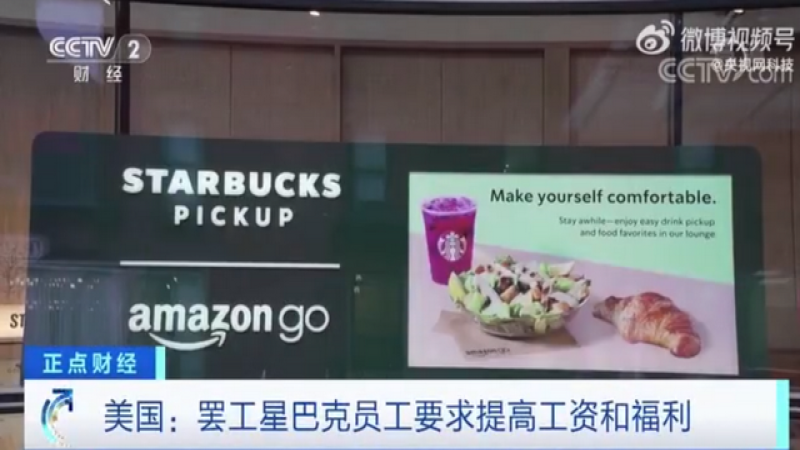
Why did the Starbucks Red Cup Day strike become the largest in union history?
On November 17, baristas at more than 100 Starbucks stores across the United States struck on Red Cup Day, the chain's annual reusable-cup event and a key driver of fourth-quarter sales. Workers demanded higher pay and better store staffing. It was the largest strike since the Starbucks union was founded.
A shift supervisor in Montclair, New Jersey, said the trigger was the company's refusal to bargain in good faith. Starbucks runs over 32,000 stores in 82 markets and sources Arabica coffee, but faces falling net profit and rising employee discontent, a tension that runs through the history of the coffee shop industry.
Over 100 Starbucks stores across the United States saw employees stage a joint strike on the annual Red Cup Day, demanding higher wages and better staffing. This strike, the largest in the history of the union, has pushed Starbucks into the spotlight of labor relations. As a coffee chain giant with over 32,000 stores worldwide, Starbucks claims its pay and benefits lead the industry while facing the dual pressure of a sharp drop in net profit and growing employee discontent. This article will review the ins and outs of the strike, Starbucks' global layout and latest financial data, and analyze the deeper reasons behind the compensation dispute, offering coffee enthusiasts a complete observation of the event.
For professional coffee knowledge exchange and more coffee bean information, please follow the Coffee Workshop (WeChat official account cafe_style)
For more specialty coffee beans, please add the private WeChat of Front Street Coffee (FrontStreet Coffee), WeChat ID: qjcoffeex
Media reports say that on November 17, baristas at more than 100 Starbucks stores in the United States jointly launched a strike. In this way, they hoped to pressure the company into securing higher pay and more reasonable store staffing.
This strike was timed to coincide with Starbucks' annual "Red Cup Day." The event has run for 25 years, with stores giving customers reusable holiday-themed cups. Red Cup Day is usually one of Starbucks' busiest periods of the year and is also seen as an important driver of fourth-quarter sales growth.
It is reported that this is the largest strike since the Starbucks union was founded. A shift supervisor at a Starbucks store in Montclair, New Jersey, said the trigger for the strike was the company's refusal to bargain in good faith with the union, so employees at more than 100 stores decided to take action on Red Cup Day.
Starbucks' influence in the global coffee market cannot be underestimated. Its store network is one of the densest among coffee chains in the world, and it can be seen in almost every relatively economically developed town. For a long time, Starbucks has focused on commercial procurement and roasting high-quality Arabica coffee, covering 82 markets worldwide, with more than 32,000 stores in total, making it a leading specialty coffee chain brand in the world.
Starbucks Coffee Company was founded in 1971 and is headquartered in Seattle, Washington, in the United States. In the United States alone, Starbucks has nearly 9,000 company-operated stores. China is Starbucks' second-largest market globally. Since entering in 1999, the brand has been committed to creating a distinctive coffee experience. At present, Starbucks has more than 6,000 stores in more than 230 cities in mainland China and employs more than 60,000 Starbucks partners (employees).
Starbucks' reported results for the fourth quarter and full year of fiscal 2022, ended October 2, show that during July to September, operating revenue rose 3.3%, with total revenue reaching $8.414 billion and total sales hitting a record high; however, net profit was only $878 million, down sharply by 50.2% year on year. The financial report also showed that Starbucks' total revenue for fiscal year 2022 was $32.25 billion, up 11% year on year; net profit was $3.28 billion, down 21.8% year on year.
Starbucks has always emphasized externally that employee pay and benefits are better than industry standards. Regarding the decline in net profit in the fourth fiscal quarter, Starbucks attributed it to factors including higher employee wages, increased investment in new training, and rising costs in the supply chain, food, and materials. However, some employees do not agree. They believe Starbucks' wages are low and working hours are too long, and what angers them even more is that the company has also promised higher wages and benefits to non-union stores.
According to media reports, IPG chief economist Bai Wenxi told Time Finance: "In the past two years, the U.S. employment situation has been relatively good, and the unemployment rate has repeatedly hit new lows, driving up average pay as well as statutory minimum wages and hourly wages. This is consistent with the description in the financial reports of companies like Starbucks, which rely heavily on part-time employees, regarding rising personnel compensation. But the increase in Starbucks' pay may not keep up with the pace of adjustments in average pay and hourly wages, thus triggering the problem of workers striking because wages are too low. This is actually not contradictory to what Starbucks said in its financial report about rising employee wages."
Image source: Internet
The above content is compiled by CoffeeHunters, a coffee news website.


