








Does reheating change how coffee tastes like alcohol after cooling?
Reheating cold pour-over can soften sharp acidity, but it cannot restore the flavor of a freshly brewed cup. As coffee cools, falling temperature dulls perceived sweetness and makes acidity and bitterness stand out, while aromatics keep volatilizing. Reheated coffee may taste flatter, yet it can beat a fully cooled cup.
A comparative test used Gesha Village Gold Label Gesha and Guatemala Huehuetenango. The Gesha was tasted at 70°C, then at 37°C after about 30 minutes, and at 27°C after 1 hour 20 minutes. Cooled light roasts often show prominent acidity, which some coffee enthusiasts describe as coffee tastes like alcohol.
A cup of pour-over coffee undergoes noticeable flavor changes as it goes from hot to cold—falling temperatures weaken the perception of sweetness, making acidity and bitterness more prominent, while aromatics continue to volatilize. So can reheating cold coffee restore it to a tasty state? Front Street conducted a comparative experiment with two beans: a Gesha Village Gold Label Gesha and a Guatemala Huehuetenango. The results showed that reheating can indeed mitigate over-acidity in coffee, but whether it becomes tastier depends on the quality of the beans themselves. This article fully documents the experiment process and the flavor performance at each temperature point, providing a reference for coffee enthusiasts.

Regarding whether coffee can be reheated after it cools, Front Street has discussed this in previous articles. As coffee goes from hot to cold, two key factors affect the flavor.
First, as the temperature drops, the taste buds' sensitivity to sweetness decreases, making acidity and bitterness relatively easier to detect. Most light-roast coffees inherently have few bitter compounds, so the acidity becomes especially prominent after cooling.
Second, coffee's aromatics continue to volatilize during the cooling process, and cooled coffee lacks the aromatic dimension, so it naturally doesn't taste as good as when hot.
So theoretically, reheating cannot bring coffee back to its original flavor right after brewing. But after heating, will it be a better experience than fully cooled coffee? This is worth verifying in practice.
Front Street's experiment plan was straightforward: brew a pot of coffee by pour-over, let it cool naturally to room temperature, then reheat it, and compare the taste differences at each stage.
The coffee beans chosen were Gesha Village Gold Label Gesha—partly because we wanted to drink it, and partly because this bean has rich honey, citrus, and floral notes when hot, and doesn't develop negative flavors after cooling.
After brewing was completed, Front Street measured the coffee liquid at 70°C and tasted and recorded the flavor. After resting for about 30 minutes, the temperature dropped to 37°C; a sample was taken for tasting and recording, and we continued to wait for further cooling.
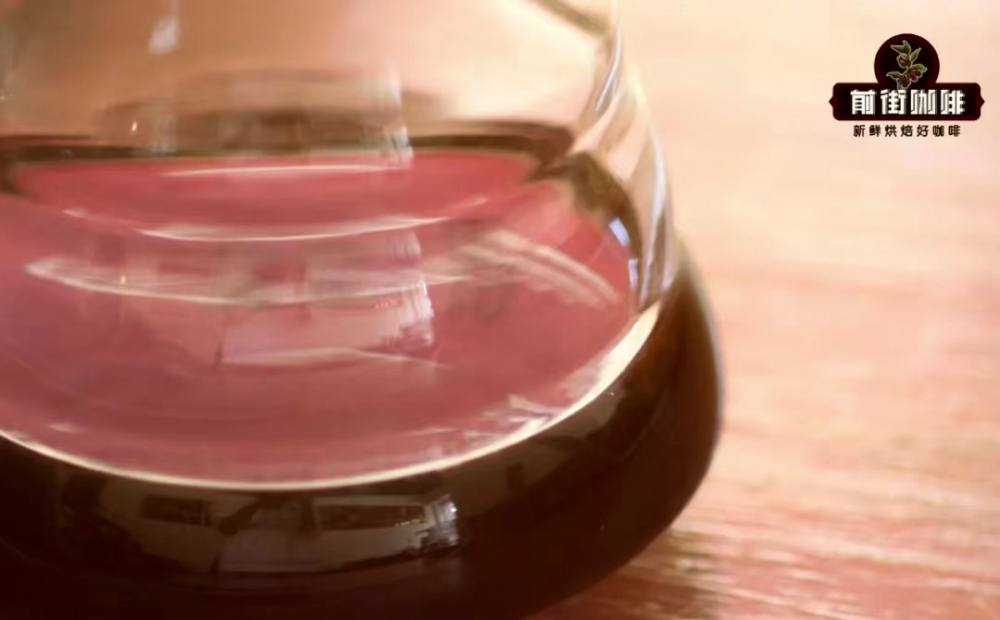
At 1 hour 20 minutes, the temperature dropped to 27°C, close to room temperature. The coffee liquid was observed to remain clear and transparent. At this point, a small cup was taken out as a control, and the rest of the coffee liquid was poured into a siphon pot and heated to 60°C with an alcohol lamp. Because 60°C coffee will drop to about 42°C when poured into a cup, which is just the optimal drinking temperature for hot coffee.
The flavor performance of the coffee at different stages was as follows:
Just after brewing (70°C): relatively rich floral and citrus fruit aromas, lively citrus acidity;
At 37°C: no heat on the palate, warm-cool state, pronounced honey and maple syrup aromas, citrus and berry fruit acidity with a clear honey sweetness;
At 27°C: aromas not obvious, bright citrus acidity with an oolong tea note, transparent acidity, no negative flavors.
After reheating (60°C): surprisingly, it gave off a honey aroma. On the palate, the flavor was not as rich as just after brewing, but the coffee was less acidic, returning to a berry-like sweet-sour taste, with no negative flavors appearing.
From this result, reheating coffee after it cools can mitigate the problem of it being too acidic. However, the experiment had one shortcoming: the beans Front Street used were of high quality, and even when cold they maintained a decent flavor. So Front Street then tested with Guatemala Huehuetenango coffee beans. This bean has nice flavors like lemon, berry, and nut when hot, but when fully cooled it develops less friendly tastes such as lemon peel astringency and heavy smoky notes.
Front Street tested with the same method to see whether reheating could improve the flavor when unpleasant tastes appeared. After waiting 1 hour 30 minutes, the coffee liquid was fully cooled; the liquid was observed to be relatively cloudy, and tasting confirmed lemon peel astringency as well as almond bitterness and smokiness.
Front Street then heated the coffee to 60°C and tasted it: the astringency and smokiness were somewhat improved, but the almond bitterness remained, and was even more pronounced when hot. This bitterness comes from chlorogenic acid lactones. There are two situations in which coffee liquid becomes cloudy: first, falling temperature makes substances that were originally dissolved in the liquid become insoluble, which can be resolved by raising the temperature; second, excessive release of chlorogenic acid—chlorogenic acid is easily soluble in water, but its decomposition product, chlorogenic acid lactone, is poorly soluble in water, and in this case raising the temperature cannot solve it.
Overall, if the only goal is to solve the problem of coffee being too acidic after it cools, reheating is one approach; but if you want to make it tastier, it still depends on the beans themselves.
The above content is compiled by CoffeeHunters, a coffee news website.


