







Why Does Lightly Roasted Coffee Carry Citrus Notes?
Lightly roasted coffee often carries citrus notes because the compounds behind them are easy to recognise and the fruit itself is familiar. Most lightly roasted beans processed by conventional methods list orange, mandarin, lemon or grapefruit among their flavor tags. d-limonene in citrus peel produces a strong, penetrating aroma, while alcohols, aldehydes, ketones and esters in the juice supply the flavor.
Decanol, n-hexanol, vinyl formate and isoamyl alcohol appear in higher amounts in some lightly roasted beans, giving the chemical basis for those notes in the cup. In coffee aroma description, citrus is not the only sour fruit: pears, apples, peaches, cherries, plums, strawberries and raspberries can also register, though their recognition thresholds differ from citrus.
When browsing e-commerce platforms, it's not hard to notice that most lightly roasted beans processed by conventional methods almost always include the word "orange" among their flavor tags. Even if the first two flavor descriptors mention floral or berry notes, the last one often adds a citrus note. This phenomenon is no coincidence—the public's familiarity with citrus, the penetrating power of citrus peel aroma, and the combination of specific alcohols, aldehydes, and esters in lightly roasted beans all contribute to the widespread presence of this flavor. This article will explain, from the perspectives of aroma chemistry and sensory recognition, why lightly roasted coffee always evokes citrus, and also discuss how other fruit flavors differ in the cup.
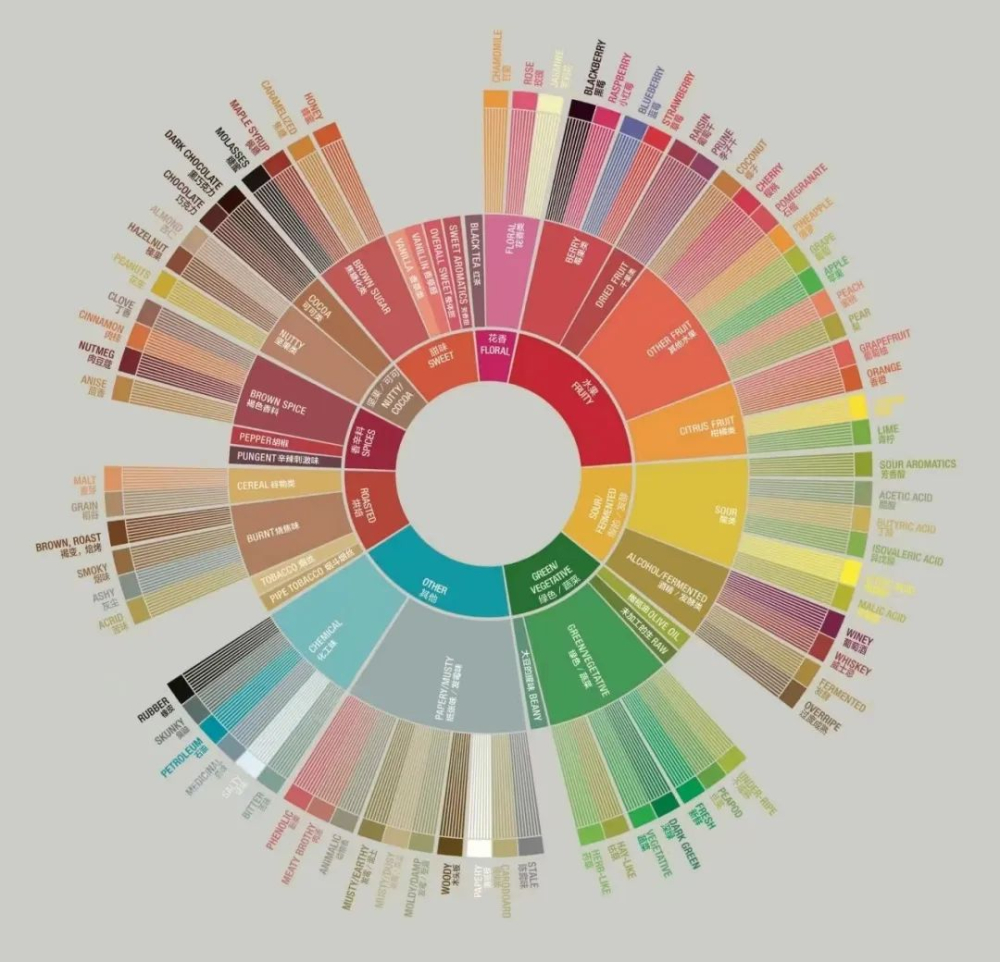
This phenomenon is actually well-documented. Open any shopping platform and look at lightly roasted coffee beans processed by conventional methods—nine out of ten flavor descriptions will include words like "mandarin, orange, tangerine, sweet orange, lemon, grapefruit." Even if the first two flavor notes point in other directions, the last one often adds a citrus term.
Why citrus in particular? The primary reason is that citrus flavors have an extremely low recognition threshold and are highly familiar to the public. Citrus fruits are practically national fruits—found everywhere at street fruit stands, affordable, and an important source of vitamin C. Having tasted them since childhood, it's hard not to remember the taste of citrus.
Secondly, the aroma of citrus fruits is highly "aggressive." Even without peeling, leaning close to the peel surface reveals a clear orange scent, thanks to the abundant d-limonene in the peel, which presents a light and refreshing citrus note. Once the peel is opened, a small amount of juice splashes into the air, and the alcohols, aldehydes, ketones, and esters contained in this juice are exactly the source of the aroma of the flesh and juice.
Some lightly roasted coffee beans happen to contain higher amounts of decanol, n-hexanol, vinyl formate, isoamyl alcohol, and other compounds—these are the chemical basis that allows us to capture citrus flavors in the cup.
Of course, citrus is far from the only fruit representing sourness. Pears, apples, peaches, apricots, cherries, plums, Japanese apricots, crabapples, loquats, hawthorns, strawberries, raspberries, and other Rosaceae plants also find corresponding flavor expressions in coffee. However, these fruit flavors are far less prominent in coffee than citrus, unless special processing techniques are used to deliberately intensify a specific, concrete flavor.

In actual tasting, judging coffee flavor often requires combining taste performance (acidity and sweetness) with the coffee's aroma (orthonasal and retronasal olfaction). In terms of acidity, citrus happens to cover a broad range from lemon to sugar mandarin, and its aroma is also more easily perceived than other fruits. Additionally, the astringency found in some lightly roasted coffees is quite similar to the slightly astringent mouthfeel of citrus.
Therefore, when we drink a coffee with excellent acidity, the brain easily associates it with "citrus" at once.
The above content is compiled by CoffeeHunters, a coffee news website.


