








Is that dark spot really a defective coffee bean?
Peaberries, bursting beans, uneven color, and shriveled beans are normal variations, not defects, in most roasted single-origin coffee. Confusion comes from two sources: drinkers rarely see true defect beans, which are removed at the green stage, and they expect every bean to look identical. Grading already limits defect counts before roasting, and hand sorting continues afterward.
Green bean standards keep defects rare. Ethiopia G1 allows no more than 3 defective beans in a 350-gram sample, roughly 3 out of 2,300 beans. Blue Mountain coffee, graded by screen size, permits a defect rate under 2%. Roasted appearance therefore reflects bean structure and processing far more often than it reflects a fault.
Many pour-over coffee enthusiasts, after buying single-origin beans, often have doubts about the appearance of the beans, and even mistake normal beans for defective beans. There are two main reasons for this misunderstanding: first, consumers who only come into contact with roasted beans rarely see real defective beans; second, they treat coffee beans as industrial assembly-line products, assuming they should have a fixed standard appearance. In reality, most defective beans are already controlled at the green bean stage, and after roasting there is still manual sorting. This article will systematically sort out the definition of defective beans, the defect rate requirements in green bean grading, and focus on explaining several commonly misjudged situations such as peaberries, bursting beans, uneven color, and shriveled wrinkled beans, to help readers view the appearance of coffee beans more rationally.
There are two main reasons for this misunderstanding. First, most consumers usually only come into contact with roasted beans, and rarely have the chance to see what real defective beans look like; second, people are used to treating coffee beans as standardized products from industrial assembly lines, mistakenly assuming that every bean should look exactly the same.
Nowadays, online information is highly developed, and a quick search can find material about coffee defects, such as insect-damaged beans, moldy beans, shell beans, quakers (i.e., white-eye beans), and so on. Although the internet usually provides example images, for people who have not seen the real thing with their own eyes, these concepts remain very abstract, and in the end what they remember is often just the names and simple definitions of defective beans.
In fact, the vast majority of defective beans are discovered at the green bean stage. Many coffee-producing countries have clear regulations on the number of defects in green beans when setting coffee grading standards. Take Ethiopia's G1 grade as an example: when sampling 350 grams of green beans, no more than 3 defective beans are allowed, which converts to no more than 3 defective beans among about 2,300 coffee beans. Blue Mountain coffee, graded by screen size, likewise requires a defect rate of no more than 2%.
It can thus be seen that at the green bean stage, the proportion of defective beans is itself very low. After entering the roasting stage, some new defects may also appear, such as beans with crater-like surfaces after scorching, or quakers that are hard to notice when green—after roasting, their color is noticeably lighter than normal beans. There are also "false shell beans," which appear intact in the green state but crack open after roasting.
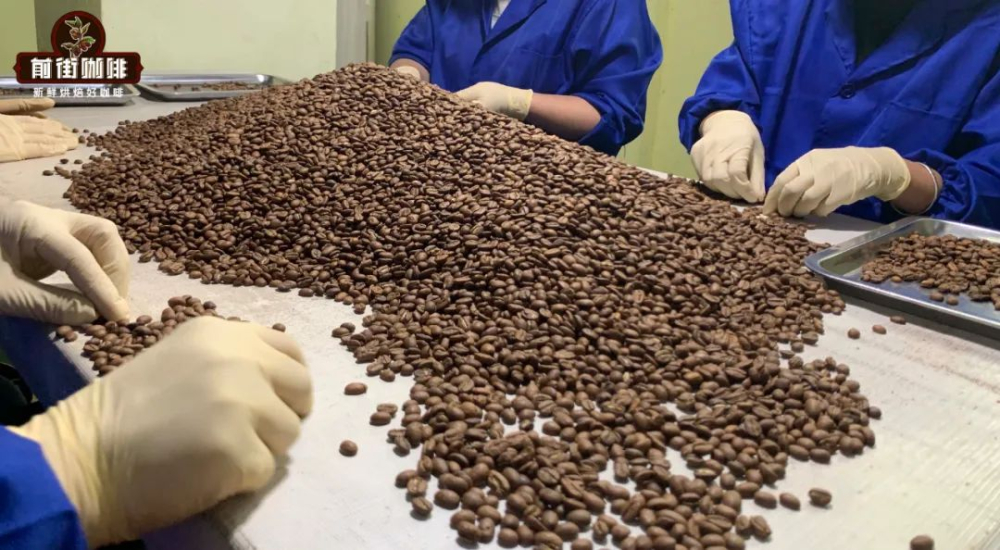
In response to these situations, Front Street performs manual sorting after each batch of coffee beans is roasted, removing the defective beans mentioned above. Therefore, the coffee beans that reach end consumers are basically free of the major defects recognized by the coffee industry. It should be specially noted that some minor defects may still remain, such as broken beans. This is because after roasting and packaging, the beans still need to be transported before reaching consumers, and collisions during transit may cause a small number of broken beans to appear, but this does not have a noticeable effect on coffee flavor.
Next, Front Street will talk with everyone about those normal situations that are often mistaken for defective beans.
- Peaberries
Friends who have bought a whole bag of peaberries (PB) may find this question unbelievable, but indeed quite a few people pick peaberries out of a bag of flat beans and then ask, "Are these defective beans?"
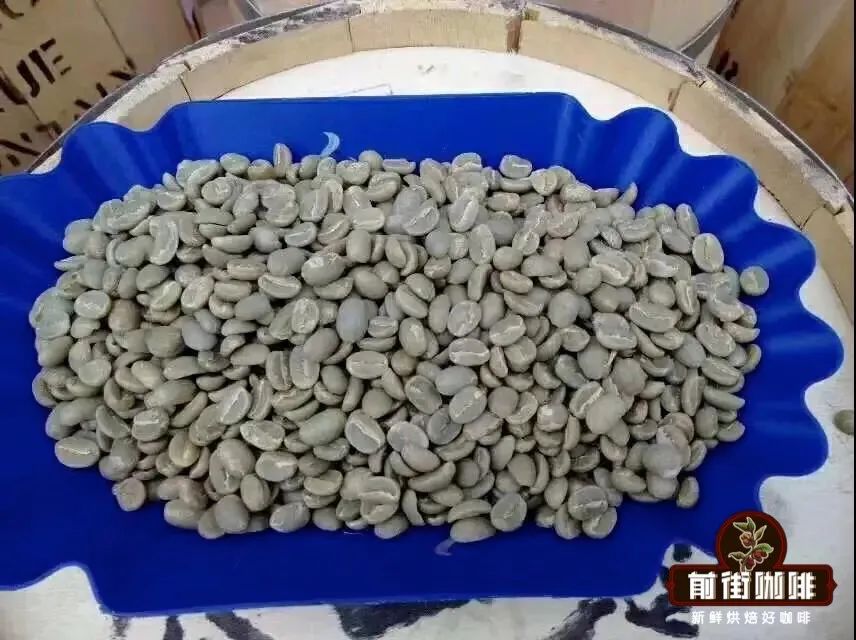
A normal coffee fruit usually contains two coffee beans (seeds). Flat beans have one flat side precisely because they originally shared one fruit with another bean. Peaberries are more special: because of environmental or genetic factors, one ovule in the fruit fails to be pollinated, so the other ovule gains double the space to develop, and ultimately only one coffee bean grows in the fruit.
Therefore, peaberries are not defective beans. Some producing countries (such as Kenya and Jamaica) specifically sort out peaberries and sell them separately, while most producing countries do not do this, so finding a few peaberries in a bag of coffee beans is very normal.
- Coffee beans burst open
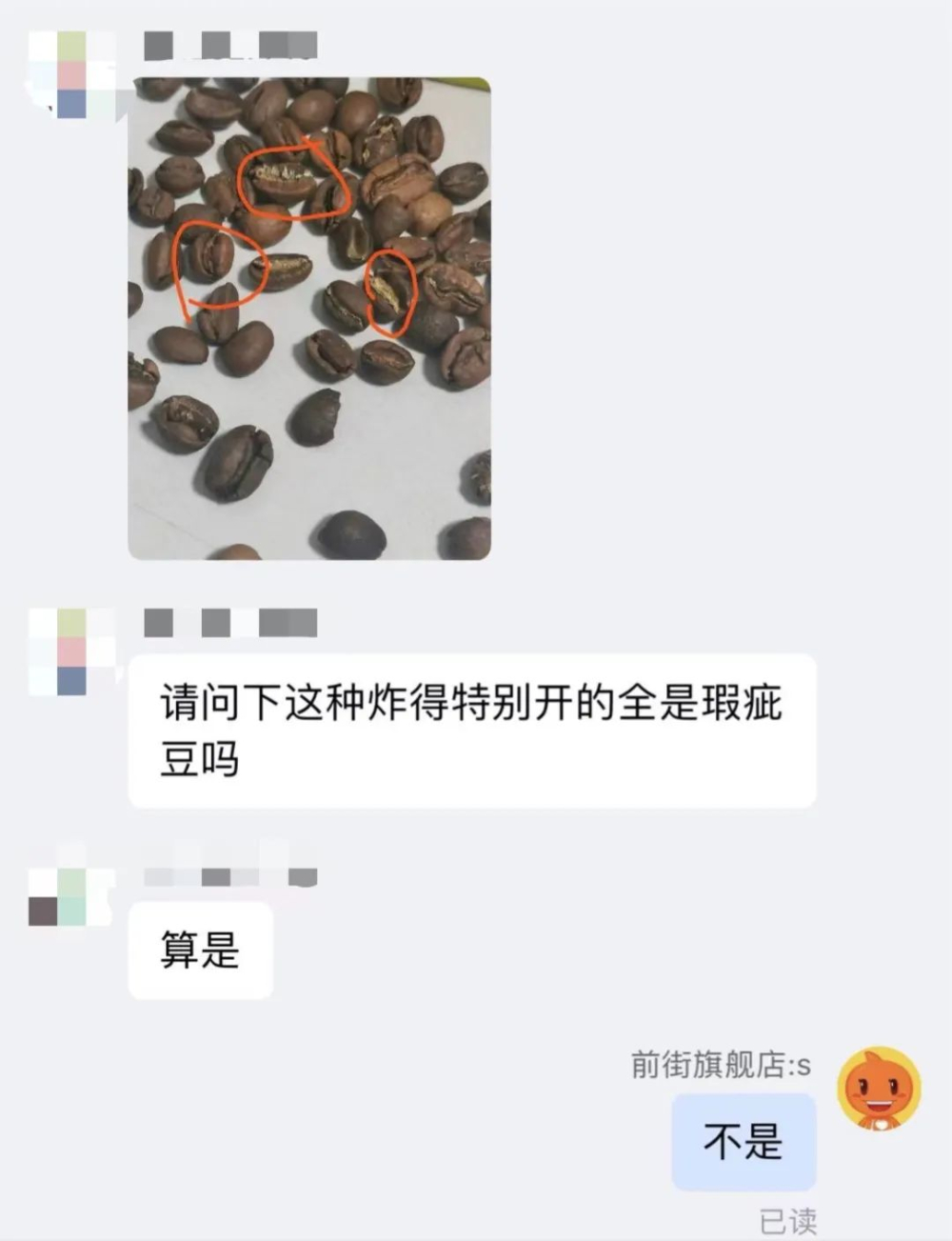
This issue was also the question of the friend mentioned at the beginning. Some coffee beans are cracked and look very incomplete, making them easy to mistake for defective beans. In fact, these are also normal beans. The reason is that coffee beans have relatively high density and absorb and store a lot of heat during roasting. When first crack is reached, the burst is too violent and blows the bean itself open. Although the appearance is not so good-looking, it has no negative effect on coffee flavor; on the contrary, their inclusion may make the coffee taste even better.
- Uneven color on the surface of coffee beans
Some friends, seeing uneven color in coffee beans, pick out the lighter ones and ask, "Why are there so many quakers?"
First, Front Street will explain what quakers are. They are actually unripe coffee fruits. After processing, they are hard to distinguish, and only after roasting do they show an obvious color difference.
Apart from the Brazilian Highlands, which uses large-scale mechanized harvesting, most producing areas still rely on manual harvesting or small machinery as an aid. Nowadays many high-quality coffee beans emphasize full red cherry harvesting, which means that picking out a large number of quakers from roasted beans is a low-probability event.
So what exactly are these lighter-colored beans? Front Street has found through summary that most friends asking this kind of question have bought coffee beans from Costa Rica or Colombia. Beans from these producing countries often use heavy fermentation methods such as honey processing and anaerobic processing, causing some coffee beans to have more sugar attached to their surface, while others are cleaner. After the caramelization reaction during roasting, the parts with more sugar become darker, while the clean parts remain lighter, so two clearly different colors appear in the same batch of beans.
- Shriveled bean body with many black spots and streaks
The last situation is mistaken for defective beans by the most friends: the beans are dry and shriveled, with speckled patterns all over the surface, looking completely different from classic coffee bean pictures.
Although these beans are unremarkable in appearance, their flavor is actually quite good, and they are certainly not defective beans. This phenomenon usually occurs in high-altitude, light-roasted coffee beans. High-altitude beans are dense, and during roasting, after moisture evaporates, the bean body contracts and wrinkles; and because of the light roast, the coffee beans are taken out before they have fully expanded, thus leaving behind the wrinkled streaks from contraction and looking shriveled.
In fact, if you want the surface to smooth out, it is very simple: just continue roasting so that the coffee beans absorb enough heat and expand, and the surface will become smooth, but the taste will definitely no longer be right.
The above content is compiled by CoffeeHunters, a coffee news website.


