







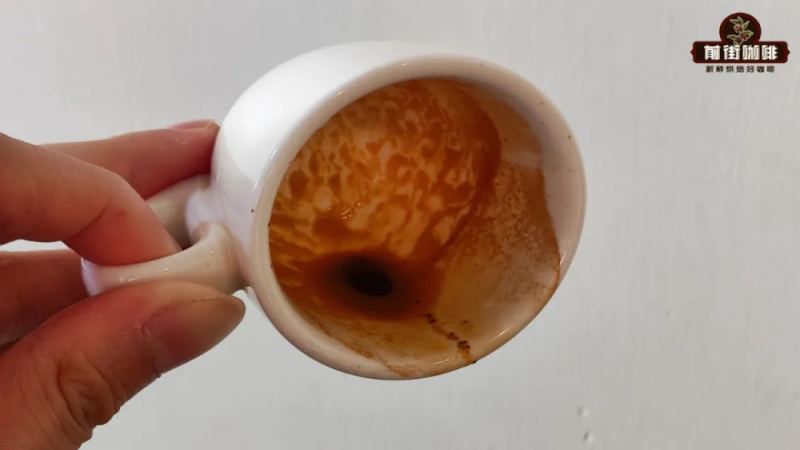
Are black coffee particles at the bottom normal?
Black coffee particles settling at the bottom of an espresso cup are normal in most cases. They are extremely fine grounds, called fines, that pass through the holes of the portafilter basket during pressurized extraction. After the shot stands for a few minutes, those particles sink and collect as a dark layer beneath the crema, so the sediment alone does not indicate a bad extraction.
Filter paper blocks solids and oils, which is why paper-filtered coffee tastes cleaner; an espresso basket uses a fine mesh instead, and some fines always slip through. The black streaks in tiger-striped crema are the same grounds. A sudden increase in sediment often points to grinding too fine or deformed basket holes, which is a signal to check grind settings.
Many coffee enthusiasts, when enjoying espresso, notice black particles settling at the bottom of the cup and worry whether this indicates a problem with extraction. In fact, this phenomenon is normal in most cases. These sediments are extremely fine coffee grounds that pass through the holes of the portafilter basket, and they usually gradually settle to the bottom after the coffee has been left to stand for a few minutes. This article will explain in detail the principle behind the appearance of fines, their relationship with tiger-striped crema, and several factors that may cause a sudden increase in sediment, including grinding too fine and deformation of the portafilter basket holes. At the same time, Front Street Coffee will also use examples to help you determine when you need to adjust grind parameters, so you can face that layer of fines at the bottom of the cup more calmly.
This phenomenon, which looks rather abnormal, is actually normal! These black particles deposited at the bottom of the espresso are actually coffee grounds that have fallen through the holes of the portafilter basket. Generally speaking, a small amount of coffee particles in one shot is normal.
Why does this phenomenon occur? We know that filter paper is currently the best filtration material, capable of blocking solids and oils, so coffee filtered with filter paper has the highest cleanliness. The portafilter basket used for extracting espresso, however, uses a mesh made of tiny holes as the filtration tool. If you hold the basket up to the light, you can see light shining through the holes into your eyes. During pressurized extraction, it is inevitable that some fines will pass through these tiny holes and fall into the coffee liquid.
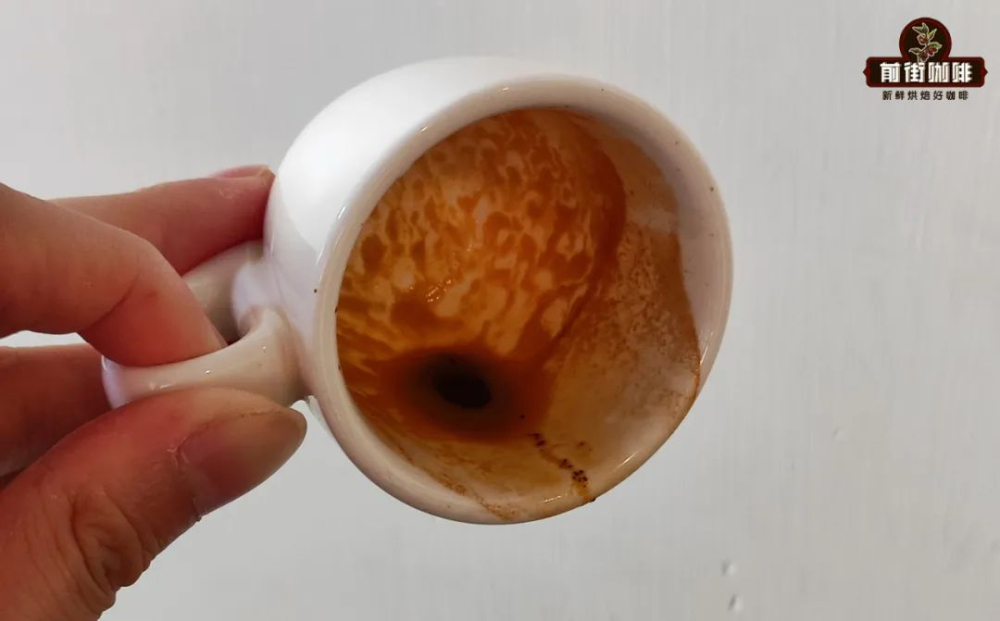
Fines hidden in the crema I believe some friends have heard of "tiger-striped crema," which is golden crema with black streaks floating on top, looking like tiger skin. Those black streaks are actually extremely fine grounds that have fallen into the cup through the portafilter basket holes. If left to stand for a period of time, after the crema on the surface dissipates, the fines will settle to the bottom of the cup.
The appearance of "tiger-striped crema" does not mean the shot was pulled poorly, nor does it mean it is especially good. It is just that its form is noticeably different from the crema performance of ordinary extraction, but in terms of judgment, "tiger-striped crema" is also a normal output. Why have I only recently suddenly noticed sediment fines in espresso? Continuing to answer that friend's question, judging by this friend's wording, this situation had not occurred before and appeared suddenly recently, which felt unusual. So Front Street Coffee has summarized several possible causes. - It was always there, you just had not noticed before The fines that fall into the coffee cup do not sink to the bottom immediately, but take about 4-5 minutes to settle at the bottom of the cup. If you drink espresso directly in one gulp, most of the fines are swallowed along with the coffee liquid, so the cup looks very clean. Of course, this small portion of fines will not cause a change in taste, nor will it harm your health. But when drinking americano, because the cup volume is relatively large, even if you drink it as fast as possible it takes several minutes, and each sip is relatively small, so the fines are more likely to settle at the bottom of the cup. When you are almost finished, the fines at the bottom of the cup will become visible.
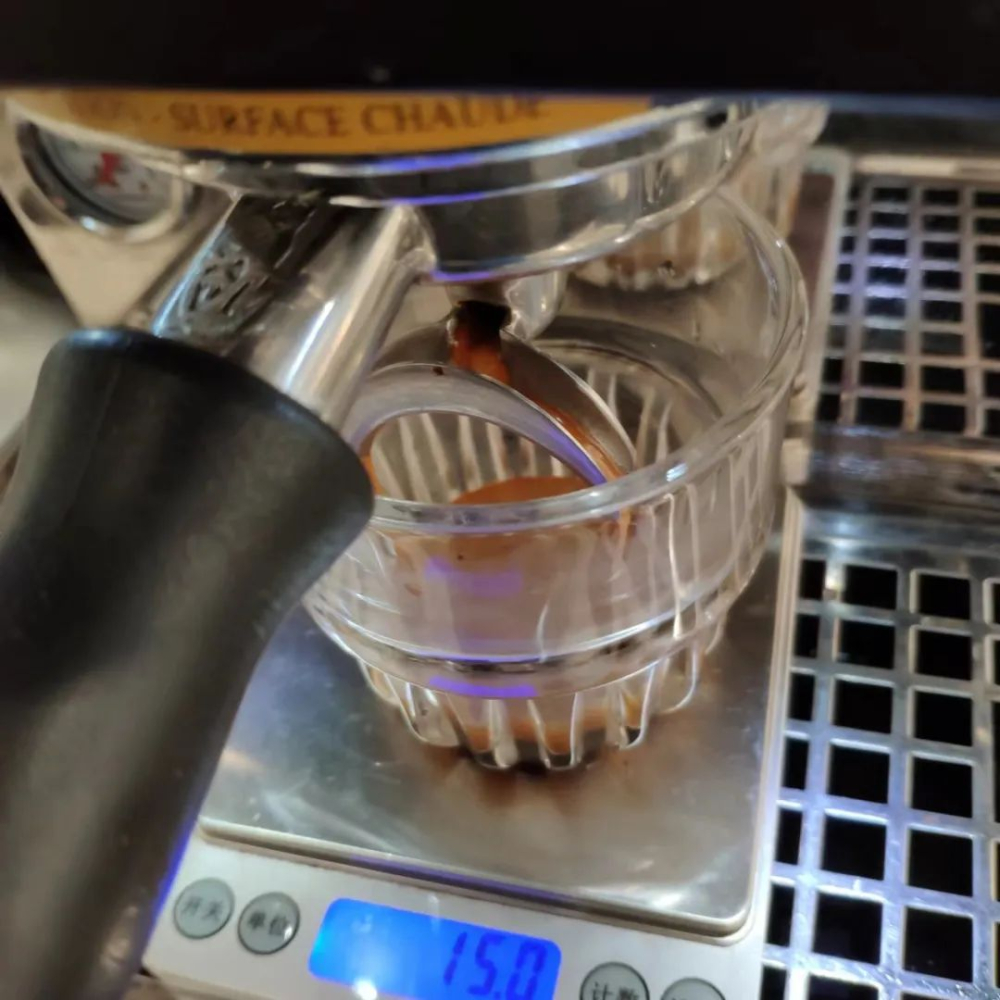
- The coffee grounds are ground too fine If you find that the sediment in your coffee is unusually abundant, it may be that your grind parameter is incorrect (too fine). When we adjust the grind setting for espresso, we mostly rely on the formula of ratio and time. That is to say, if the extraction ratio is correct and the time is correct, then the grind setting is suitable. Front Street Coffee gives an example model. Suppose we all use a 1:2 coffee-to-liquid ratio and 30 seconds as the standard for judging the grind setting. Then when the grind setting is 2.0, 20g of coffee extracts 20g of liquid in 30 seconds; and when the grind setting is 1.7, 18g of coffee extracts 36g of liquid in 30 seconds.
In other words, if you use a smaller dose, to ensure the time you need to grind the coffee finer. And the finer the coffee is ground, the greater the chance that coffee grounds will pass through the holes and settle at the bottom of the cup. - Deformation of the portafilter basket holes Long-term exposure of the portafilter basket to high temperature and high pressure can cause the holes to become larger. This phenomenon is not common; only after 1-2 years of high-intensity use is it possible for this kind of hole deformation to appear. Testing is also simple: hold the basket toward the light and observe whether any of the tiny holes have become larger.
The above content is compiled by CoffeeHunters, a coffee news website.


