







What Does Hand Brewed Coffee Flow Control Really Require?
Pour-over flow control comes down to muscle memory, not just dialing in numbers. Choosing a kettle with a suitable spout diameter and water capacity makes practice easier, and posture matters: keep a steady distance from the dripper and a consistent arm height. Most brewers can reach basic control after about two and a half weeks of daily practice.
Parameters depend on understanding and repeated trial and error, but hand brew coffee flow control is a technical skill built through repetition. Training runs from a thin stream to a thick stream, then from straight steady lines to concentric circles. The final coffee bed reveals pouring habits rather than directly proving whether the cup tastes good, which is why a stable stream is the goal.
Whether you can brew a good cup of coffee often hinges on one key step: pouring and flow control. Parameters can be adjusted through understanding and trial and error, but flow control is more of a technical skill that relies on muscle memory—it requires choosing the right equipment, correcting your posture, and practicing repeatedly. This article begins with the spout diameter and water capacity of the pouring kettle, explaining how different choices affect the difficulty of practice, then goes on to explain posture points such as the distance between your body and the dripper and the height of your arm while pouring, and finally provides a complete training sequence from thin stream to thick stream, from steady straight lines to concentric circles, helping coffee enthusiasts build stable flow control in a short time. The article also retains practical observations and suggestions from Front Street stores for readers' reference.
The final state of the coffee bed is actually hidden in this one sentence. Looking at the coffee bed cannot directly determine whether a cup of coffee tastes good, but it is enough to reveal your pouring habits and your level of flow control.
The Significance of Flow Control in Pour-Over
If a cup of coffee is brewed poorly, it usually comes down to two causes: one is a problem with the parameter settings, and the other is inadequate flow control. For beginners, it is also common for both to appear at the same time. However, the paths to overcoming these two are not the same. Parameters rely more on the brain's understanding and repeated trial and error; as long as you grasp the principles and keep adjusting, you will eventually find a suitable combination.
Flow control, on the other hand, leans more toward muscle memory and is a technical skill. In other words, once you have accumulated enough practice time, flow control will naturally become smooth. Generally speaking, with two and a half weeks of consistent practice, basic flow control can be mastered.
Flow control is built on an understanding of brewing parameters, so it is relatively less difficult, but that does not mean you can learn it after watching once. For example, at Front Street stores, many customers want to try it themselves after watching a barista brew. As a result, when most people actually operate it, their hands shake like a cafeteria lady serving food, the stream fluctuates between large and small, and even interrupted flow is common.
So for beginners, quickly mastering this skill is indeed somewhat challenging. However, with the right method and a certain amount of practice, achieving relatively stable flow control within three days is feasible.
So what techniques are there for practicing flow control?
- Choosing a Pour-Over Kettle
When practicing flow control, you only need to focus on two things with a pour-over kettle—the spout and the weight.
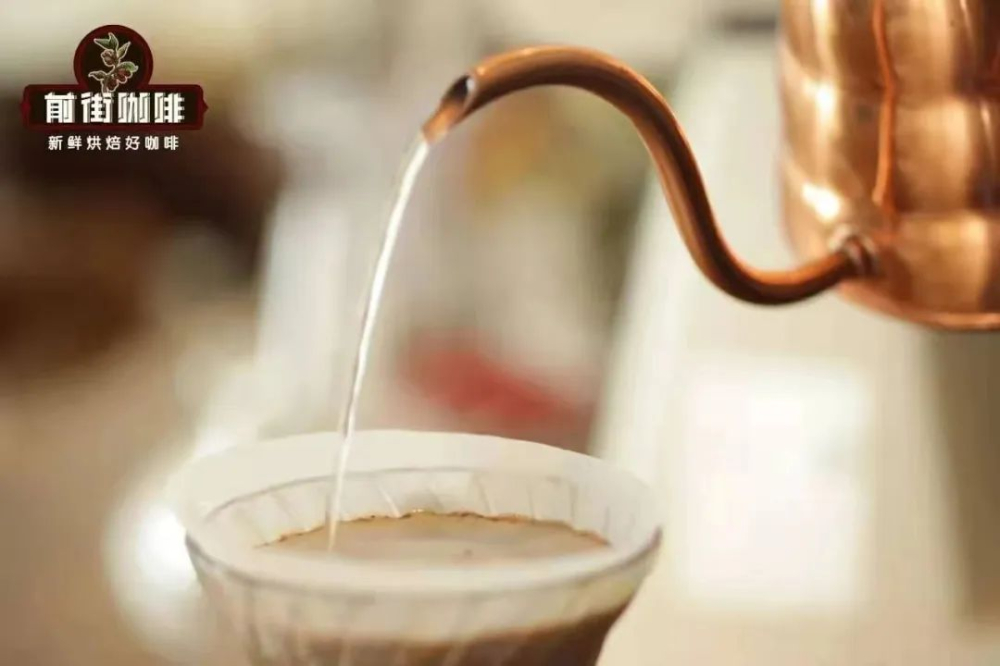
For the spout, it is recommended to choose a gooseneck design, which is more suitable for pour-over coffee. The size of the spout diameter directly determines the difficulty of flow control and how deep your flow-control skills can ultimately become. A narrow-diameter kettle makes flow control easy and shortens the learning period, but it also prevents you from developing much flow-control skill, because there is hardly any need to control it; a narrow-spout kettle also struggles to produce a large stream, so it is not very versatile.
A wide-diameter kettle is the opposite: flow control is difficult and the learning period is long, but once you conquer this kettle, you can basically handle other kettles with ease.
Weight refers to the total weight of the kettle after it is filled with water. When brewing coffee, we need to hold the kettle for at least a minute and a half. So being able to lift it does not mean the kettle is suitable for you; at minimum, you must be able to hold it steadily for a minute and a half without shaking. People with less strength can choose a small kettle of 0.6 to 0.8 liters, while those with more strength can choose a large kettle of 1.0 to 1.2 liters. Of course, adapting to the weight is itself part of muscle memory. That is, on the first day you may shake while holding this weight, but if you hold it continuously for a week and let your hand get used to it, it will naturally become steady.
- Proper Posture
A reasonable pouring posture can also improve the stability of flow control. The reason is simple: at the beginning, flow control is difficult mainly because the hand has not yet adapted to the weight of the kettle and the load is too great—what we often call "the eyes have learned it, but the hands have not."
Maintaining a comfortable pouring posture helps reduce the burden on your hands and improve endurance. For example, if the table is too high, you have to raise your palm above shoulder height to pour, and the load on your entire arm becomes very heavy; when the arm can no longer hold up, the hand will begin to shake. A more comfortable pouring height should be slightly lower than your chest.
Some people like to stand close to the edge of the table while pouring, with the dripper placed relatively far forward. This makes it hard to extend the arm comfortably, easily tires the shoulder, and also affects circular pouring. A better approach is to keep your body about 20 centimeters away from the dripper, leaving enough room for your arm to move.
- Controlling the Stream and Pouring Evenly in Circles
If the kettle tends to tilt forward when held with one hand, it means your strength is insufficient. Front Street suggests that you first hold the kettle with both hands, that is, hold the handle with your right hand and steady the lid with your left hand, which can reduce the burden on your right hand.
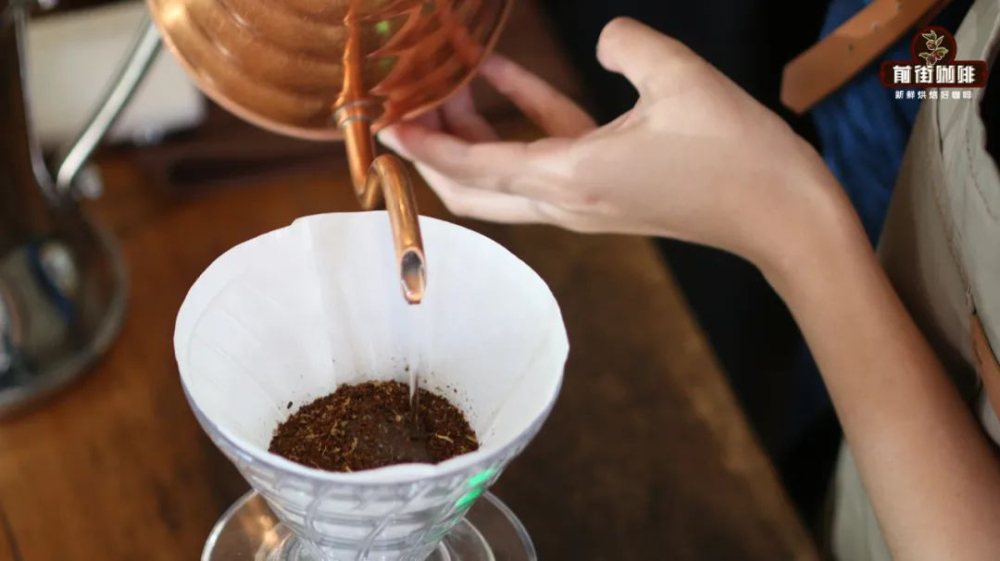
When practicing the stream, you can first pour out all the water in the kettle at a small, steady flow, keeping the stream at a right angle to the horizontal line, and practice repeatedly. Once you get the hang of it, switch to a medium steady flow and pour out all the water, again practicing repeatedly. Finally, practice with a large flow, repeatedly. The purpose of this is to train your ability to control the size of the stream.
Next is circular training. Front Street suggests using your arm to control the movement path of the pour-over kettle, keeping the stream vertical as you trace concentric circles, from a small circle to a large circle, and then back to a small circle. At first you can move slowly, and once the stream is stable, gradually speed up the circular motion.
Once you are proficient, you can further practice circular pouring with a small stream, circular pouring with a medium stream, and circular pouring with a large stream, until flow control becomes second nature.
The above content is compiled by CoffeeHunters, a coffee news website.


