







How did carbonic maceration shape his australian coffee run?
Sasa Sestic, the 2015 World Barista Champion, returned to competition after seven years at the 2022 Australian Coffee Brewing Championship. He brewed an experimental Geisha from Iris Estate, a farm he co-founded with Jamison Savage, using extended carbonic maceration and his Paragon brewing method to highlight candy-like sweetness.
Since developing carbonic maceration with a Colombia farm owner, Sestic has worked behind the scenes on the coffee beans process while anaerobic lots spread through competitions. By the 2021 WBC stage, more than 80 percent of competitors used experimentally processed beans, mostly anaerobic. His staged pouring and ice-stone aroma work show a different path within australian coffee competition.
In 2015, WBC Barista Champion Sasa Sestic returned to the competition stage after seven years. This time, he brought an experimental batch of Geisha from Iris Estate, a farm he co-founded with Jamison Savage, the owner of Deborah Estate in Panama, to compete in the 2022 Australian Coffee Brewing Championship. This coffee professional, who has delved deeply into carbonic maceration for many years, chose to take a step back in an era when anaerobic fermentation was sweeping the competition scene. He studied regional terroir and volatile compounds, and used his original Paragon brewing method and ice-stone aroma-locking technique to showcase the candy-like sweetness of an extended-maceration Green Tip Geisha. This article will provide a complete analysis of his brewing approach, staged pouring parameters, and flavor performance, with a recommendation from Front Street Coffee at the end.
For professional coffee knowledge exchange and more coffee bean information, please follow Coffee Workshop (WeChat public account: cafe_style)
For more specialty coffee beans, please add the private WeChat of Front Street Coffee: qjcoffeex
Sasa Sestic, the 2015 World Barista Championship (WBC) espresso champion, actually entered a pour-over competition?!
Not long ago, Sasa, who had not appeared publicly for quite some time, competed in the 2022 Australian Coffee Brewing Championship with an experimental batch of Geisha beans processed at Iris Estate, a farm he had established over the past few years together with Jamison Savage, the owner of Deborah Estate in Panama.
Seven years ago, Sasa won the WBC championship with Rume Sudan coffee beans processed using the carbonic maceration method (hereafter referred to as CM), which he developed together with the owner of La Nubes coffee farm in Colombia. In the seven years since, he has been working behind the scenes, focusing on CM.
In a past interview, Sasa was asked why he did not continue competing. His answer was: "To return to the competition stage, I need a real and honest reason to come back."
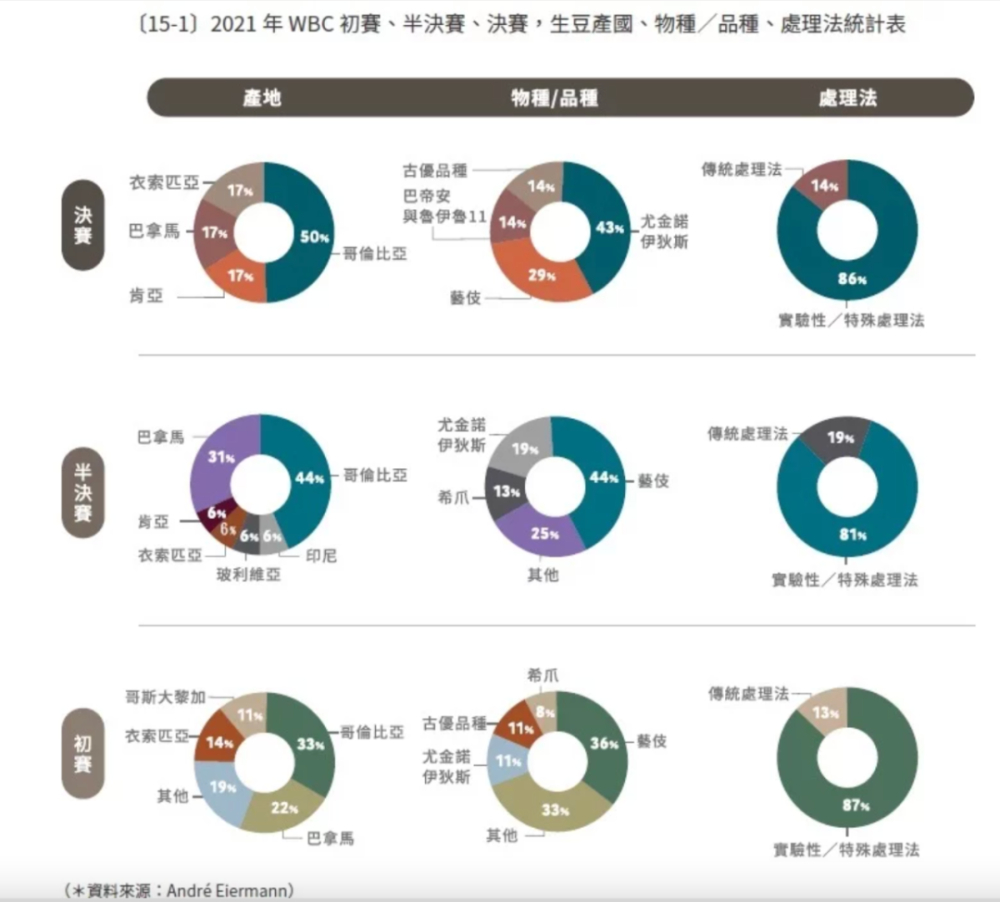
Since the emergence of the CM processing method, more and more competitors have chosen anaerobically fermented coffee beans to compete in world-class coffee competitions. By the 2021 WBC stage, competitors using experimentally specially processed coffee beans (among which anaerobic processing was the most common) reached more than 80%, while those using traditional processing methods accounted for less than 20%.
- Han Huaizong, "The Fourth Wave of Specialty Coffee"
In an era when anaerobic fermentation processing was exploding, Sasa did not rush. Instead, he spent several years settling down and studying volatile compounds in coffee. The greatest appeal of the CM processing method lies in eliminating aerobic bacteria in the fermentation environment by injecting carbon dioxide, allowing lactic acid bacteria to dominate the entire fermentation process. But he admitted that, in some cases, anaerobic fermentation can easily mask the coffee beans' own regional flavors.
Therefore, in recent years he shifted his attention to the influence of regional terroir on coffee bean flavor, hoping to understand the processes and key factors by which cultivation, environment, climate, and even shade trees "shape" coffee flavor. He wanted to know what flavor characteristics each harvest of coffee had, and then, by controlling the time and ambient temperature of lactic acid bacteria fermentation, allow these regional flavor characteristics to be displayed more clearly after extraction.
So starting in 2017, Sasa and the owner of Deborah Estate began research and cultivation in an extreme-altitude area near a volcano in Chiriquí Province, Panama, at 1,850–2,300 meters. Inga trees, which can produce natural nitrogen, were planted around the coffee trees for shade. The surrounding birds, animals, and trees also formed an excellent ecosystem, "simulating" the rich and varied environment of Ethiopian forests.
Sasa believes that coffee "shaped" in these environments has very rich and intense coffee flavors, and with the support of CM, these can be expressed more clearly.
After several years of research and effort, this year Sasa came to the Australian Coffee Brewing Championship stage with a Green Tip Geisha produced using an experimental batch of extended carbonic maceration. Paired with an extraction method tailored specifically for these coffee beans, it showcased the beans' rich and intense candy-like sweetness.
According to Sasa, this experimental micro-lot Green Tip Geisha used fully red cherries. After being picked, the cherries were placed into stainless steel sealed tanks that are not easily contaminated by bacteria, and carbon dioxide was immediately injected under pressure to create an oxygen-free environment inside the tank.
After fermenting for a period at a suitable temperature, the temperature in the sealed tank was lowered so that lactic acid bacteria could take the dominant role. Sasa said that after this batch of coffee beans fermented for 90 hours in a low-temperature environment, the moment the sealed tank was opened, the coffee showed raspberry notes and candy-like sweetness.
To allow this coffee to better express itself during extraction, Sasa also sought out scientist Professor Jahan to discuss the scientific principles of the brewing process. First, Sasa discovered that when brewing directly with dry filter paper, a certain volatile aroma in this coffee would be accentuated, bringing a pleasant sweetness and fragrance to the coffee's finish reminiscent of Turkish delight.
In order to capture more volatile aromas during brewing, Sasa also invented a new brewing method for this purpose—Paragon Coffee Brewing. In the dripper Sasa brought this time, a piece of ice stone he invented was placed in the middle to lock in the aroma of the freshly extracted coffee liquid.
Sasa first drew circles in the coffee grounds poured into the dripper to make the distribution of coffee grounds more even and the extraction more consistent. In the first pour, he used a circular pouring motion to wet all the coffee grounds, and then in the second pour, he used a strong stream of water directed toward the center to pour quickly from the center.
This was intended to bring the fines upward and let the coarser particles settle at the bottom, so that the fines at the top contact the hot water for a shorter time, avoiding the extraction of unpleasant bitterness, while the coarse grounds at the bottom can also increase the extraction yield.
The coffee extracted in these two pours would pass through the ice stone for rapid chilling, locking in the volatile aromas in the coffee. According to Sasa, the addition of this ice stone can enhance the coffee aroma by as much as 40%, allowing the coffee to retain more vivid aromas of rose water, raspberry, and hibiscus tea.
Wait! It is not over yet. After the first two pours were completed, Sasa removed the ice stone and continued with a strong center pour to increase the extraction yield for the third pour. The first three pours used a water temperature of 93°C to highlight the tartaric acid in the coffee.
Then, for the fourth pour, he changed kettles, lowered the water temperature to 88°C, and used Malaysian hot spring water with a silica concentration of 50 ppm. Silica can extract more of the candy-like sweetness from the coffee.
Reading this, do you find it very complicated? Yes, it really is very complicated. It is also difficult to replicate such parameters in everyday brewing, and they may not necessarily be suitable for other coffee beans.
After the four pours were completed, at the high-temperature stage the coffee showed hibiscus tea, with a finish of purple grape and almost rose champagne; at the medium-temperature stage it showed red apple, with a finish of red apple acidity; at the low-temperature stage it showed raspberry transformed into red candy, also with a finish of red apple acidity, and an aftertaste of chocolate-coated Turkish delight, with varied acidity.
Before this competition, Sasa once said that an important reason he was motivated to compete this time was the opportunity to show his drive and love for the craft of coffee making, and he hoped to share this in front of family and friends during the competition.
This time, Sasa once again delivered a wonderful performance for us and demonstrated his pursuit of and passion for perfect coffee. Although he used a processing method that allows coffee flavors to perform better, it is ultimately still a kind of everyday processing. Like the other competing coffee beans, it is everyday processing, everyday cupping, and everyday competition, so competitions will naturally have winners and losers.
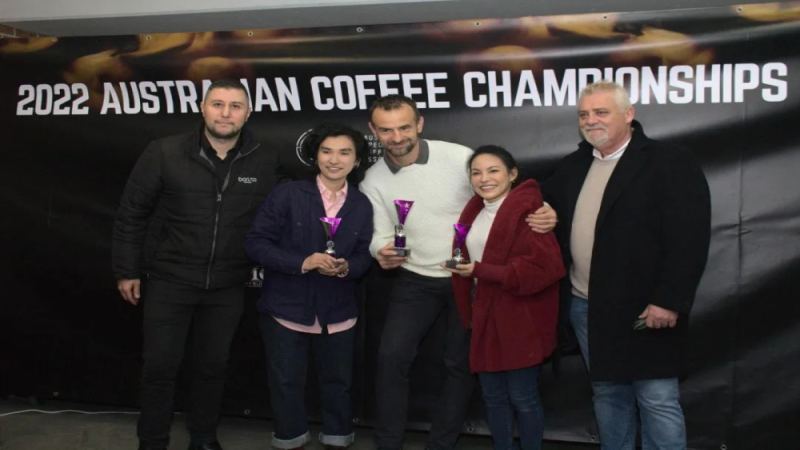
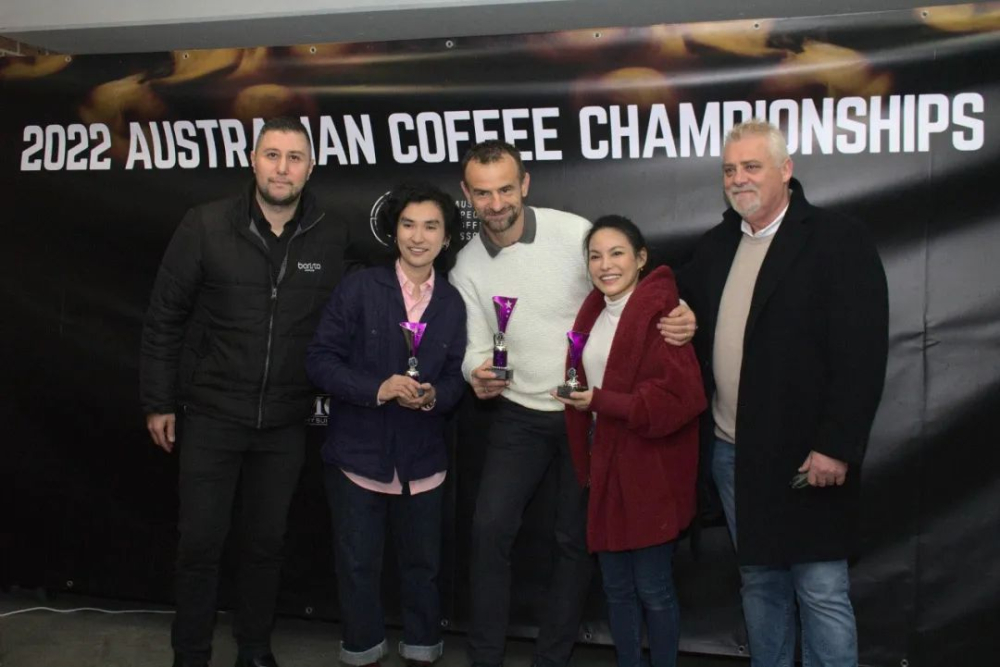
This time Sasa won second place in the 2022 Australian Coffee Brewing Championship—and the champion was also a very impressive Korean Australian barista, Harry Ko! Harry Ko will also represent Australia in this year's WBC competition. Regardless of the competition results, every competitor standing on the stage is worth learning from, learning from their dedication, focus, and single-mindedness toward one thing.
As for the ice stone used in this competition, Sasa also said on Instagram today that he will share its secrets with everyone in the coming weeks. After Sasa shares it, Coffee Workshop will provide a follow-up for everyone.
Image source: sasasestic ins internet
The above content is compiled by CoffeeHunters, a coffee news website.


