








Why are coffee beans roasted, and why do fresh beans need to rest?
Freshly roasted coffee beans hold a large amount of carbon dioxide from the roasting process, and that gas interferes with brewing. When hot water hits the grounds, the trapped CO2 escapes as bubbles that block water from reaching the soluble flavor compounds, so the cup tastes thin, flat, and low in aroma. That is why beans straight off the roaster often perform poorly and need several days of resting.
Resting lets carbon dioxide dissipate so extraction runs more evenly. The blooming step during brewing serves the same purpose: it releases gas first and wets the grounds before the main pour. A smoky, pungent residue left by high-temperature roasting also fades with time, which is why a deep roast coffee tends to taste smoother after the fourth day post-roast rather than on day one.
Many coffee lovers can't wait to brew a cup after getting freshly roasted beans, only to find the flavor flat, the body thin, and even a dry, uncomfortable sensation in the throat afterward. The key behind this lies in the large amount of carbon dioxide remaining inside the beans after roasting, as well as the smoky, pungent sensation brought on by high-temperature roasting. This article will take a deep dive into why fresh coffee beans need to "rest" before brewing, how carbon dioxide interferes with the extraction process, and the true source of that dry throat sensation. At the same time, Front Street will also share a few practical methods to help you still brew a relatively ideal cup even when the beans are too fresh.

Experienced coffee enthusiasts know well that brewing coffee beans straight out of the roaster often yields less than satisfactory results. Common signs include insufficient aroma, a thin body, and even a dry, irritating sensation in the throat afterward. So the first thing to do upon receiving beans is usually to check the roast date; if it's too close to the roast date, you'll let them sit for a few days to "rest" before brewing, which allows you to achieve a fuller layering of flavor.
Why do freshly roasted beans actually taste worse?

During the roasting process, coffee beans accumulate a large amount of carbon dioxide inside. When hot water contacts the ground coffee, in order to smoothly extract flavor compounds, these gases must first be released in an orderly manner, clearing a path for water to enter the interior of the particles. Otherwise, the carbon dioxide will form bubbles that keep rising, hindering the release of soluble flavor compounds and ultimately leading to under-extraction—manifesting as a thin, watery body and a lack of aroma. This is precisely the purpose of the blooming step: it not only helps carbon dioxide release first, but also "awakens" the soluble substances in the coffee grounds, creating better conditions for the subsequent main extraction.
As for the problem of a dry throat and a choking, parched sensation after drinking coffee, the root cause lies in the residual roasted flavor left inside the beans after high-temperature roasting—that smoky, pungent taste. There's no shortcut to eliminating this flavor; it can only dissipate naturally with time. Generally speaking, starting from the fourth day after roasting ends, this throat discomfort will noticeably diminish.
What should you do if the beans on hand are really too fresh?
Front Street suggests that if you have to brew coffee beans that are too fresh, you can try the following methods:
- Let the grounds rest for 2 minutes after grinding before pouring water
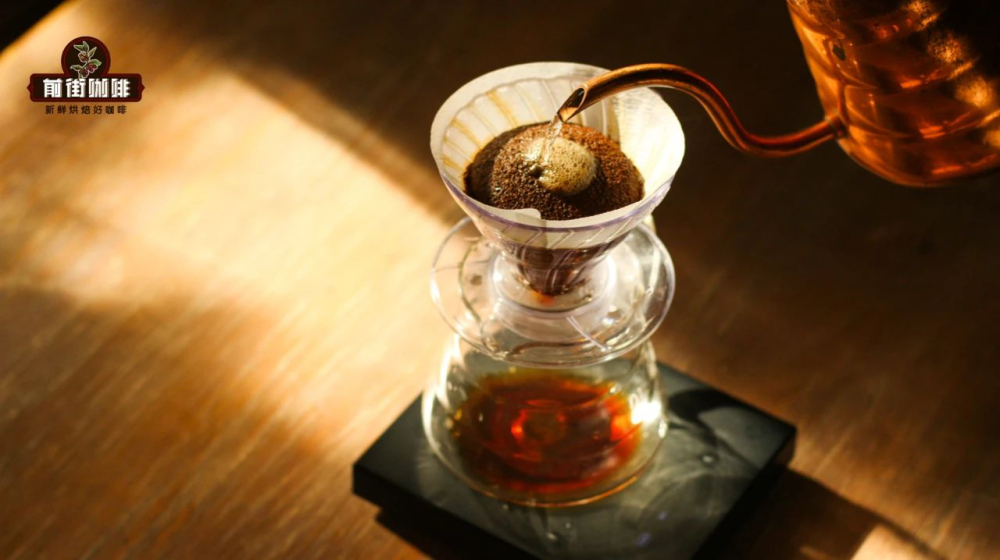
- Appropriately extend the blooming time
- Use stirring to speed up degassing
The standard approach is to quickly pour about three times the weight of the coffee grounds in water (the pouring method doesn't need to be too particular), then immediately stir the coffee bed with a spoon.
The above content is compiled by CoffeeHunters, a coffee news website.


