







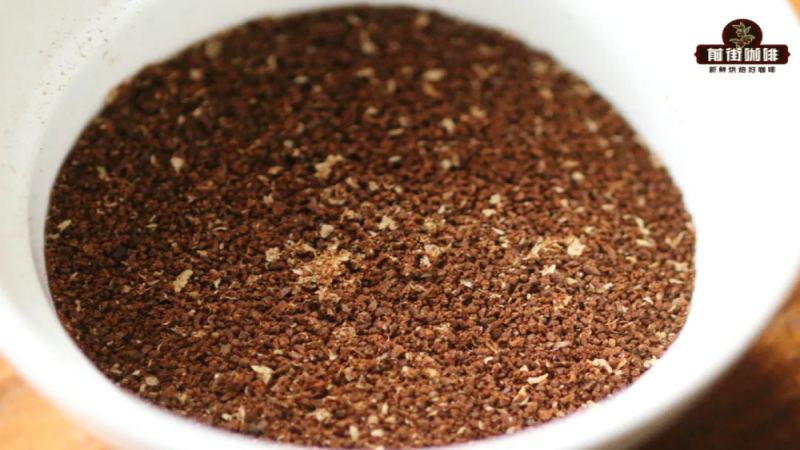
Why Do Finer Coffee Particles Taste Bitter in Pour-Over?
Grind size determines how efficiently water and coffee grounds interact, which shapes the flavor in the cup. Finer coffee particles have more total surface area and a shorter path from surface to center, so extraction runs faster and the flavor leans bitter. Coarser grounds expose less area and require a longer water path, so extraction weakens and the cup tastes thin.
Coffee grounds also act as a barrier that slows water draining through the bed during drip brewing. Front Street Coffee recommends using extraction time as the baseline for judging grind setting and calibrating with a No. 20 sieve to check the passing rate. Grinding close to flour causes clumping, which can slow extraction instead of speeding it up.
Grind size is one of the most difficult variables to master in pour-over coffee. It directly determines how efficiently water and coffee grounds interact, which in turn affects the final flavor. Grind too fine, and the coffee easily turns bitter; grind too coarse, and the flavor comes across as thin. Behind this lie both the physics of surface area and penetration distance, as well as the way the coffee bed blocks the flow of water. Front Street Coffee tends to use extraction time as the baseline for working backward to judge whether the grind setting is appropriate, and recommends using a No. 20 sieve to calibrate the passing rate. This article will break down these principles one by one, while also explaining the correct sieve calibration procedure and common misconceptions, to help you find that balance point within your own brewing system.
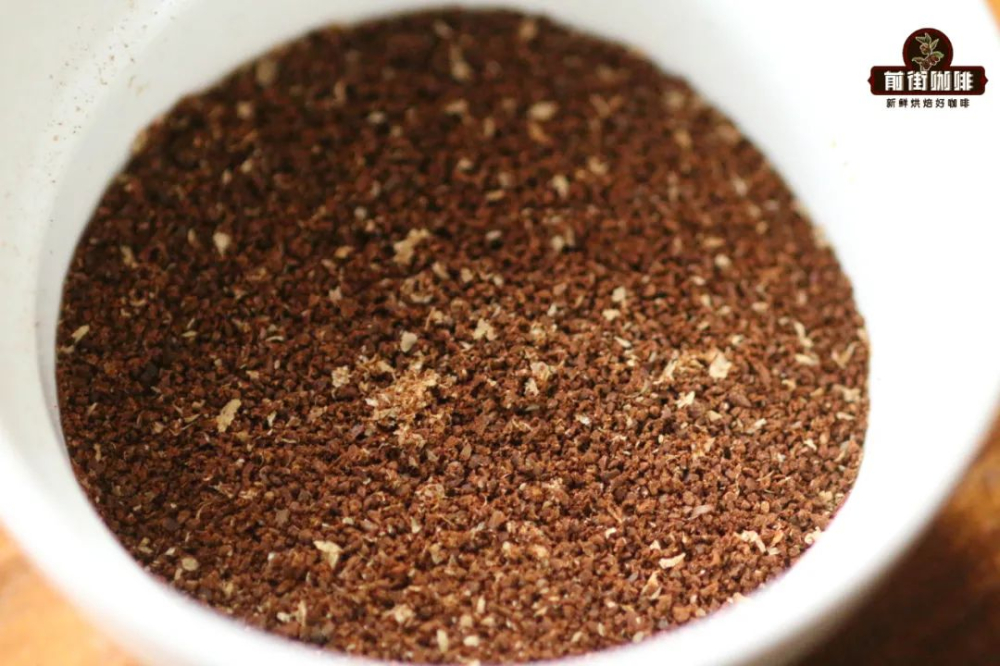
The finer the coffee is ground, the more the flavor tends toward bitterness; the coarser it is ground, the more the flavor comes across as bland. Most enthusiasts have probably experienced this phenomenon. But why does it happen? There are two mechanisms at play.
First, with a fine grind, the total surface area of the coffee grounds increases significantly, and the distance water must travel from the surface into the center of each particle is shortened, so coffee substances are extracted more rapidly. With a coarse grind, by contrast, the total surface area is smaller, and water must travel a longer path from the surface to the interior, so the time needed for complete saturation is extended and extraction efficiency is correspondingly weakened.
(Of course, there are special cases: if you grind the coffee to a fineness close to flour, the powder very easily clumps together, which instead slows down extraction efficiency.)
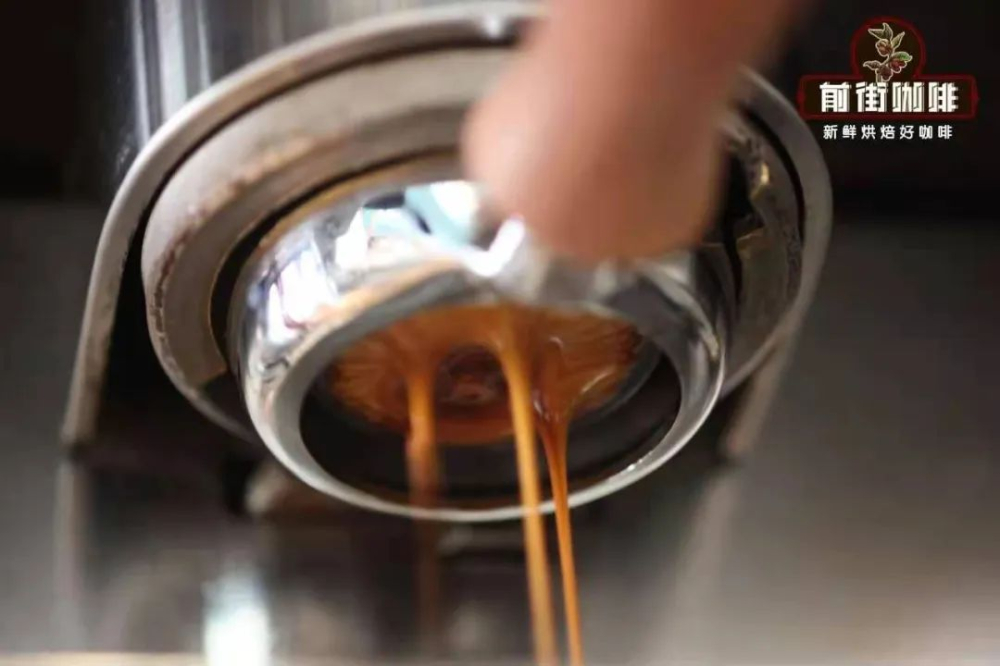
Second, in drip brewing, coffee grounds play another role — that of a barrier that hinders water from seeping down quickly. What we commonly call pressurized espresso extraction should, strictly speaking, be classified as pressure filtration; it likewise forces water through the coffee bed, with the coffee liquid obtained after filtering through the fine holes of the portafilter basket.
Friends familiar with Front Street articles should know that when Front Street guides grind adjustment, the first step is always to reference time. The reason is that when the grind is on the coarse side, the gaps between coffee particles become larger, the resistance to water weakens, and the time water takes to pass through is shorter; when the grind is on the fine side, the gaps between particles narrow, water does not penetrate easily, and the time required is naturally longer.
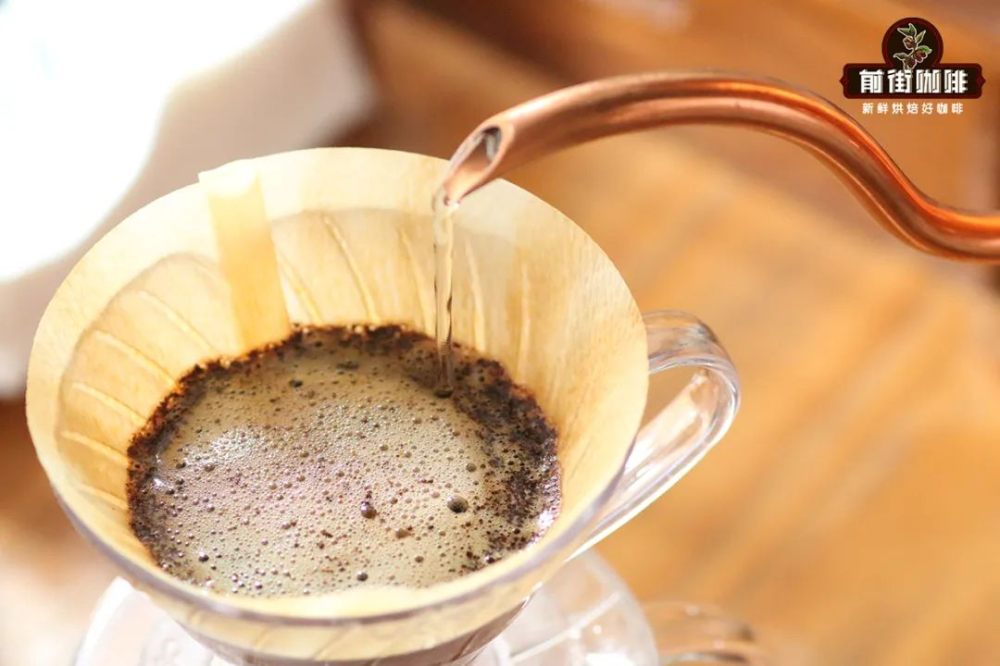
Returning to the pour-over scenario, the logic is exactly the same. After the coffee is ground finer, on one hand water more easily seeps into the particles and carries out substances, and on the other hand the coffee bed has strong water resistance, so water drains slowly, the time the coffee grounds are soaked in water is extended, and the final cup easily presents bitterness.
When the grind is on the coarse side, it takes longer for water to thoroughly saturate the coffee grounds, and at the same time the gaps between particles are large and water flows smoothly, so some of the water passes through the coffee bed before fully extracting it, resulting in a thin mouthfeel and a coffee lacking in flavor.
Therefore, the appropriate grind size can be verified and reconciled through a variable we cannot directly control — time. Front Street gives an example to make this easier to understand:
When verifying the relationship between grind size and time, all other parameters must be fixed, such as the brewing dose (15g), the coffee-to-water ratio (1:15), the pouring technique (three-pour method), and the dripper (V60), because once these conditions change they will also affect extraction duration. In Front Street's recommended grinding standards, light-roast beans are calibrated with a No. 20 sieve at an 80% passing rate — what is commonly called a medium-fine pour-over grind — corresponding to an extraction time of roughly 1 minute 50 seconds to 2 minutes 10 seconds.
In other words, if you follow Front Street's parameters exactly, using the same dose, coffee-to-water ratio, technique, and grind size, then in theory the extraction time should also fall within 1 minute 50 seconds to 2 minutes 10 seconds. Once the time deviates, grind size is very likely the part that has gone wrong, because the other parameters are relatively easy to judge as right or wrong, while grind size is harder to pin down.
Some friends will say: "My grind size definitely isn't wrong, I also calibrated with a No. 20 sieve, and it's also 80%!" There are two reasons that may lead to misjudgment here; the first is the way the sieve is used.
The calibration procedure Front Street recommends is: take 10 grams of coffee beans (or a multiple of 10, for easier calculation — the larger the dose, the more precise the data), select a grind setting, grind the coffee, then pour it into the sieve and shake it back and forth horizontally until no more noticeable particles fall through (usually taking 3 to 5 minutes). Then weigh the fallen grounds and divide by the total dose to get the passing rate. For example, if 5g of grounds pass through the sieve, the passing rate is 50%; if you want to reach the 80% standard, you need to adjust the grind finer, grind again, and measure until it reaches 80%.
The second reason lies in the limitations of the No. 20 sieve itself, as well as differences in the grinding quality of grinders. The No. 20 sieve has an aperture of 0.85mm; it can only distinguish which grounds are larger than 0.85mm and which are smaller than 0.85mm. As for how fine the finest grounds are or how coarse the coarsest grounds are, it cannot tell. A grinder with excellent grind quality produces a concentrated particle-size distribution with few coarse and few fine particles, so there is not much of a problem. But if the grinder is of average quality and the ground particle sizes vary greatly, with many fines and many coarse particles, then even if the sieve passing rate reaches 80%, the extraction time may still be on the long side.
So extraction time is also a reference for judging whether the grind size is accurate. When brewing coffee, if the extraction time clearly exceeds expectations, you can first take a sip to confirm that there really is a problem, then adjust the grind appropriately coarser — for example, to a 75% passing rate — and observe whether the flavor improves.
When sharing brewing knowledge, Front Street often says that data is dead; you can never reproduce someone else's flavor by replicating their data. But the principles are interconnected. Only by understanding the reasoning behind others' use of this data, and then combining it with your own actual situation to summarize parameters that suit you, can you brew delicious coffee.
For professional coffee knowledge exchange and more coffee bean information, please follow Coffee Workshop (WeChat public account: cafe_style) For more specialty coffee beans, please add the private WeChat of Front Street Coffee (FrontStreet Coffee), WeChat ID: qjcoffeex
The above content is compiled by CoffeeHunters, a coffee news website.


