







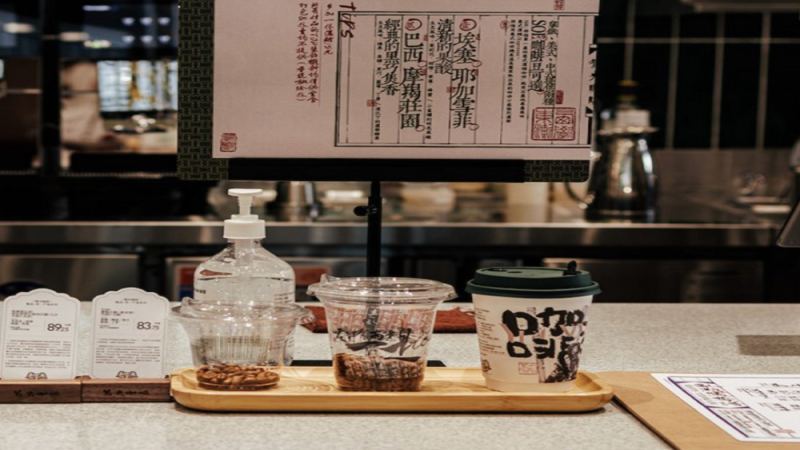
What role does Yunnan coffee play in Chinese-style coffee?
Chinese-style coffee is developing through cafés that blend traditional Chinese design with local flavors, moving from the instant coffee era into a specialty coffee wave. The key takeaway from the industry's evolution is that innovation brings crowds in, but professional brewing, local bean cultivation, and deep commitment to the Yunnan coffee production region are what make Chinese-style coffee last.
Coffee became a mass beverage only after instant products arrived in the 1940s. From the 1960s, cafés shifted toward selecting higher-quality arabica beans and used dark roasting with pressure extraction to produce concentrated coffee, so drinkers could still taste its rich, full body. That quality-first logic now underpins the new Chinese-style coffee movement.
In recent years, cafés featuring elements of traditional Chinese culture have been springing up one after another, and coffee, this imported product, is accelerating its path toward Sinicization. From new-style tea beverage brands crossing over into opening coffee shops, to domestic local brands lowering prices to cultivate the market, to practitioners proposing that Chinese-style coffee should have its own mode of expression, this path is full of both opportunities and challenges. This article sorts out the evolution of coffee in China from the instant coffee era to the specialty coffee wave, and explores the current state and future of new Chinese-style coffee—innovation can attract the masses, but only professionalism, the cultivation of local bean varieties, and deep commitment to the Yunnan production region can truly make Chinese-style coffee remembered by the world. At the end of the article, Front Street Coffee's communication channels are listed.
Over the past year, cafés featuring traditional Chinese style elements have been emerging one after another. The new generation of consumers' enthusiasm for "guochao" and "local culture" has prompted many cafés to actively seek change, integrating store decor and coffee offerings with representative local foods, culinary traditions, and aesthetic styles. Relying on cultural resonance, coffee, this foreign species, is step by step moving onto a Sinicized track.
Just yesterday, a new-style tea beverage brand long known for its Chinese style announced that it was simultaneously opening five coffee shops in the same traditional Chinese style in a popular commercial district in Changsha.
Compared with alcohol and tea, coffee counts as a relatively late-emerging beverage. Although many books record that coffee has a history of several hundred years, what truly brought it to the masses was the invention of instant coffee in the 1940s. Only after brands such as Nestlé and Maxwell House launched instant products did coffee truly become a mass consumer good.
As demand for coffee continued to climb, more and more people began to care about how coffee tasted. Starting in the 1960s, cafés began to emphasize selecting higher-quality Arabica coffee beans and adopted dark roasting combined with pressure-based extraction to make very concentrated coffee, with the aim of allowing consumers to still taste coffee's rich, full-bodied flavor after adding milk and sugar.
However, the coffee flavors produced under these two waves were not something everyone could accept, which also led people to associate coffee with bitterness the moment it was mentioned. In order to overturn the public's stereotype that coffee is only bitter and to make more people willing to try and accept coffee, after entering the new millennium, coffee bean quality continued to improve, and cafés also began using light roasting and drip methods to bring out fruit-like sweetness and acidity in coffee as well as richer layers.
Such flavors happened to cater to the pursuit of beverage taste by the generation of consumers who were still children around the turn of the millennium. After a decade of accumulation, starting in 2010, whether domestically or abroad, there have been more and more specialty coffee shops pursuing high quality, fresh light roasting, and distinct layers.
Although there are more specialty coffee shops, the tea-drinking culture formed in China over thousands of years has not allowed consumers to accept coffee all at once. In addition, the prices of freshly ground coffee and specialty coffee are relatively high compared with new-style tea beverages, so although specialty coffee shops keep opening, demand for coffee has never truly been driven up. It was not until the emergence of domestic brands such as Luckin and Manner, which pulled coffee prices down, that more and more people in China began to consume coffee.
After consumer demand grew stronger, domestic coffee practitioners gradually formed a view: when coffee arrives in a region, it will produce a mode of expression unique to that place, and make the whole world remember it.
Japan, with its unique roasting and brewing methods, formed a Japanese-style school; Australia, out of its insistence on the flavor expression of Italian-style milk coffee, formed an Australian-style school; therefore China should also have its own unique way of expressing Chinese-style coffee.
Although coffee became popular in China relatively late, it must not lose itself. Thus, unlike the Chinese-style brewed coffee originally created by ethnic Chinese in Southeast Asia, domestic new Chinese-style coffee places more emphasis on store decoration and the appearance of coffee offerings, thereby creating resonance among consumers.
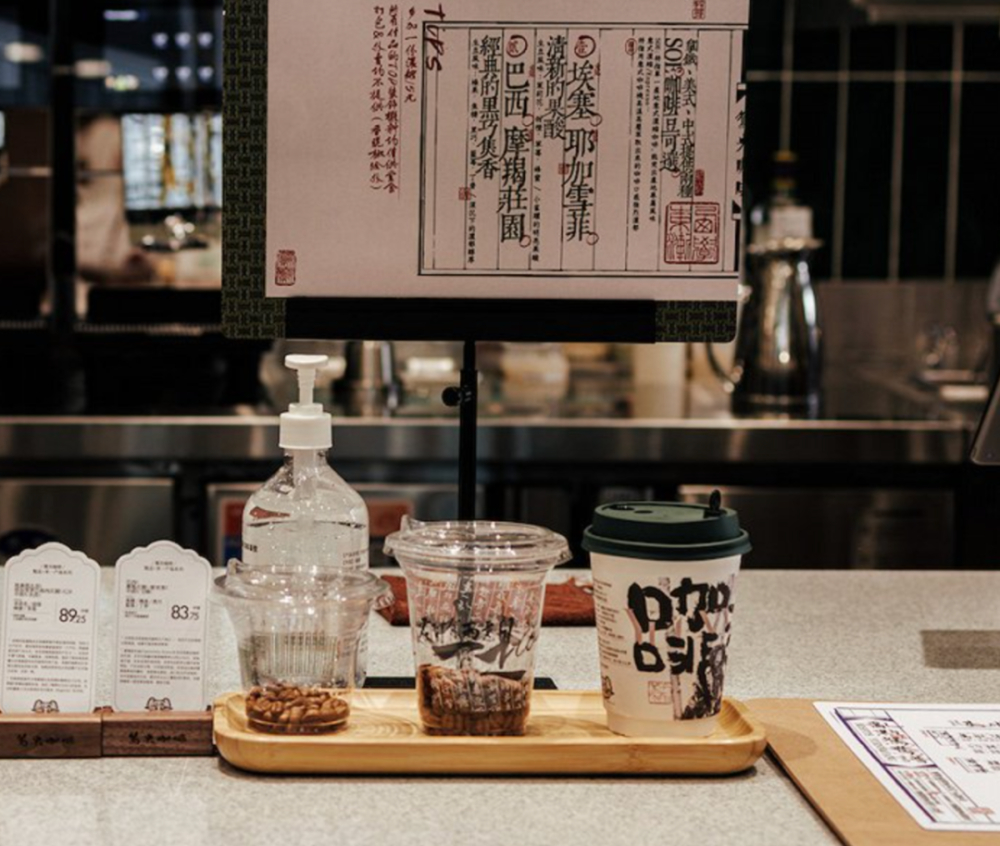
Serving coffee in traditional Chinese tableware, paired with spatial design featuring traditional Chinese style, and combined with creative coffee infused with regional food culture—whether these new Chinese-style coffees are a good thing or a bad thing, everyone has a different view.
After all, people are visual creatures. Gradually closing the distance between Chinese people and coffee through product packaging helps Chinese people accept coffee, and then extends to promoting coffee grown in Yunnan, and then slowly forms a coffee culture that can represent China.
Take chili peppers, for example. This species was originally an imported product as well, but over several hundred years Chinese people's local cultivation, harvesting, circulation, and adaptation to terroir have allowed chili peppers to display unique aroma and spiciness in every region of China. Then, after people in different regions created numerous home-style dishes in their own ways, and these spread around the world with population migration, ultimately when people mention chili peppers, they can always associate them with a certain Chinese dish.
The Sinicization of coffee has only just begun. If we want people around the world to immediately think of China when they talk about coffee, that is absolutely not something that can be achieved overnight. To make the world recognize a Chinese-style coffee school, there is still a long way to go.
Of course, for something to develop, it cannot do without innovation. Only innovation can attract more mass consumers, and only with the demand of more mass consumers can it be better spread and developed. Since new Chinese-style coffee can capture consumers' hearts, it should take this opportunity to spread more correct coffee knowledge.
The existing new Chinese-style coffee is more of a reverse guide to new consumption habits. Perhaps it is a good start, but if it wants to be recognized and passed down like the Japanese-style school and the Australian-style school, it cannot do without professionalism.
China itself has the advantage of growing local coffee. Just like chili peppers, only by continuously cultivating and growing coffee beans that can represent the flavor of the Yunnan production region, and studying roasting ideas and extraction methods suitable for Yunnan coffee, can we truly make the world remember Chinese-style coffee.
The fact that schools such as Japanese coffee and Australian coffee can be recognized by everyone cannot be separated from professionalism—and at the same time, this professionalism is oriented toward every consumer, leading everyone to feel the charm of a cup of coffee, so that everyone can appreciate, from just one taste, the love that people in each region have for coffee.
Attracting public attention while showing a side that is not professional enough will only deepen the world's misunderstanding of Chinese-style coffee. Innovation lets more people accept coffee and understand Chinese coffee, which is a very good start, but it is also necessary to promote Chinese-style coffee with roots and soul; otherwise people will only remember the appearance of Chinese-style coffee and will not remember its charm.
Image source: Internet
For professional coffee knowledge exchange and more coffee bean information, please follow Coffee Workshop (WeChat public account: cafe_style)
For more specialty coffee beans, please add the private WeChat account Front Street Coffee (FrontStreet Coffee), WeChat ID: qjcoffeex
The above content is compiled by CoffeeHunters, a coffee news website.


