







How does the coffee formula link extraction yield and strength?
In pour-over brewing, extraction yield is the share of soluble material drawn out of the coffee grounds, while strength, or concentration, is the share of dissolved coffee solids in the cup. The two connect through the weight of the brewed liquid and the weight of the grounds, and extraction yield can be measured with a refractometer.
Industry ranges put ideal extraction at roughly 18% to 22%, and a comfortable drinking concentration between 1.15% and 1.45%. The relationship is written as extraction yield equals concentration multiplied by the weight of the coffee liquid divided by the weight of the grounds. Adjusting ratio, grind size and water temperature moves both numbers.
The extraction yield and concentration of pour-over coffee are core concepts that every enthusiast cannot avoid. Extraction yield describes the proportion of soluble substances in coffee beans that are carried out by water, while concentration reflects the percentage of dissolved substances in the coffee liquid. The two form a mathematical relationship through the weight of the coffee liquid and the weight of the coffee grounds, and the extraction yield can be calculated using a refractometer. Understanding the interaction between these two indicators can help us predict flavor trends during brewing and quickly pinpoint the root cause when tasting unpleasant flavors such as burnt bitterness, sharp acidity, wateriness, or hollowness. This article starts from Front Street Coffee's staged brewing experiments to sort out the logic of changes in extraction yield and concentration, and combines parameters such as coffee-to-water ratio, grind size, and water temperature to provide specific adjustment ideas for under-extraction and over-extraction.
If you want to learn pour-over coffee well, the relationship between extraction yield and concentration is a lesson you cannot avoid. Once you understand these two things, brewing coffee yourself will become much easier.
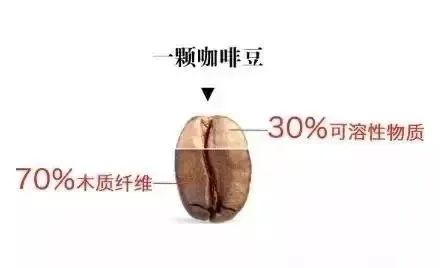
First, let's clarify what the subject of extraction yield and concentration is in each case. The subject of extraction yield is the coffee bean; it measures the percentage of substances dissolved into water from the coffee beans or coffee grounds relative to the weight of the coffee beans themselves. The soluble substances in coffee beans account for at most 30% of their total weight, and the industry generally believes that when the extraction yield falls within the range of 18% to 22%, the dissolved flavor substances are relatively ideal; once it exceeds 22%, unpleasant flavors such as bitterness and off-flavors are often brought out.
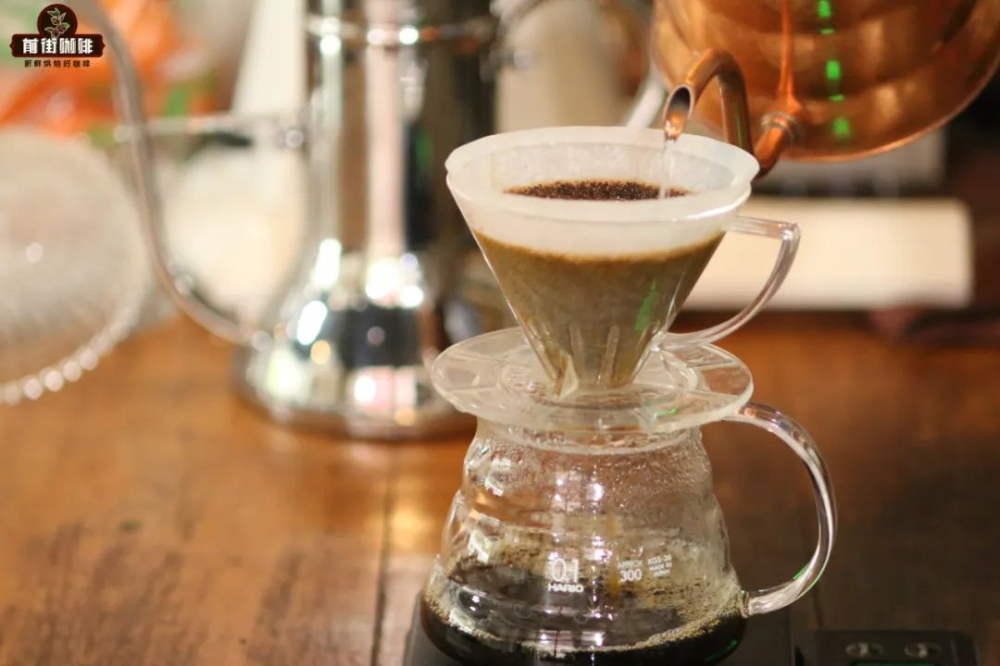
The subject of concentration is the coffee liquid; it indicates the percentage of dissolved coffee substances in the entire cup of coffee liquid. Generally speaking, when the coffee concentration remains between 1.15% and 1.45%, it tastes more comfortable.
At this point, the connection between the two should have surfaced. They both point to the same coffee substances dissolved out by water, which can be written as the formula: "Extraction yield = Concentration × Weight of coffee liquid ÷ Weight of coffee grounds." In other words, as long as the concentration of the coffee liquid is measured with a refractometer, the extraction yield of that cup of coffee can be calculated backward.
Of course, not everyone has a refractometer, so today we will only talk about the relationship between the two and use this relationship to help us formulate brewing plans. Below is a set of staged brewing experiments done by Front Street Coffee: the entire brewing process was cut into three stages, with three cups collected respectively from the front stage, middle stage, and tail stage, and the liquid volume of the three cups kept consistent. Through observation and tasting, it can be found that the front-stage cup is the most intense, the middle stage is slightly weaker, and the tail stage is the weakest.
It can be seen that at the very beginning of brewing, the coffee concentration is the highest, and the extraction efficiency in the early stage is also the strongest; afterward, the extraction efficiency gradually declines, and the concentration drops accordingly. But the extraction yield continuously accumulates. Even if the extraction efficiency is lower in the later stage, as long as water still flows through the coffee grounds, the extraction yield will continue to rise.
Let's make an assumption: if endless water is used to rinse the coffee grounds, the extraction yield will eventually approach 30%, but the more water used, the more diluted the coffee concentration will become. Therefore, pour-over coffee must balance two things at the same time—both controlling the extraction yield of the coffee beans well and managing the concentration of the coffee liquid well.
This leads to the first parameter for controlling these two: the coffee-to-water ratio. Using a coffee-to-water ratio of 1:15 to 1:16 makes it easier to find the balance point between extraction yield and concentration, which is the often-cited golden cup extraction range. However, Front Street Coffee would like to add that the principles of golden cup extraction are worth learning, and mastering the relationship between extraction yield and concentration is enough. As for the data set of 18-22% extraction yield and 1.15-1.45% concentration known as the "golden cup extraction range," it can be used as a reference, but there is no need to be overly attached to it. Falling within the golden cup range does not guarantee that it will taste good, and there are also examples of good-tasting coffee outside the range. (The SCA also realized that the golden cup extraction theory needs iterative updating and began research on Golden Cup 2.0 in 2017. We might as well wait for the experts' new results.)
After clarifying the relationship between extraction yield and concentration, when you taste an undesirable flavor, it becomes easier to judge where the problem lies. For example, if you taste a strong, burnt-bitter, rough, and heavy mouthfeel, it is most likely caused by both concentration and extraction yield being too high.
For another example, if it tastes intense but bland, or has sharp acidity and no aftertaste, it belongs to high concentration with low extraction yield. Wateriness, thinness, and little flavor are signs of low concentration and low extraction yield. As for a feeling like bitter water, hollow, thin, and rough, it corresponds to low concentration and high extraction yield.
If the coffee-to-water ratio is appropriate (1:15-1:16), low-concentration and high-extraction situations will basically not occur.
If you encounter high concentration and low extraction, you can appropriately increase the coffee-to-water ratio and pour in more water to improve the extraction yield and lower the concentration.
The two types of problems, high concentration with high extraction and low concentration with low extraction, mostly come from grind size and water temperature.
The above content is compiled by CoffeeHunters, a coffee news website.


