








Is Instant Coffee Carcinogenic? What the Science Says
Dark roasting does create acrylamide, but detecting the substance is not the same as proving it causes cancer in people. The compound was first found in 2002 in fried and roasted potatoes and grains. It forms through the Maillard reaction, the same browning process that gives coffee, bread, and braised pork their color and aroma.
Acrylamide also appears in fried potato chips and brown sugar, often at higher levels than in coffee. Population studies have not established that normal dietary intake raises human cancer risk, and the International Agency for Research on Cancer classification reflects hazard, not proven harm from a daily cup. That distinction is central to the question of whether instant coffee acrylamide, or is instant coffee carcinogenic at all, deserves alarm.
A push notification in the family group chat saying "coffee causes cancer" left many people feeling uneasy after reading it. The claim was that the darker the coffee beans, the higher the acrylamide content, and the greater the cancer risk. Does this conclusion hold up? This article starts from the discovery of acrylamide, sorts out the relationship between the Maillard reaction and this substance, compares the content differences in common foods such as coffee, brown sugar, and fried potato chips, and cites the classification and population study conclusions of the International Agency for Research on Cancer, to help you clarify just how far apart "detecting acrylamide" and "definitely causing cancer" really are.
"Coffee causes cancer! The darker the coffee beans, the higher the acrylamide content!"
Recently, after reading a push notification in the family group chat, the writer fell silent... Setting aside whether coffee beans actually contain acrylamide after roasting, looking at this substance itself, it currently cannot be asserted that simply ingesting acrylamide will definitely raise the cancer risk in humans...
And the origin of this news piece almost left the writer confused as well. The matter dates back to 2002, when a Swedish professor first detected a neurotoxic potential carcinogen—acrylamide—in potatoes and grains that had been fried or roasted. Some literature points out that this substance is a byproduct generated when food undergoes the "Maillard reaction"... Hence the claim that "the darker the coffee beans, the higher the cancer risk"!
WHAT?????????
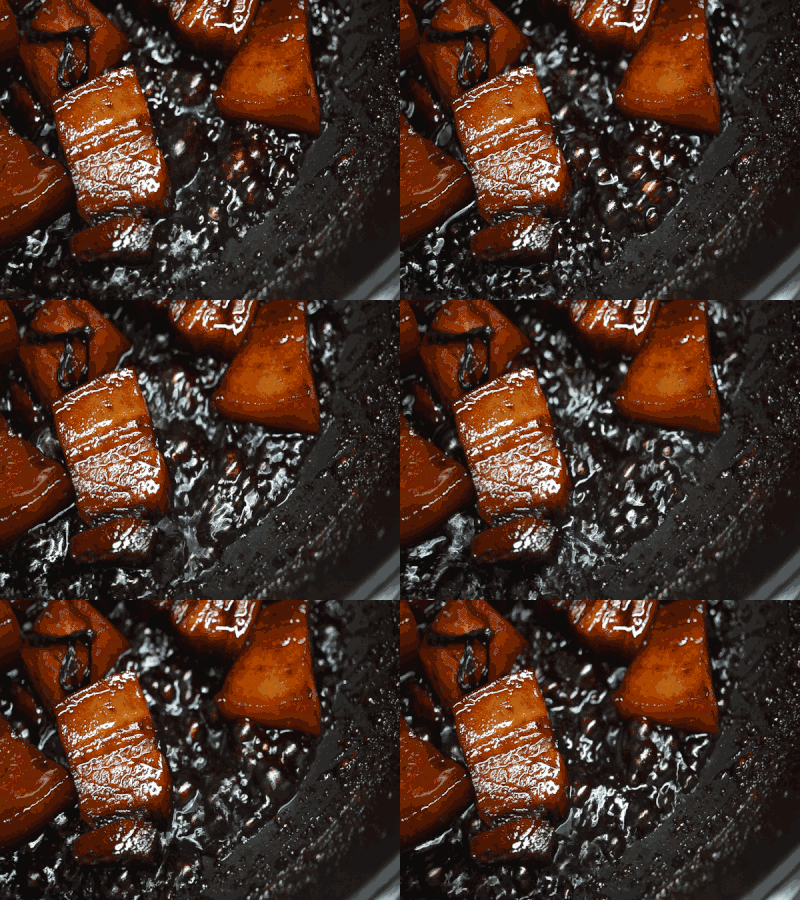
The Maillard reaction is precisely also the key process by which food develops aroma and deep, rich color during processing and cooking. If the Maillard reaction really did produce carcinogens, then eating braised pork would also be a carcinogenic process, wouldn't it? After all, braised pork is the most typical and most common home-style dish of the "Maillard reaction." At which step does the reaction occur? Is it when caramelizing the sugar, or when pan-frying the pork belly until fragrant and searing out that tempting color...
The so-called Maillard reaction actually refers to a series of complex chemical reactions that occur when carbohydrates in food, along with amino acids and proteins, are heated. After the reaction, melanoidins and thousands of different aroma molecules are generated. These aroma molecules can tease the human sense of smell and give off tempting flavors.
Simply put, as long as there are carbohydrates (including starch and sugar) or fats/oils, plus proteins (amino acids or amines produced from amino acid degradation), combined with high-temperature heating, the Maillard reaction can be triggered.
The darker the color of food becomes during heating, the more intense the "Maillard reaction" usually is, and the more acrylamide is generated. If we follow the logic of that article, the foods we eat daily made by pan-frying, deep-frying, braising, and other cooking methods are, to some extent, even more burnt than coffee beans... And brown sugar, which everyone is familiar with, is probably "cancer itself"...

Some things cannot be directly transformed in your thinking out of thin air while ignoring other more important factors!
Moreover, acrylamide is widely present in the foods people eat every day. It is in coffee, in chocolate cookies and cereal, and even in vegetables and fruits.
If we really want to look directly at the final test data, coffee does indeed contain acrylamide, but the average content is 150 mg/kg, while acrylamide in brown sugar is 860 mg/kg. Looking at it this way directly, brown sugar is far more terrifying than coffee...
Of course, it definitely cannot be compared directly like that!
According to research, even for the same food, acrylamide content can vary greatly due to subtle differences in processing methods. But overall, foods high in acrylamide are mainly fried potato products, while vegetables and fruits are lower. In addition, temperature has a great influence on acrylamide content.
The critical temperature for acrylamide formation is 120°C. Within a certain temperature range (<185℃),丙烯酰胺的生成随温度升高而升高。,如果温度过高了,则丙烯酰胺的生成反而会降低,而咖啡豆出炉的温度,最少也超过190℃,看着是颜色挺深的,但是由于温度过高,但是丙烯酰胺反而是少!!
In addition, according to animal experiments, acrylamide has potential neurotoxicity, genotoxicity, and carcinogenicity. However, current research has not yet confirmed the association between acrylamide intake, related biochemical marker levels, and the risk of various cancers.
The International Agency for Research on Cancer (IARC) currently classifies acrylamide in Group 2B as "possibly carcinogenic to humans." Some studies have examined the relationship between people who frequently consume acrylamide-rich foods and their cancer incidence, and the results showed: Frequent consumption of foods rich in acrylamide (300–1200 mg/kg) or containing moderate acrylamide (30–299 mg/kg) has no direct relationship with the incidence of bladder cancer, kidney cancer, and rectal cancer, but currently no other research reports support the above conclusion. Therefore, as of now, it cannot be said that simply ingesting acrylamide will definitely increase human cancer risk.
Since acrylamide is a possible carcinogen, most risk analyses are based on results from non-human animal studies. But it can also be said that excessive intake will increase cancer risk. However, no one would drink two kilograms of coffee a day... Even if there were a problem, the cardiovascular and cerebrovascular systems would give out first...
Therefore, for people, the wiser attitude is to pay attention to controlling acrylamide intake in daily life. Everything edible has its own dangers. It is better to consume it in a reasonable and scientific way, which will make you happier!
If relatives or friends forward you this kind of article next time, remember to forward this article to them!!
Image source: Internet
For more coffee bean information, please follow Coffee Workshop (WeChat public account: cafe_style)
For professional coffee knowledge exchange, please add WeChat ID: kaixinguoguo0925
The above content is compiled by CoffeeHunters, a coffee news website.


