







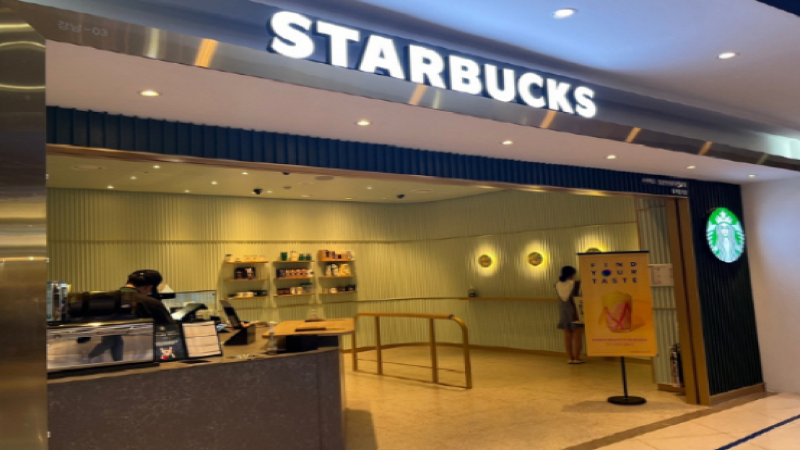
What does in-station coffee service look like in Seoul?
Starbucks Korea opened a store inside Gangnam subway station in Seoul, a fast-service format aimed at commuters rather than the usual lounge seating. The station handles about 100,000 passengers a day, and roughly 19 Starbucks outlets already sit within 500 meters of it, making the in-station branch a bet on speed and foot traffic.
The company says only two Starbucks stores worldwide sit inside stations, the other at Canary Wharf in London. Gangnam is also an extreme coffee location given the store density around it. Starbucks Korea describes the underground site as part of its Korean market expansion, and Seoul subway staff note that eating and drinking in cars is allowed but discouraged since the pandemic.
Coffee has long become an indispensable part of modern urban life, and coffee shop locations are often concentrated on residential street corners or at the ground floor of office buildings. However, coffee shops are rarely seen inside subway stations that are key commuting arteries. Recently, Starbucks Korea broke with convention and opened a store inside Seoul's busiest Gangnam subway station. This new-concept store centers on fast service and targets high-frequency, high-spending commuters. At the same time, Starbucks has only two in-station stores globally, with the other located at Canary Wharf station in London. This article will guide you through the considerations behind Starbucks' strategic layout and the market performance of Starbucks Korea.
Coffee is hailed as modern people's "life-sustaining water" and is also a social medium. It is not hard to see that cafés often choose to open on residential street corners or on the ground floor of office buildings. But near subway stations, the most important commuting tool for urbanites, coffee shops are rarely seen. Recently, however, Starbucks Korea went against the grain and opened a store inside a subway station, which is extremely rare in its global layout.
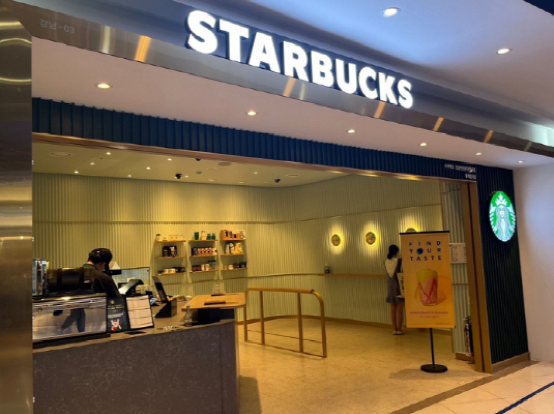
According to Korean media Pulse News, Starbucks Korea, under South Korea's Shinsegae Group, opened a branch inside a Seoul subway station, choosing Gangnam subway station, which has the largest passenger flow and the most complex structure among urban rail stations. The station has an average daily passenger flow of up to 100,000 people, and within about 500 meters around it there are as many as 19 Starbucks stores. This new store differs from traditional Starbucks outlets, which are usually located in spacious areas and known for the comfortable "third place." This store, by contrast, chose Seoul's most core and busiest area, aiming to attract more consumer groups and provide fast service for morning rush-hour commuters. Starbucks Korea said that choosing an underground space this time is part of the brand's expansion strategy in the Korean market.
Seoul subway station staff told the media that the Seoul subway does not prohibit passengers from eating and drinking in train cars, but due to the impact of the COVID-19 pandemic, passengers are advised not to eat in the cars and to wear masks properly. It is worth noting that the South Korean government has lifted the outdoor mask mandate, but in indoor or enclosed spaces, people still need to comply with the mask-wearing requirement.
In fact, this is the second Starbucks store in the world to be opened inside a subway station. The other is located at Canary Wharf station in London, UK. This new-concept store is called express café, with very few seats, a mini footprint, and a greatly simplified menu that retains only basic options. All this simplification is meant to provide a faster and more convenient experience for "buy-and-go" customers.
As times change, people's pace of life keeps accelerating. Many consumers working downtown, especially white-collar workers in a hurry, are often pressed for time. Starbucks has precisely set its sights on this group, which consumes a large amount of coffee each year and has strong actual purchasing power.
Starbucks entered the Korean market in 1999. At present, Starbucks Korea operates 1,674 stores, with first-quarter 2022 sales reaching 602.1 billion won (about US$475.8 million), up 15% year on year. Since July last year, South Korean retailer Emart has become the largest shareholder of Starbucks Korea, holding 67.5% of its shares.
Image source: Internet
For professional coffee knowledge exchange and more coffee bean information, please follow Coffee Workshop (WeChat public account cafe_style)
For more specialty coffee beans, please add the personal WeChat of Front Street Coffee (FrontStreet Coffee), WeChat ID: qjcoffeex
The above content is compiled by CoffeeHunters, a coffee news website.


