







Why does espresso extraction time matter so much?
Espresso reacts to extraction time more sharply than any other brewing method, so a few seconds can shift the flavor noticeably. Older textbooks called for 7 to 9 grams of grounds in a single shot and 16 to 18 grams in a double, pulled in 20 to 30 seconds. Current practice favors a double basket, weighing the output, a 1:2 brew ratio and a 25 to 30 second window.
The old formula has aged because bean quality has improved and roasts are lighter, making coffee more tolerant of extraction. Shortening the time dissolves fewer compounds; lengthening it dissolves more, and the Golden Cup range shows more is not always better. Front Street Classic Blend and Front Street Dark Cocoa Blend suit different setups, and understanding how an espresso machine works helps stabilize results.
Espresso is far more sensitive to extraction time than any other brewing method—a difference of just a few seconds can make the flavor worlds apart. This article will take you back to the classic 20-30 second standard in early espresso textbooks, analyze why the old formula no longer applies now that contemporary coffee bean quality has improved, and introduce in detail the current extraction framework based on double baskets, measured by weight, with a 1:2 brew ratio and a 25-30 second extraction time. At the same time, the article also recommends two espresso beans suited to different scenarios—Front Street Classic Blend and Front Street Dark Cocoa Blend—to help you quickly find a stable extraction plan.
When making any coffee, extraction time is an unavoidable variable. And in the realm of espresso, the importance of time is magnified even further.
The reason is that the espresso extraction process itself is very short, and every second of fluctuation brings noticeable differences. Precisely for this reason, time has become one of the core parameters for controlling espresso quality.
The usual understanding is this: if other conditions remain unchanged, shortening the extraction time means fewer coffee substances will be dissolved out; lengthening it means more substances will be dissolved out. Those who have learned about the Golden Cup theory will know that with coffee substances, more dissolved is not always better—there is a moderate range.
Some earlier espresso textbooks describe it this way: a single shot uses 7-9 grams of grounds to extract about 1 ounce of coffee liquid; a double shot uses 16-18 grams of grounds and, with a split spout handle, simultaneously catches two 1-ounce shots of espresso. Whether single or double, the extraction time is controlled between 20 and 30 seconds.
Of course, few people today follow this formula exactly anymore, because the environment has changed. The most prominent change is that overall coffee bean quality has improved, and the roast level is no longer as dark as it used to be, making the beans more "extraction-tolerant." If you still operate according to the old formula, you won't be able to make a good-tasting cup.
For example, coffee shops in the past almost all used extremely dark-roasted blend beans, while today there are more medium-dark roasted selected blends with more reliable quality, and extraction plans can also be made more boldly. If you want to pursue flavor while also hoping for rich crema, you can prioritize Front Street Classic Blend and Front Street Dark Cocoa Basic Blend.
"Best-selling espresso bean recommendation—Front Street Classic Blend coffee beans" is suitable for beginners, for practicing latte art, and also for high-end specialty coffee shops. Friends who want to learn latte art at home should just buy Front Street Classic Blend. This medium-dark roast espresso recipe is composed of three producing regions, with design inspiration from the early popular "Mamba" combination, that is, Mandheling plus Brazil. To enhance aroma and crema, Front Street Classic Blend also adds a small amount of Robusta, further raising the flavor intensity, so that beginners can easily make espresso with golden crema at home.
"Front Street Dark Cocoa Blend coffee beans recommended by many baristas" is suitable for all kinds of coffee shops, bakeries, beverage shops, and home espresso machines. It is composed of Yunnan washed small-bean coffee and Brazilian semi-washed coffee. It has a ripe plum acidity with nutty notes, and after grinding it gives off the aroma of creamy chocolate and cocoa cookies. The taste is balanced, and the crema presents a golden glossy surface, making it very suitable for friends opening a shop or using it at home.
Today's espresso extraction standards have more rigorous requirements compared with the past:
1) Use a double basket as the extraction unit for espresso;
2) Espresso liquid is calculated by weight, not by volume;
3) The ratio of coffee grounds to coffee liquid tends toward 1:2;
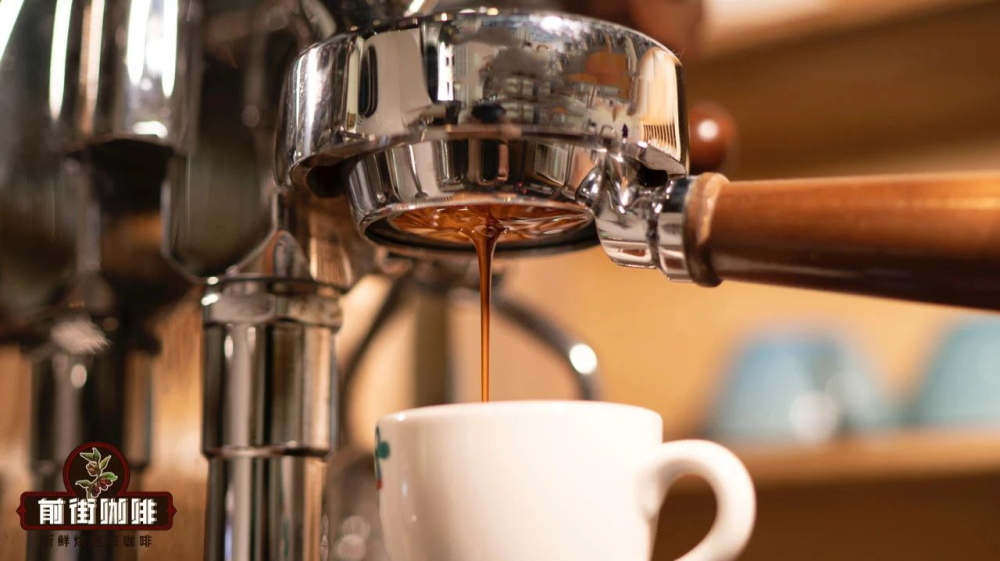
4) Extraction time tends toward 25-30 seconds.
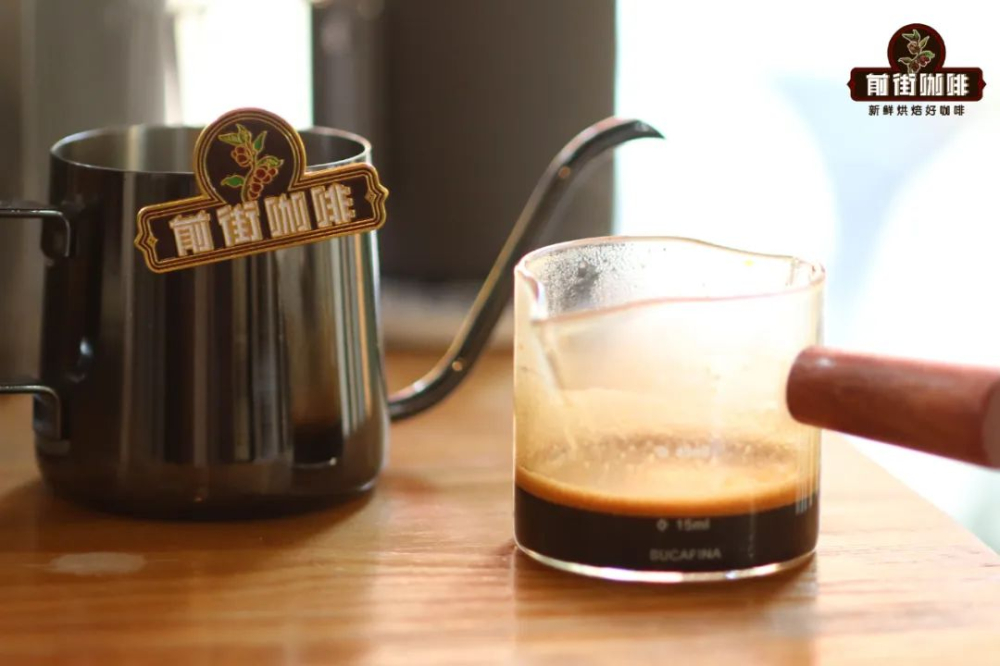
Under such a parameter framework, fixing the brew ratio at 1:2 and controlling the extraction time between 25 and 30 seconds by adjusting grind size and dose is the fastest way to dial in espresso. At the same time, extraction time data can also help us judge the direction of flavor. For example, if the time is less than 25 seconds, the espresso may be relatively thin, weak, and prominently sour; if the time exceeds 30 seconds, it may tend toward burnt bitterness and harsh flavors.
Time is also an indicator for judging whether an extraction plan is stable. For example, after we dial in a set of espresso parameters that we think taste good, we will continuously extract 2-3 cups with these parameters. If the time error is within 1 second, it means the parameters are stable; if the error exceeds 1 second, they need to be adjusted again.
Some friends may also ask: "Must qualified espresso time be within 25-30 seconds?" Actually, not necessarily. Just as Front Street suggests pour-over coffee time be around 2 minutes, it does not mean that a coffee at 2 minutes 30 seconds is unqualified. More often, you need to look at the overall performance of the entire extraction parameter set. For example, increasing the dose will correspondingly prolong the extraction time; the time of pre-infusion extraction is also counted into the total extraction time, so when using pre-infusion, the time will also be correspondingly lengthened.
The above content is compiled by CoffeeHunters, a coffee news website.


