







How Important Is Pour Coffee Technique Compared to Extraction Parameters?
Pour coffee technique matters, but it is the visible form, not the main cause of flavor. Grind size, pouring rhythm, circle count, and total time are easy to copy, yet what actually decides the cup is the extraction logic behind them. Beginners who only imitate a barista's movements often brew bitter or weak coffee because the parameters underneath the motions stay unchanged.
The practical path starts with zero and moves in stages: watch and copy first, then measure. Tracking dose, water temperature, ratio, and time turns a guess into a repeatable recipe. Only after those numbers are stable does refining the pour, such as water control in Japanese-style brewing, meaningfully change the result. Form follows understanding, not the other way around.
Many friends who are just getting into pour-over coffee go through a phase like this: standing at the coffee bar, eyes fixed on the barista's every move, trying to replicate a good cup of coffee through imitation. Grind size, pouring rhythm, number of circles, total time—these visible "forms" are certainly important, but what truly determines a cup's flavor is often the invisible extraction logic behind them. This article will draw on Front Street's observations and experience to discuss how important pour-over technique really is, and how beginners can start from zero, gradually transitioning from imitating movements to understanding parameters, completing the cognitive leap from "0" to "1."
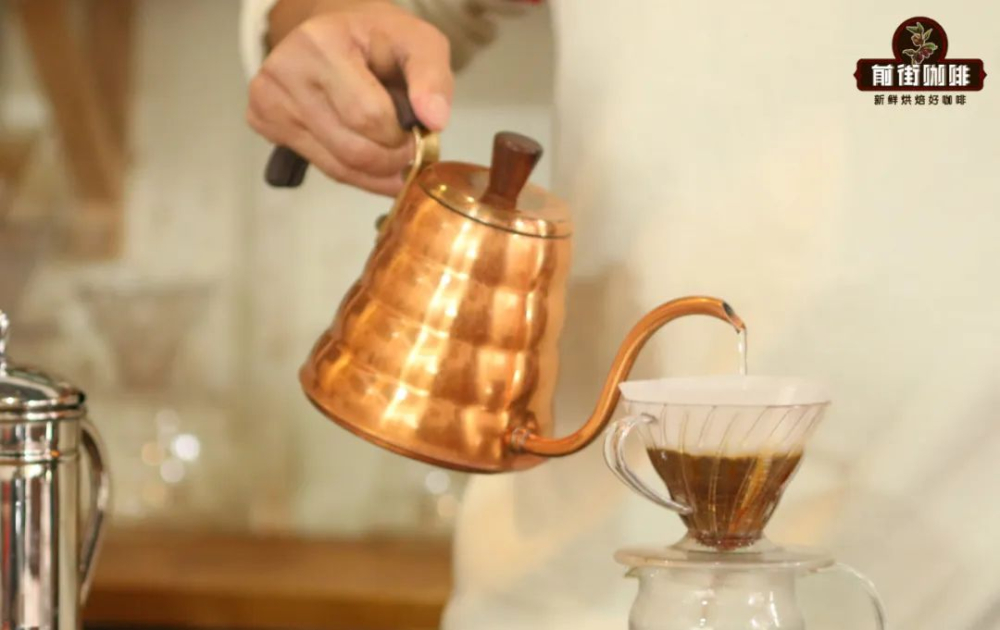
Thinking back to when I first encountered pour-over coffee, the most budget-friendly way to learn was probably "stealing skills." Walking into a café, ordering a pour-over, and then watching the barista's every move the entire time—trying hard to discern the grind size during grinding (later realizing I couldn't remember it at all), silently counting the circles during pouring, mentally estimating the total time. I was clever enough back then to just pull out my phone and start a stopwatch.

After getting home, I'd replay it over and over and practice repeatedly. Of course, with today's abundant online resources, you can find tutorial videos shared by coffee experts anytime, anywhere—there are far more learning paths than before.
Back when I knew nothing, the coffee I brewed myself was genuinely hard to swallow, while what others brewed was genuinely delicious. This stark contrast naturally led people to treat brewing technique as the number one factor determining coffee taste. Add to that the barista's smooth, flowing brewing performance in videos, and beginners easily make "mastering that set of hard skills" their ultimate goal on the coffee journey.
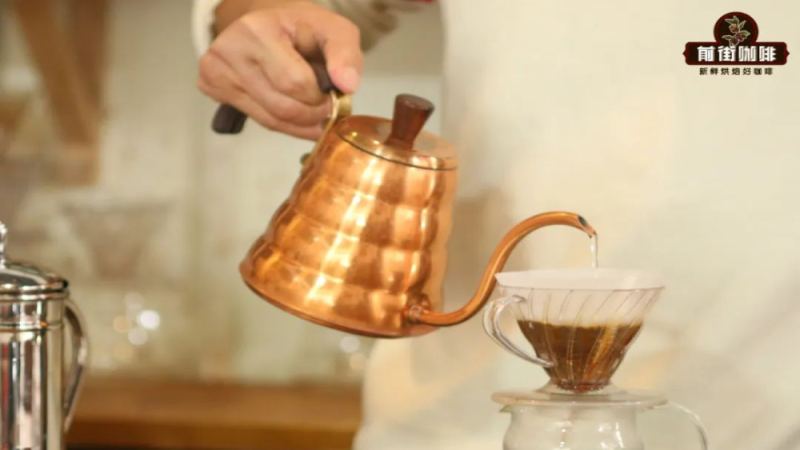
I must mention Japanese-style pour-over coffee here. When I watched videos back then, I was completely captivated by the barista's precise water control and elegant posture, to the point that for a long time, "water control" was the only thing I could see.
All of the above, Front Street calls "form." In Jin Yong's novels, Yang Guo learned the moves of the Dog-Beating Staff Technique under Hong Qigong's guidance, but lacking the mental cultivation method, he could never achieve true mastery. It was only after Huang Rong taught him the mental method that Yang Guo truly mastered the technique. The moves are "form," while the mental method is the "core" and "essence." Pour-over coffee follows the same principle—only by truly understanding the underlying logic of extraction, combined with the "form" of pour-over, can you unleash its true power; having "form" alone can only fool laypeople.
The essence of coffee extraction, in the end, is the coordination among various parameters: grind size, water temperature, coffee-to-water ratio, and your understanding of the coffee beans themselves.

Imagine this: if you only learned the operational process of brewing coffee and used the same method regardless of what beans you got, even with perfect water control and standard movements, the final taste might not necessarily be good. Conversely, adopting a brewing approach tailored to different coffees' characteristics—one that highlights their style—is what fully brings out a coffee's flavor profile.
Back to the original question: is brewing method and technique really that important? For beginners who've never encountered coffee, wanting to take that first step, it truly is crucial. There's inevitably an adjustment period during hands-on practice—initially holding the kettle unsteadily, pouring at an angle—these are all perfectly normal. According to Front Street's observations, it takes about half a month for a beginner to go from zero to being basically able to consistently control water while circling.
Once you've mastered the basic "form," if your mindset shifts—no longer fixating on the barista's movements but instead understanding and internalizing their brewing parameters—that's when you've truly taken a big step from "0" toward "1."
Of course, when your own water control is still very unstable, seeing others pour with smooth, flowing precision, you can't help but cast an envious glance—that's only human nature.
The above content is compiled by CoffeeHunters, a coffee news website.


