








What Green Bean Coffee Trends Mean for Takeout Packaging
Takeout coffee increasingly arrives with espresso, milk, and ice in separate pouches that the customer mixes, a format sometimes called pouch coffee. The idea is to prevent milk foam from collapsing and flavor from fading during delivery, while giving drinkers a sense of participation. That matters in China, where takeout is a major channel for independent cafes.
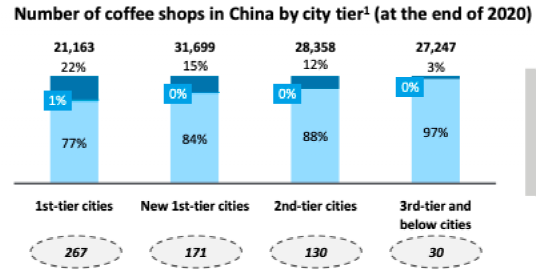
Deloitte figures cited in the coverage put China's coffee shop count near 110,000, with independent cafes holding roughly 87% of the market; in smaller cities that share climbs to 97%. Because those shops lack large capital backing and face pandemic uncertainty, delivery has moved from a sideline to a necessity, even as green bean coffee sourcing and roasting remain their draw.
Order a takeout coffee, and what arrives is espresso, milk, and ice each in separate packaging, requiring you to mix it yourself—this new format known as "pouch coffee" is drawing attention on social platforms. Its emergence addresses takeout pain points like dissipating milk foam and loss of flavor, while also catering to young people's pursuit of participation and ritual. According to Deloitte data, the number of coffee shops in China has approached 110,000, with independent cafes making up as much as 87%, and takeout has long become an important survival channel for them. Why is portioned coffee trending? Can it balance flavor and experience? What new problems might it bring? This article sorts through them one by one.
In the past, street-side cafes carried a social function: buy a drink, while away time in the shop, chat, binge-watch shows, and let the days pass leisurely. But the pace of life has gotten faster and faster, and nowadays more people are used to ordering coffee directly on takeout platforms.
For Chinese consumers, takeout coffee has long been integrated into daily life. Whether it's chain giants like Starbucks and Luckin, or some niche independent coffee shops, delivery entry points can be found on Meituan and Ele.me.
Deloitte's 2021 statistics show that the total number of coffee shops in China has approached 110,000, with about 75% concentrated in first- and second-tier cities. Notably, chain brands do not account for a high proportion of the overall market—only around 13%—which means independent cafes focused on individuality and small-but-beautiful concepts have taken the remaining 87% share. If we look at third-tier cities and below, the proportion of independent cafes climbs even higher, to 97%.
Lacking strong capital backing, plus the uncertainty brought by repeated pandemic outbreaks, the takeout business has gradually shifted from a supplementary option to a rigid necessity for many coffee consumers. Compared with milk tea, where you can freely check off toppings and sweetness levels, coffee's customizable space in the takeout scenario has always seemed limited.
Early takeout coffee was often criticized for not allowing customers to choose concentration or milk amount, and the bumpy ride with delivery riders could also cause spills. Recently, new approaches to these problems have emerged: instead of pre-mixing the ingredients into one cup, they are packaged separately by material—espresso liquid poured into a spout pouch, milk placed in a larger spout pouch, and ice separately placed in a transparent plastic cup.
This handling method not only lets customers enjoy the fun of mixing it themselves, but also brings a visual presentation rarely seen in ordinary takeout coffee.
On Xiaohongshu, many users have posted about their experiences with this kind of portioned coffee, and one brand that appears frequently is HungryPuff from Yangzhou. In fact, takeout portioning is not an entirely new concept; it was used earlier to alleviate takeout problems such as dissipating milk foam, melting ice, and flavor decay. And "pouch coffee," with espresso liquid held in spout pouches, is more like an advanced version of this idea.
The path to popularity for pouch coffee is quite similar to the previously viral convenience-store cocktail—sticking a small liquor bottle upside down into a beverage, creating novelty by changing the way you drink it, thereby attracting consumers to try it.
At first, the starting point for portioning was very practical: to keep the coffee flavor as close to ideal as possible. But in an era of consuming by appearance, merchants have put more thought into packaging design. There is a saying circulating in the new tea beverage industry: change the packaging and you can make a product go viral. Pouch coffee has also benefited from this wave, with small, exquisite independent containers paired with concise text and patterns, inherently suited for photo sharing.
What's more, compared with taste itself, young people often value participation and ritual more. On Xiaohongshu, discussions about homemade drinks emerge endlessly, from imitating Luckin's coconut latte, to recreating the Starbucks menu, to various DIY coffees and milk teas. Takeout coffee portioning happens to give consumers a chance to adjust the ratio themselves, greatly enhancing the sense of participation.
However, the portioning model is not without shortcomings. Although spout pouches holding espresso liquid can, to a certain extent, maintain layering and slow flavor loss, after half an hour in the bag, the coffee aroma begins to decline; if it is then put in the refrigerator overnight, the taste is almost halved, so consumers' wish to stock up on multiple bags at once is not easy to realize.
At the same time, portioning means more packaging materials, and environmental issues follow. The coffee industry advocates green concepts and promotes coffee-grounds merchandise on one hand, while creating more waste by increasing participation on the other. This contradiction is worth thinking about.
Coffee products are still iterating rapidly, and no one can predict what the 3.0 version of takeout coffee will look like.
Image source: Internet
For professional coffee knowledge exchange and more coffee bean information, please follow Coffee Workshop (WeChat public account: cafe_style)
For more specialty coffee beans, please add the private WeChat Front Street Coffee (FrontStreet Coffee), WeChat ID: kaixinguoguo0925
The above content is compiled by CoffeeHunters, a coffee news website.


