







How Will the Starbucks PFAS Packaging Phase-Out Work?
On March 15, Starbucks announced a ban on per- and polyfluoroalkyl substances in its food packaging. US stores are pledged to stop using PFAS-containing packaging by the end of 2022, and the ban is set to extend to all global stores by the end of 2023. The move responds to years of advocacy by the Toxic-Free Future group's Mind the Store campaign.
PFAS is a class of man-made chemicals added to paper containers to repel oil and water. They resist breakdown and can persist in water and air for thousands of years, accumulating in the environment and in animals and people. Studies link them to kidney cancer, testicular cancer, liver and thyroid disease, reproductive problems, pregnancy-induced hypertension and low birth weight; in August 2020, an overseas environmental group reported detecting PFAS in fast-food packaging.
Starbucks recently announced a major environmental initiative: a commitment to eliminate PFAS-containing food packaging from its global stores by the end of 2023, with US stores leading the way by the end of this year. This ban is a key part of Starbucks' sustainable packaging strategy and also responds to years of advocacy by the environmental group "Toxic-Free Future." PFAS, a chemical commonly found in takeout containers, effectively repels oil and water but poses a serious threat to the environment and human health because it is difficult to degrade. This article will provide an in-depth interpretation of Starbucks' phase-out plan, the hazards of PFAS, and the cost challenges facing alternatives, while also highlighting the sustainability efforts of brands such as Front Street Coffee.
On March 15, Starbucks officially issued a perfluorinated chemicals ban, pledging to completely stop using PFAS-containing food packaging in US stores by the end of this year and to extend this ban to all global stores by the end of 2023. This move responds to years of advocacy by the "Toxic-Free Future" organization's Mind the Store campaign, which has been dedicated to promoting the phase-out of PFAS in retail food packaging.
PFAS is often used to enhance the water- and oil-resistant properties of paper containers, and because it is low-cost, it is widely used.
PFAS stands for per- and polyfluoroalkyl substances, which are man-made chemicals. Because they are extremely difficult to break down and can even persist in water and air for thousands of years, continuously accumulating in the environment, animals, and human bodies, they pose a serious threat to health. However, these chemicals are still commonly found in everyday products, with food packaging, especially takeout containers, being a common source.
In August 2020, foreign media reported that an overseas environmental organization released a report stating that the toxic substance PFAS was detected in the food packaging of major fast-food brands such as McDonald's and Burger King. Subsequently, McDonald's and McDonald's China both responded that the substance was not added to products in China.
Multiple studies show that PFAS is closely associated with a range of health problems, including kidney cancer, testicular cancer, liver and thyroid disease, reproductive problems, pregnancy-induced hypertension, low birth weight, increased risk of birth defects, and immune system damage.
Starbucks' PFAS ban is part of its broader sustainable packaging strategy, which also includes sourcing paper certified by the Forest Stewardship Council (FSC). As the sustainability strategy advances further, Starbucks is further optimizing single-use packaging and replacing it with reusable packaging. It is expected that by the end of this year, all food packaging in US stores will be completely free of PFAS; by 2023, all food packaging in global stores will also achieve this goal. Currently, Starbucks has more than 15,000 stores in the United States and more than 34,000 stores worldwide.
After Starbucks released its announcement, the "Toxic-Free Future" organization immediately issued a statement welcoming Starbucks' participation in the initiative and praising its commitment to protecting customers from the potential health harms of PFAS.
Previously, Starbucks was rated F in the retailer reports of 2018, 2019, and 2021, which are based on benchmarking retailers' chemical safety policies and implementation plans.
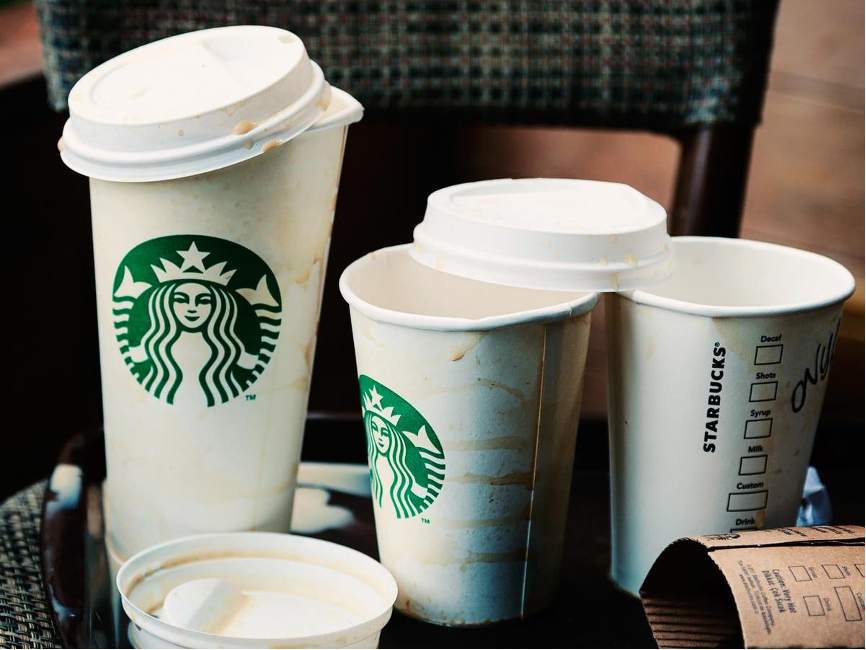
PFAS is widely used because of its low cost. In view of its serious threat to the environment and human health, brands such as Starbucks, Tims, and McDonald's have successively made phase-out commitments. However, to accomplish this difficult task, researchers are actively looking for alternatives. Among them, PBS also has good oil-resistant properties, but its cost is as much as five times that of PFAS.
While phasing out single-use cups, Starbucks is also phasing out PFAS. Although disposable products bring convenience to life, they cause indelible harm to the environment and health. Therefore, when going out for coffee in the future, it is better to bring your own cup.
Image source: Internet
For more coffee bean information, please follow Coffee Workshop (WeChat public account: cafe_style) For professional coffee knowledge exchange, please add WeChat ID: kaixinguoguo0925
The above content is compiled by CoffeeHunters, a coffee news website.


