







Why Did Starbucks Suspend Stock Buybacks?
On his first day back as CEO, Howard Schultz suspended Starbucks' stock buyback program and redirected the funds toward employee benefits and store operations. The decision followed a wave of unionization among US partners, driven by heavy workloads and stagnant benefits. Employees at 10 stores have voted to form unions, and more than 170 stores have applied to join. Schultz acknowledged the company had let employees down and plans to invest $1 billion in wages, training, and benefits.
The pressure built after the COVID-19 pandemic, when supply chain crises, high inflation, and local US pandemic policies strained operations. To cut costs, Starbucks laid off staff and reduced store funding while running beverage promotions, leaving partners with multiplied workloads and unchanged pay. Employees first sought consultation, then turned to petitions and votes after talks failed, while the company actively opposed union formation. Schultz took over temporarily after Kevin Johnson's retirement.
On his first day back, former Starbucks CEO Howard Schultz announced an immediate suspension of the stock buyback program, redirecting the funds toward employee benefits and store operations. Behind this decision is a wave of unionization among Starbucks partners in the US, driven by intense workloads and stagnant benefits. So far, employees at 10 stores have voted to form unions, and over 170 stores have applied to join. Schultz admitted that the company had let employees down in addressing store operations issues and plans to invest $1 billion in wages, training, and benefits. This article sorts out the context of this transformation move and its impact on Starbucks' future operations.
After the outbreak of the COVID-19 pandemic, supply chain crises, high inflation, and local US pandemic policies put considerable operational pressure on Starbucks. To cut costs, the company resorted to layoffs and reduced funding for store operations, while continuously launching beverage promotions to attract customers. As a result, store partners' workloads multiplied, yet wages and benefits remained stagnant. Amid long-term high-intensity work and a tense environment, discontent among Starbucks employees gradually spread.
At first, partners took a consultative approach, hoping the company would invest more in employee benefits and store operations. Faced with these demands, Starbucks did not take them seriously at the time and showed no willingness to address the issues. After multiple failed communications, employees began forming unions through petitions and votes, hoping to gain a channel for direct dialogue with the company.
The company was indifferent to increasing employee benefits but quite active in blocking union formation—yet the results were less than ideal. Since the birth of the first Starbucks employee union, more and more US partners have joined the action, some applying and others joining, and the situation eventually became difficult to control. As of now, employees at 10 Starbucks stores in the US have voted to form unions, and employees at over 170 stores have requested to join unions.
Previously, Starbucks announced that former CEO Kevin Johnson would retire, with Howard Schultz temporarily taking over the CEO role until a new successor is determined. Before his official return, Schultz had already formulated a plan to "change Starbucks' situation," one element of which was to increase investment by $1 billion in wages, training, and benefits.
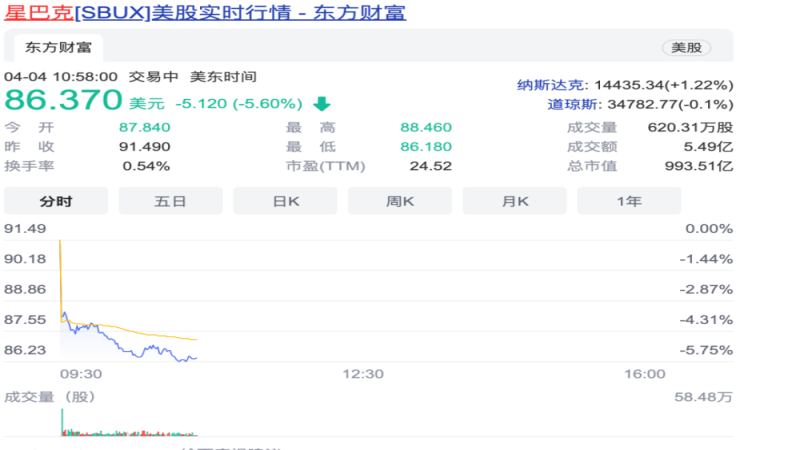
Such a large sum of money would naturally not come out of the old man's own pocket. If investment is increased on one side, cuts must inevitably be made on the other. So on April 4, his first day in office, Howard Schultz announced through an open letter an immediate suspension of the stock buyback program.
When a company uses funds to buy back its own stock, it typically drives up the share price, benefiting investors and executives who hold large amounts of stock. Due to the pandemic, Starbucks halted stock buybacks in 2020 and did not renew its commitment to investors until the end of 2021, promising to match $20 billion in dividends and buybacks within three years. In the quarter ending January 2, 2022, Starbucks had repurchased 31.1 million shares, with 17.8 million more repurchasable under the current authorization. The exact amount spent on buybacks has not yet been disclosed.
- Source: The New York Times
But what is certain is that Howard Schultz intends to invest the funds needed to buy back those 17.8 million shares into the company's employees and store operations. To "steady the troops," he will visit stores in the coming weeks to speak face-to-face with frontline employees.
Schultz's return this time has won recognition from many investors and employees. In dealing with the union issue, he chose not to confront but to address the most fundamental problems. Before taking office, Schultz communicated with the manager of the first store to form a union. He later admitted to a New York Times reporter: the company failed to help employees solve difficulties in store operations, which left them disappointed. Therefore, when formulating Starbucks' 2022 plan, the first thing he thought of was improving employee benefits and solving the understaffing problem.
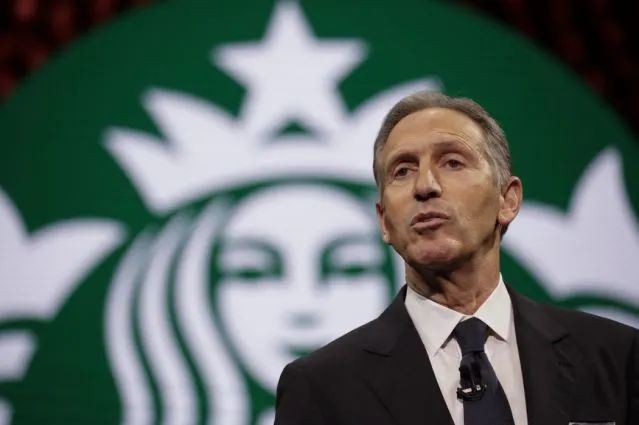
Howard Schultz once said: "People (partners) will always be our most important asset and Starbucks' competitive advantage."
This is like a foundation: once it becomes loose, how can the building remain stable? Rather than trying every possible way to build external supports for the building, it is better to make the foundation solid. The same principle applies to a company: if employees cannot obtain good treatment and a sense of belonging in the enterprise, the company's operations will only become more difficult.
Image source: Internet, The New York Times
For professional coffee knowledge exchange and more coffee bean information, please follow Coffee Workshop (WeChat public account: cafe_style)
For more specialty coffee beans, please add the private WeChat of Front Street Coffee (FrontStreet Coffee), WeChat ID: kaixinguoguo0925
The above content is compiled by CoffeeHunters, a coffee news website.


