








Does Brewed Coffee Powder Close the Gap With Pour-Over?
Pour-over and drip bags differ mainly in grinding: pour-over uses freshly ground beans and a matching dripper, while drip bags rely on pre-ground coffee. In a home test with a Hario V60, Kono filter paper, and an 800-yuan hand grinder, fine particles settled and slowed the flow, producing a thin flavor.
The fix came down to grind consistency and setup. When time and equipment were limited during a Spring Festival trip, a county-town cafe used an EK grinder to prepare drip bags. The comparison shows that brewed coffee powder can still make a drinkable cup when the grind is even and the equipment has limits.
What exactly is the difference between pour-over and drip bags? This article starts from a real brewing experience during a Spring Festival trip back home, compares the grinding performance of a hand grinder and an electric grinder, and analyzes the impact of pre-ground versus freshly ground coffee on flavor details. Using mid-range setups such as a Hario V60 and Kono filter paper as references, the author records the specific situation in which fine particles settled and slowed the flow, resulting in a thin flavor, and shares the solution proposed by Front Street. In the end, due to time and equipment constraints, the author turned to a county-town cafe and used an EK grinder to make drip bags. The article fully presents the logic of choosing between pour-over and drip bags, and also points out a simple truth: if you have never used better equipment, what you have now is the best.


When it comes to choosing between pour-over and drip bags, as a half-baked barista like me, I would definitely stand on the side of pour-over. How could the flavor of drip bags ever be enough to compete with pour-over? Front Street said before that proper pour-over emphasizes freshly ground beans and a matching dripper, which is exactly what drip bags, made with pre-ground coffee, cannot do.
"I would rather not drink a single sip of coffee than touch pre-ground powder!"
Let me tell you a true story of my own. About two weeks ago, I went back to my hometown in a small county town for the Spring Festival. As someone who feels uncomfortable if I go a day without coffee, I naturally had a full pour-over setup at home.
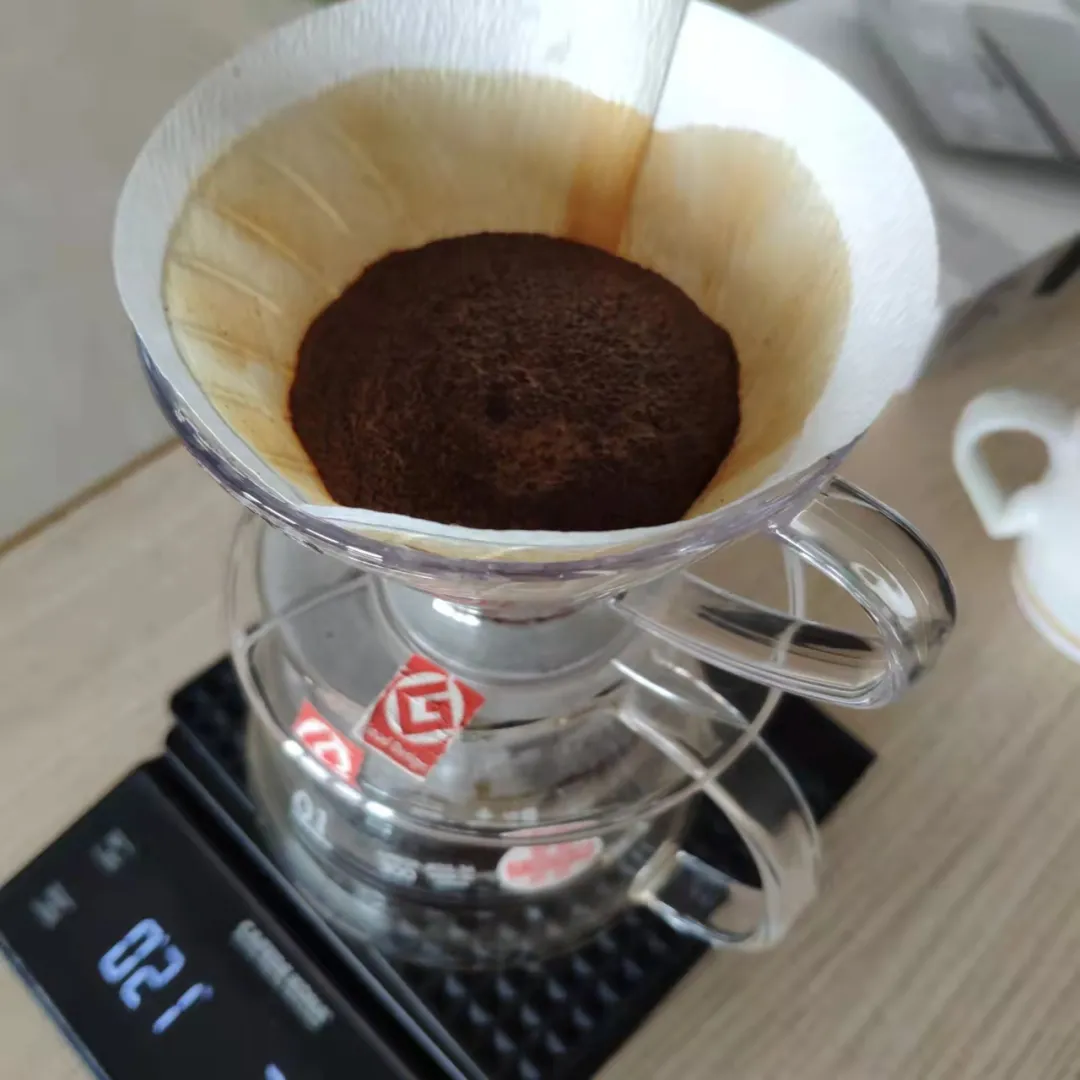
The setup was not top-tier, but still mid-range: a Hario V60 dripper and pouring kettle, Kono filter paper, and a Tiamo thermometer, basically the same type of equipment used in Front Street stores. For grinding, I used an 800-yuan hand grinder. When I bought it four years ago, it was still considered upper-mid-range, and for the first half year after buying it I used it quite often and it felt good in the hand. Later, as I went home less often, it just sat there gathering dust.
Since the tools were all there, I only needed to bring some beans home. On the day I arrived, I was eager to brew a cup to satisfy my craving. But as soon as I started brewing, something felt off. Having seen all kinds of coffee bed conditions, I quickly realized that fine particles had sunk to the bottom and clogged the drainage hole, noticeably slowing the flow. I made adjustments on the spot.
The coffee still tasted decent, since the beans themselves were good, but compared with what is brewed in the store, many layers of detail were lost, and the body was also a notch weaker.
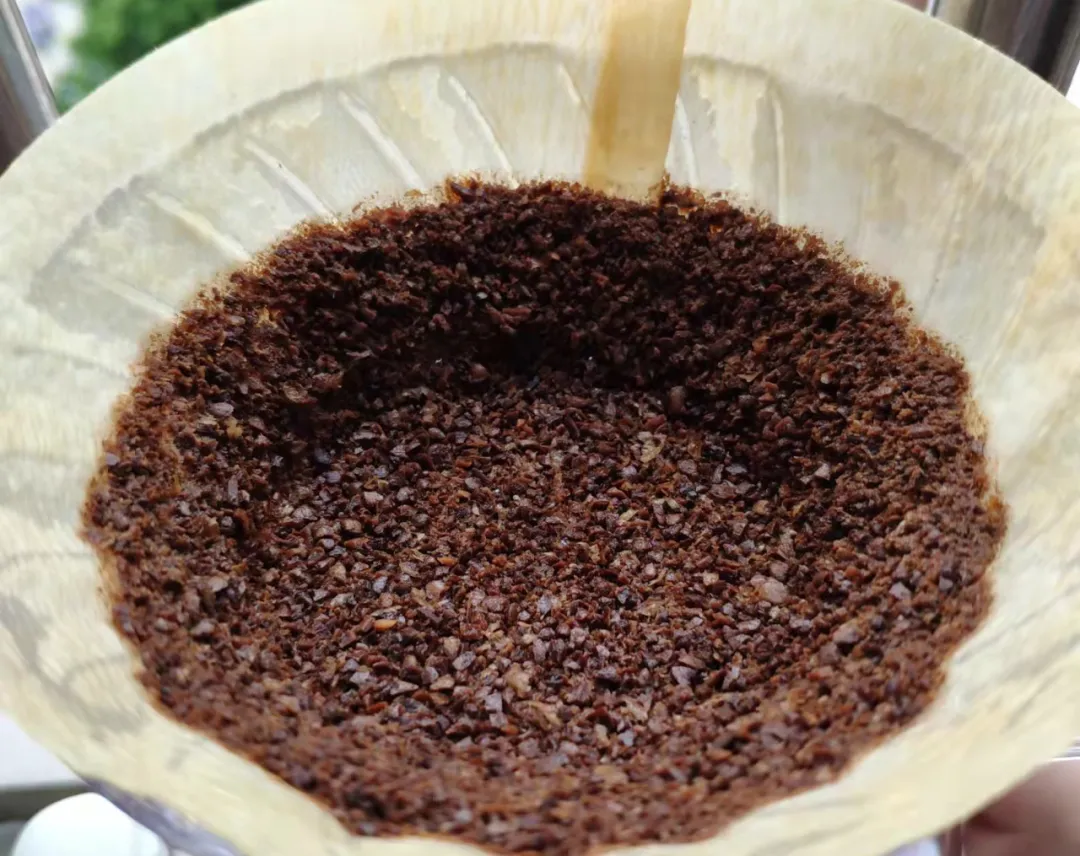
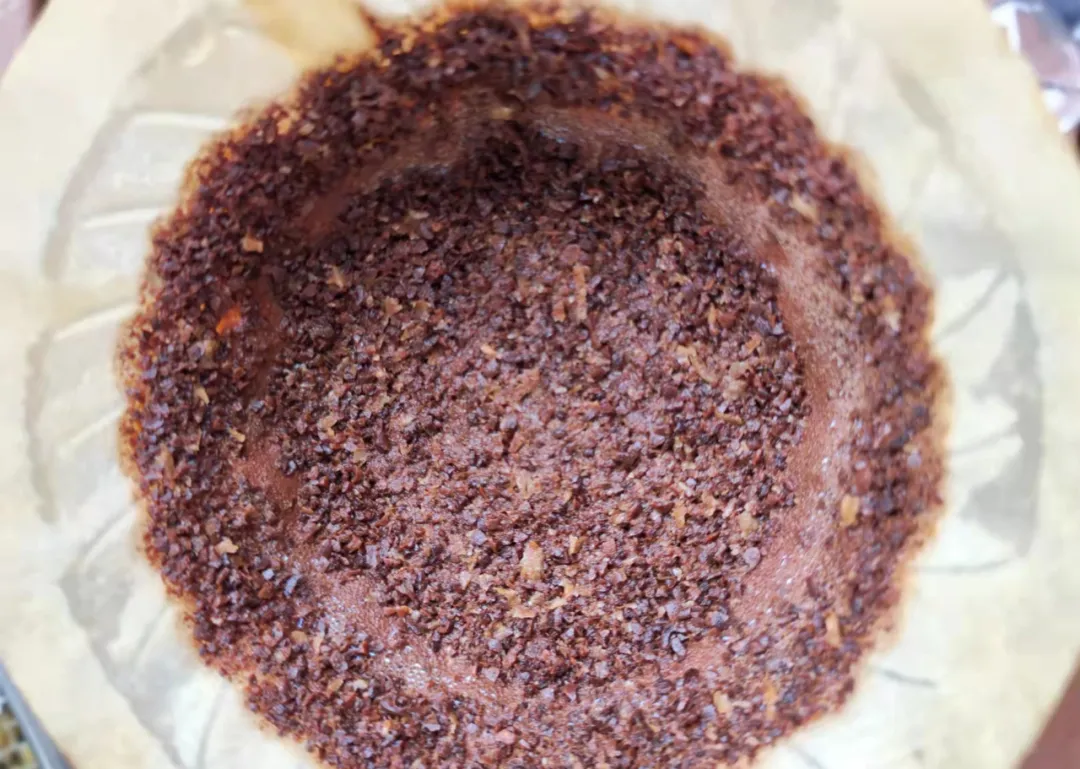
Looking at the coffee bed, coarse particles were visible to the naked eye on the surface of the bed, and a muddy layer of extremely fine powder was stuck to the wall of the dripper, with even more at the bottom.
This is actually what Front Street mentioned before: the particle distribution is too scattered, with coarse and fine particles each making up a large portion. If brewed with a conventional method in this state, the mouthfeel will be on the thin side, and the flavor can easily become dull.
If I were still the me from four years ago, I probably would have thought this cup was already very good, since I had never tasted anything better. But once you have used a grinder with very uniform grinding, you can never go back. Of course, Front Street also discussed in a previous article how to deal with this situation - "If the grinder performs too poorly and the coffee grounds are uneven, is there still a way to brew good coffee?"
That method was developed specifically for the grinding state of this kind of hand grinder. The next day I adjusted the grind size accordingly, and the brewed result was indeed much better, especially with improved flavor details, but it still could not compare with what that EK grinder in the store produces. Still, none of that was the key point. The key point was that coffee that originally took five minutes to make was dragged out to fifteen minutes.
During the Spring Festival at home, my time was packed full by the elders, and every minute was precious, so I simply went to a coffee shop in the county town to grind coffee and make drip bags. I have to say, the setup of coffee shops in small county towns is really not low these days; an EK has almost become standard equipment.
I chose drip bags rather than grinding coffee to take home for pour-over mainly because I feel the biggest dividing line between drip bags and pour-over lies in pre-grinding versus fresh grinding. Once the coffee is ground, whether you brew it with a dripper or in a drip bag makes little difference to me. Moreover, drip bags are more convenient, with no need to weigh the coffee dose or wash the dripper.
This is a true experience from going home for the New Year this year. I used to think grinding coffee with a hand grinder was romantic; now I only find it torturous. Conversely, if I had to keep using that hand grinder to brew coffee, I would still choose drip bags as the more worry-free option.
From this I also realized a principle: if you have never experienced something better, what is in front of you is the best; if you have never used an EK, a hand grinder is quite good too.
The above content is compiled by CoffeeHunters, a coffee news website.


