







How does americano coffee perform with light-roast beans?
Espresso is usually pulled with darker roasts, but a test with three Ethiopian light-roasted beans shows that americano coffee keeps the fruit acidity and aroma of the beans well. The Dorothy lots performed especially clearly in the cup. The same beans, however, mostly lost their coffee flavor in a latte, where milk easily masked what remained.
The experiment compared Front Street Coffee's Huakui, Gadingding, and Dorothy, all roasted to Light Roast or Cinnamon Roast levels with Agtron values of roughly 85 to 95. The team adjusted grind setting, pre-infusion, pressure, and extraction time on a machine with more manual stages, so Americanos stayed bright while milk drinks stayed weak.
Traditional espresso mostly uses darker-roasted beans, but nowadays many cafés are starting to try making espresso with light-roasted beans. In this article, through extraction experiments with three Ethiopian light-roasted beans—Front Street Coffee's Huakui, Gadingding, and Dorothy—we recorded parameter adjustments and flavor performance in detail. The tests found that making Americano with light-roasted beans preserves the original fruit acidity and aroma very well, with Dorothy Americano performing especially prominently; but once made into a latte, the coffee flavor is generally too weak and is easily masked by the milk. The article also shares practical adjustment experience such as grind setting, pre-infusion, pressure, and extraction time, providing a reference for coffee lovers who want to try light-roast espresso.
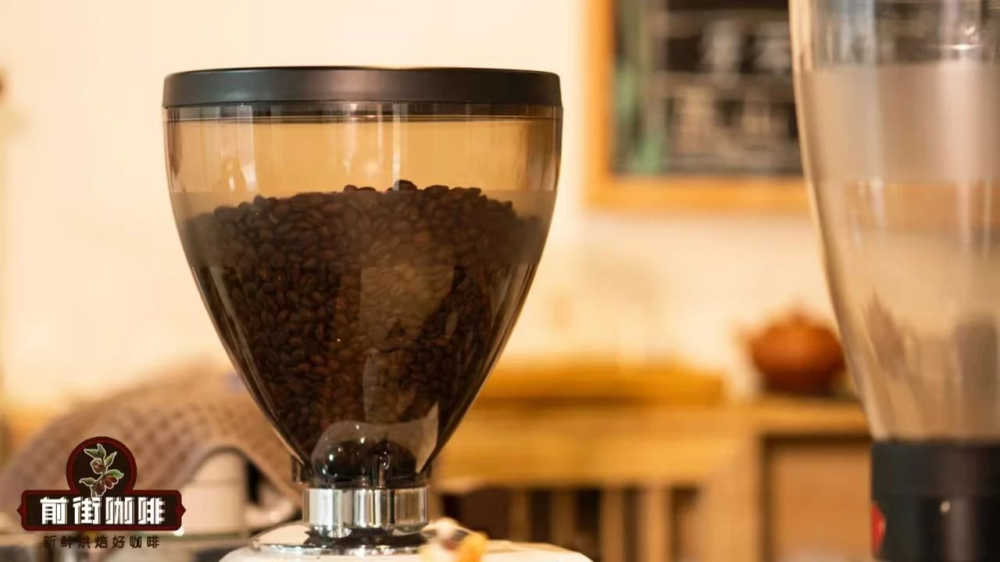
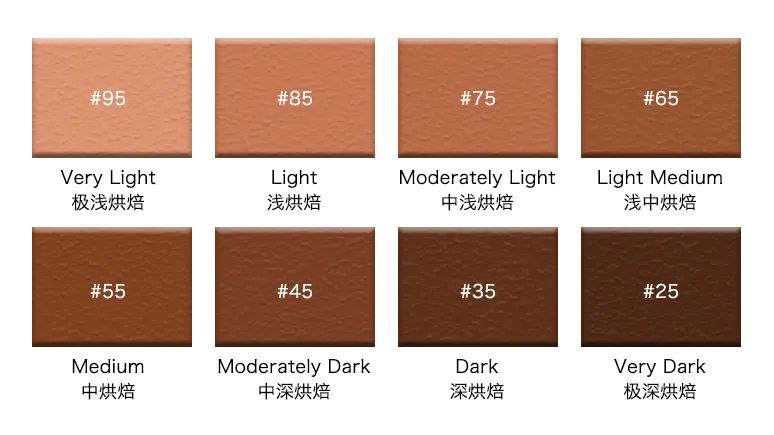
Espresso usually uses darker-roasted beans, and this has almost become an industry consensus. In coffee roasting classifications, there is a dedicated level called "Italian Roast," with an Agtron color value of about 25, the darkest of the eight roast levels. These beans often have an oily sheen on their surface. However, the espresso beans commonly seen on the market today are not that dark. Taking Front Street Coffee's espresso series as an example, the Agtron color values are mostly around 55, corresponding to "City Roast" among the eight levels.
Today Front Street Coffee wants to try extracting espresso with light-roasted beans to see what kind of flavor it presents. The light roast mentioned here refers to "Light Roast" and "Cinnamon Roast" among the eight levels, with Agtron color values roughly between 85 and 95. Previously, Front Street Coffee had not done this "fun experiment" because the old coffee machine in the shop (the hero when the shop opened) had limited functions, and the effect of extracting light-roasted beans was always less than ideal. Now that a new-style machine has been swapped in, with more stages that can be manually intervened in, we can finally let loose and play around.
Three beans were selected for this test: Front Street Coffee Huakui (natural), Front Street Coffee Gadingding (washed), and Front Street Coffee Dorothy (enzyme-washed). Why are they all Ethiopian beans? Because these varieties all showed bright fruit acidity during pour-over, making it convenient to compare their commonalities and differences when made as espresso.
First, let's test Front Street Coffee Huakui. If you want to extract espresso with light-roasted beans, be sure to remember to set the grind finer. Otherwise, you will see the following situation:
At the 7th second of extraction: the flow rate was astonishingly fast.
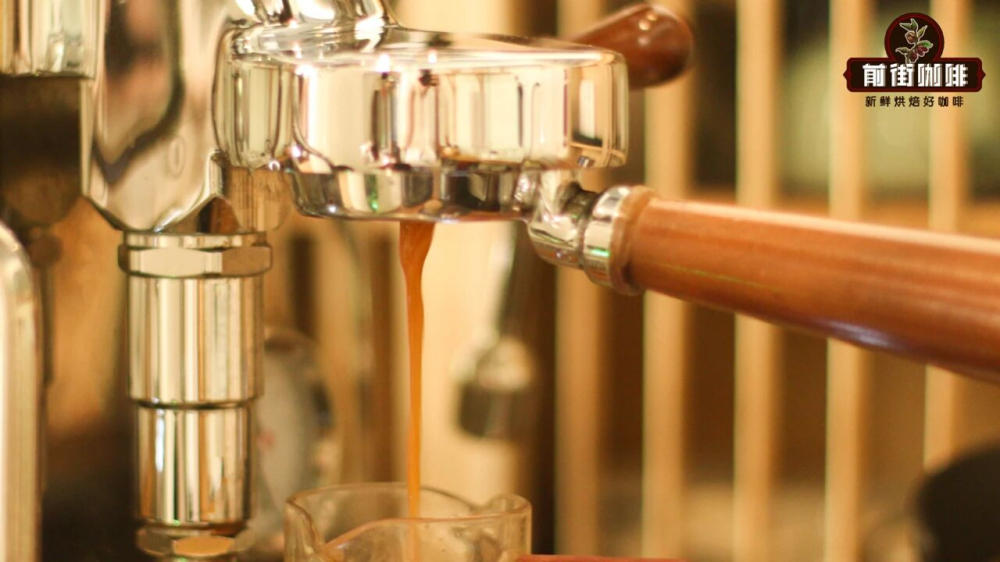
After three rounds of parameter adjustments, the extraction recipe for light-roast Huakui was set as: 20 grams of coffee grounds, 8 seconds of pre-infusion, extracting 35 grams of coffee liquid under 6 bar pressure throughout, with a total time of 30 seconds. The espresso exudes a sweet berry aroma, tastes like concentrated juice with a jammy quality, and is accompanied by a slight pungency.
Front Street Coffee made one hot Americano and one hot latte with Huakui. The hot Americano gave off an enticing sweet berry aroma, entered the mouth like raspberry juice, had almost no bitterness, and finished with the aroma of passion fruit honey. But once made into a hot latte, the performance was somewhat flat; the coffee flavor was basically covered by the milk flavor, and what stood out instead was the sweet milky taste (a bit like baby formula).
Next is the washed Front Street Coffee Yirgacheffe Gadingding. With the experience from Huakui, only one parameter adjustment was made this time: 20 grams of coffee grounds, 6 seconds of pre-infusion, extracting 32 grams of coffee liquid under 5 bar pressure throughout, with a total time of 26 seconds. Similarly, Front Street Coffee made hot Americanos and hot lattes for comparison.
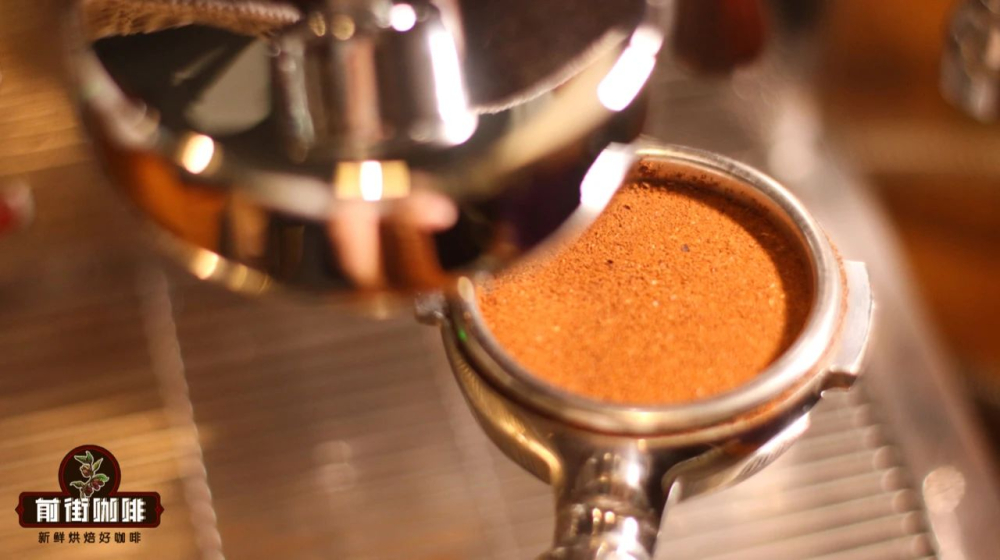
The crema of the espresso extracted from washed Gadingding dissipated very quickly; before the hot water was even poured, only a thin layer of crema remained. The hot Americano also performed well, rich in citrus notes, with a smooth and full mouthfeel, and a finish of white floral aroma; the only shortcoming was that the finish was a bit short.
After being made into a latte, the performance was less than ideal; the whole cup tasted very weak, and it did not bring out the milk's sweetness and aroma like Huakui did—it felt as if the coffee and milk repelled each other.
Finally, Dorothy was tested. Because this bean showed a "white peach oolong" flavor during pour-over, Front Street Coffee also directly calls it "White Peach Oolong." Parameter adjustments were also made: 20 grams of coffee grounds, 10 seconds of pre-infusion, extracting 35 grams of coffee liquid under 6 bar pressure throughout, with a total time of 29 to 30 seconds. The resulting espresso gives off a rich peach aroma.
Hot Americanos and hot lattes were also made for comparison. Because we suffered a loss with Gadingding, Front Street Coffee this time directly extracted the coffee onto hot water. The Dorothy hot Americano was considered by Front Street Coffee to be the most delicious of the three beans, with a rich peach flavor, creamy body, and oolong tea finish, not inferior to pour-over at all.
After being made into a hot latte, the performance was somewhat surprising; the whole cup tasted like light cheese, interesting and special.
Judging from the performance of these three light-roasted beans, making Americano coffee all had good results and could present the beans' original flavors well. But after blending with milk to make a latte, the flavors of light-roast coffee were generally on the light side and easily overpowered by the milk's dominance.
For friends who want to use light-roasted beans for espresso, this path is feasible, but to extract delicious coffee, a great deal of theoretical knowledge and repeated practice are needed to achieve it.
The above content is compiled by CoffeeHunters, a coffee news website.


