







Is anaerobic coffee processing the same as adding flavoring?
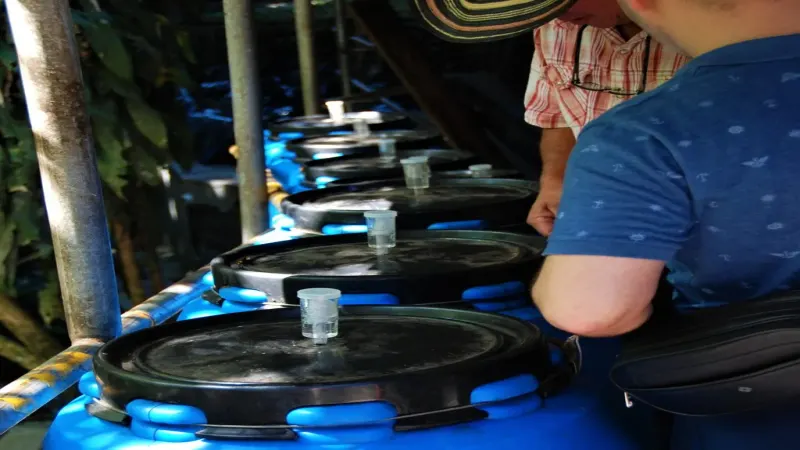
Anaerobic coffee is not flavored coffee. The distinctive flavors come from fermentation, not from additives, and the label terms describe how the fruit and seed were handled. Anaerobic processing splits into two types: anaerobic natural, where fermentation comes before drying, and anaerobic washed, where the coffee is washed first, then fermented, then dried.
This kind of coffee processing costs more, takes longer, and needs closer control than ordinary natural or washed methods, so it is mostly run by estates with stronger finances rather than individual smallholders. World champion Sasa has drawn the line between flavored coffee and the use of enzymes or yeast fermentation, and the article addresses whether anaerobic beans harm health.
In recent years, the processing method descriptions on coffee bean labels have become increasingly long, with various special processes centered on anaerobic fermentation emerging one after another. When many consumers drink anaerobically processed coffee with unique flavors, they wonder whether flavorings were added during roasting. This article sorts out the differences between anaerobic natural and anaerobic washed, explains why special processing methods are mostly led by well-funded estates, and cites the views of world champion Sasa to clarify the essential differences between flavored coffee and the addition of enzymes or yeast fermentation. It also answers questions such as whether anaerobic coffee is equivalent to flavoring beans and whether it harms health, helping coffee lovers understand more transparently where the flavors in their cup come from.
No one knows when it started, but the processing method column on coffee bean labels has grown longer and longer, as if they wish they could print the entire processing flow on the packaging. The best example of this trend is the various special processes centered on anaerobic fermentation.
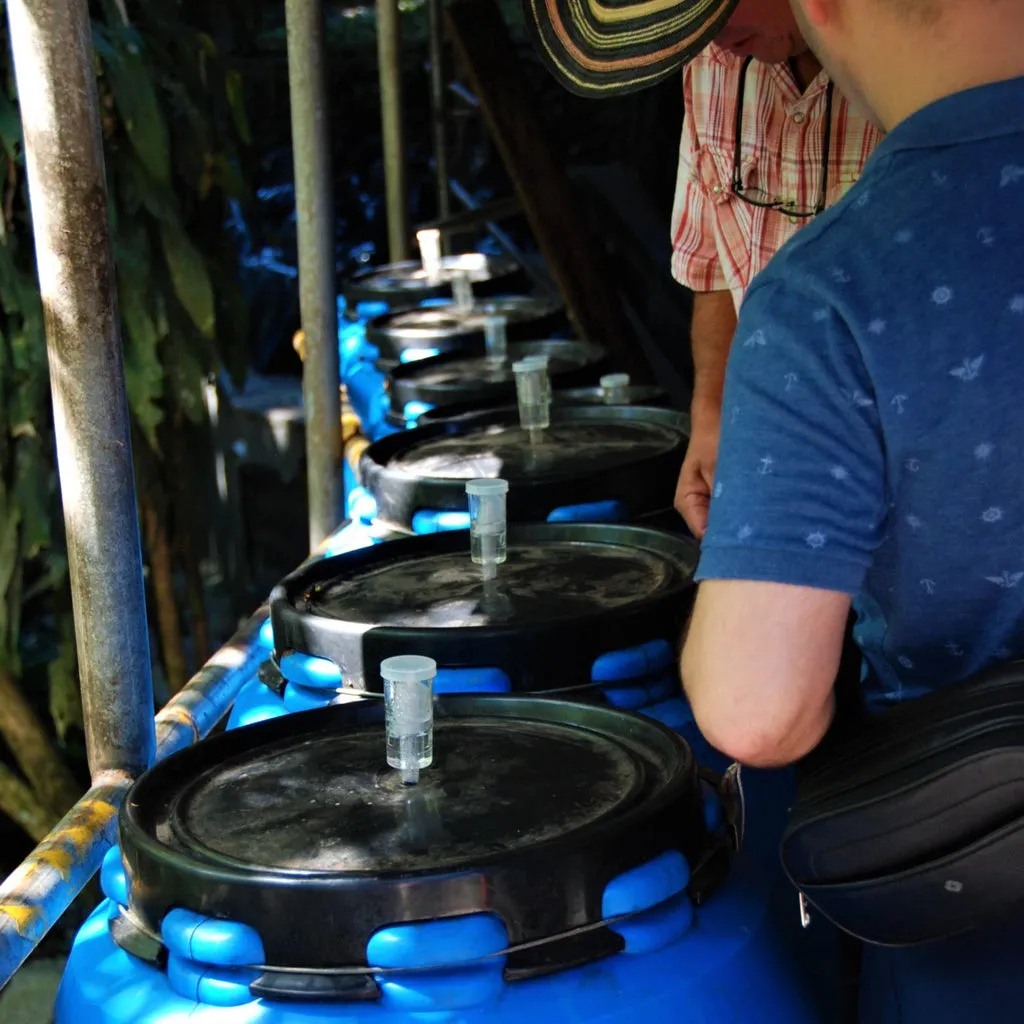
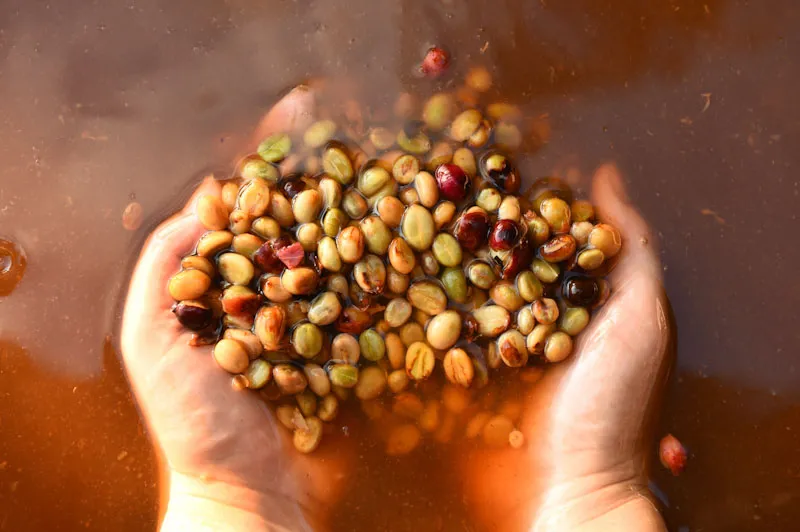
The first to enter the public eye were various anaerobic techniques. Theoretically, anaerobic processing can be divided into two categories: anaerobic natural and anaerobic washed. The difference lies in adding a period of anaerobic fermentation to the original natural or washed process. The sequence for anaerobic natural is to first perform anaerobic fermentation, then proceed to natural drying; anaerobic washed is first washed, then anaerobically fermented, and finally dried.
If switched to ordinary natural or washed, the processes at each estate are actually quite similar, since there are limited steps humans can intervene in, and to a large extent it depends on the weather. Places with plenty of sunlight dry for a shorter time, while places with less sunlight need to extend the drying period.
But once entering the anaerobic fermentation stage, the factors that can be controlled by humans increase significantly. Moreover, anaerobic processing is a high-investment approach, and it is rarely heard that a certain farmer in a certain village independently produces a batch of anaerobic beans. It is almost always done by estates with stronger economic strength. Anaerobic processing is costly, time-consuming, and requires professional knowledge, so the earliest explorers of anaerobic processing were estates in Colombia, Costa Rica, Panama, and other places. Estates that use unique processing methods as a selling point have also appeared on the market, such as 90+, Hacienda La Palma & El Tucan, and Finca El Paraiso.
One more thing to add here: many customers who come to Front Street Coffee and drink anaerobically processed coffee are surprised and ask whether Front Street added "something" during roasting to make the flavor so special. In fact, these unique flavors are formed during the coffee processing stage, not by anything extra added during roasting.
And because each estate has its "own ideas" about anaerobic processing, in order to make it easier for consumers to understand how thoughtfully and uniquely the estate owner handled it, the naming of processing methods has become increasingly elaborate. (Anaerobic is essentially an oxygen-free fermentation process, which involves the control of parameters such as time, medium, temperature, and pressure.)
So the processing methods commonly seen on the market can be detailed down to:
(various alcoholic) oak barrel fermented washed process "using different oak wine barrels to ferment coffee beans, so the flavor expression naturally differs, such as sherry whiskey barrels and rum barrels"
(various fruits) yeast anaerobic process "adding yeast to assist fermentation, helping the coffee ferment out the flavor the processor wants, such as adding lactic acid bacteria or specific yeasts"
various unique anaerobic processing methods "such as ASD anaerobic slow natural, double anaerobic washed, carbonic maceration, low-temperature slow anaerobic honey process"
So many anaerobic-processed coffees have created flavors that many traditional processing methods cannot present, with extremely high recognizability. Drinking them feels less like drinking coffee and more like tasting fruit or alcohol itself. As a result, the term "flavored coffee" has attracted everyone's attention.
The definition of flavored coffee is rather vague, so perhaps we can refer to Sasa's view. He is a big figure in the coffee world who was the first to win the world championship using anaerobic coffee. He believes that, provided the processing information and additives are both labeled, this type of coffee is worthy of recognition. Although today major coffee competitions such as COE, BOP, WBC, and WBrC regard such beans as suspicious of cheating and shut them out.
He also clearly mentioned that in experiments in Nicaragua, poor-flavor varieties and low-altitude coffee beans indeed showed improved flavor performance after carbonic maceration (which is also why green bean competitions prohibit such coffee beans from participating).
After discussing with a group of industry experts, Sasa tried to help everyone distinguish flavored coffee: if the substance added during processing ultimately has its flavor reflected in the coffee, then it is flavored coffee. Simply put, if flavor extracts or flavorings are added during processing with the aim of making the coffee taste like that flavor, or if fruits, flowers, alcohol, etc. are added during processing, roasting, or brewing and the final drink tastes of the added substances, then it all counts as flavored coffee.
But if enzymes are added as fermentation catalysts, or yeast or probiotics are added to participate in fermentation, and in the end the coffee does not contain the taste of the additives but rather flavors produced through the fermentation process, then it does not count as flavored coffee.
"Note: An enzyme is essentially a type of protein, while yeast is a fungus, a single-celled microorganism with cellular structure."
Sasa also specifically discussed whether adding fruit during fermentation counts as flavored coffee. His original wording was:
"In fermentation, producers sometimes add fruit to support enzymatic reaction. Fruit can also be added to support fermentation with yeast, bacteria, and sugars.
If, at the end of fermentation, we cannot find any remains of the fruit left in the final product (green beans), it can be considering a processing aid and does not need to be declared unless it is an allergen.
For example, if we add pineapple in fermentation, it adds new microbes and sugars, which are used during the fermentation process. By the time it’s completed, the pineapple will be consumed and will no longer be present.
This leads to the formation of different aroma compounds that wouldn’t be present without the pineapple, but because there is no pineapple itself present in the final product, it is a processing aid; not an infusion."
The general meaning is: if the fruit added is for enzymatic reaction and participates in fermentation, and in the end there is no residue of that fruit on the green beans, then the added fruit should be regarded as a processing aid, not a flavoring agent.
Of course, this is only the view Sasa reached after discussing with some people, and everyone can take it as a reference. But regardless of whether flavored coffee is accepted by the market, Front Street very much agrees with one of Sasa's views, which is that coffee processing information should be transparent, and this also fits the traceability concept of single-origin coffee. As long as end consumers can clearly, transparently, and truthfully understand how the coffee they drink was grown and processed, the final choice still rests in the hands of consumers.
Perhaps the slowly lengthening names of processing methods are a very good start.
The above content is compiled by CoffeeHunters, a coffee news website.


