







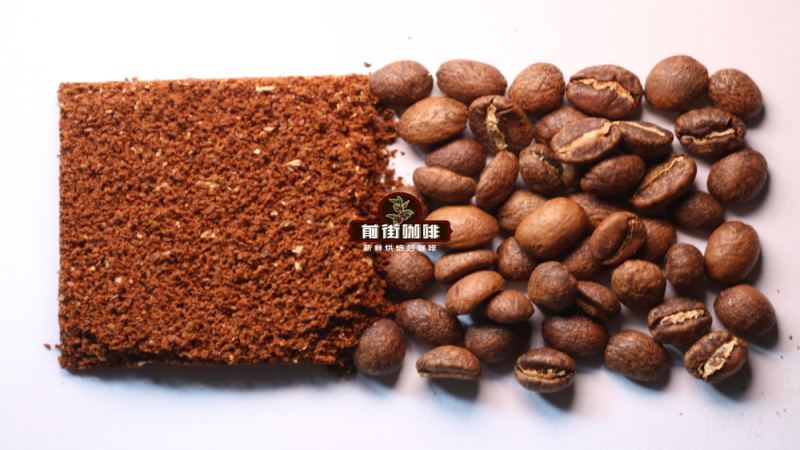
How fine should coffee particles be for pour-over?
Grind size causes more pour-over problems than any other variable, and more than half of the brewing complaints reviewed trace back to it. Beans are ground to raise the contact area between coffee and water, so flavor releases far faster than from whole beans. Finer coffee particles expose more surface, and too fine a grind slows water flow and pushes extraction toward bitterness and astringency.
The SCA cupping standard offers a reference passing rate through a No. 20 sieve, along with guidance on the ideal particle range and the share of ultra-fine particles. Without a sieve, extraction time and the settling speed of the coffee bed still show whether the grind suits the brew. When learning how to make coffee from powder, adjust grind before changing other parameters.
Grind size is the most error-prone part of pour-over coffee. After answering a large number of questions from enthusiasts, Front Street Coffee found that more than half of brewing problems stem from improper grind selection. This article starts with why coffee needs to be ground, then analyzes in detail how coarse and fine grinding affect extraction, introduces the reference value for the passing rate of a No. 20 sieve under the SCA cupping standard, and gives the criteria for judging the ideal particle size range and the proportion of ultra-fine particles. In addition, it also shares practical methods for using extraction time and the settling speed of the coffee bed to help judge whether the grind size is appropriate, so that you can make reasonable adjustments even without a professional sieve.
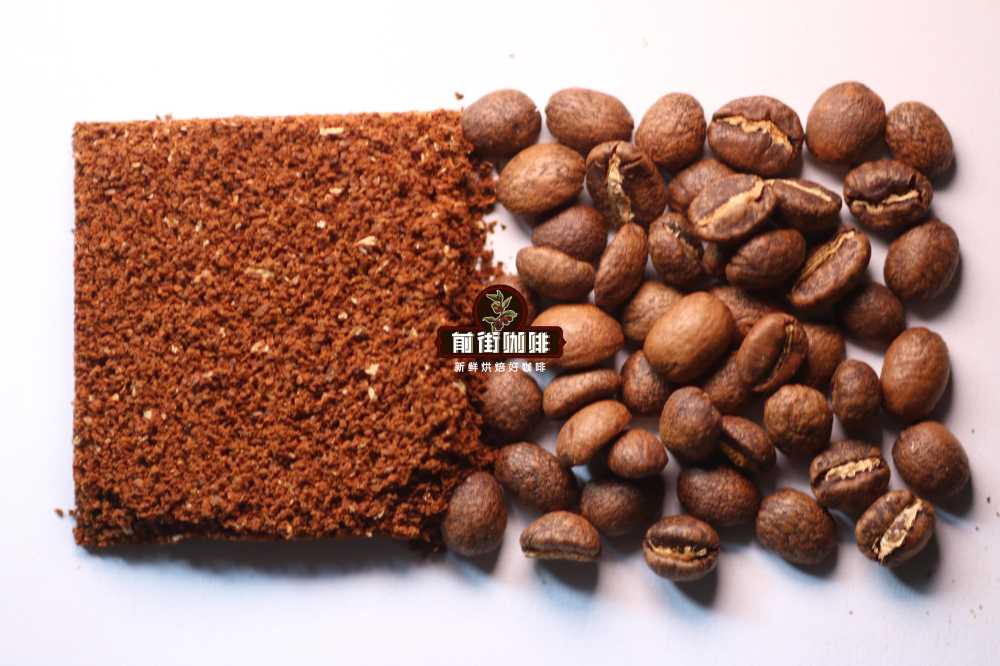
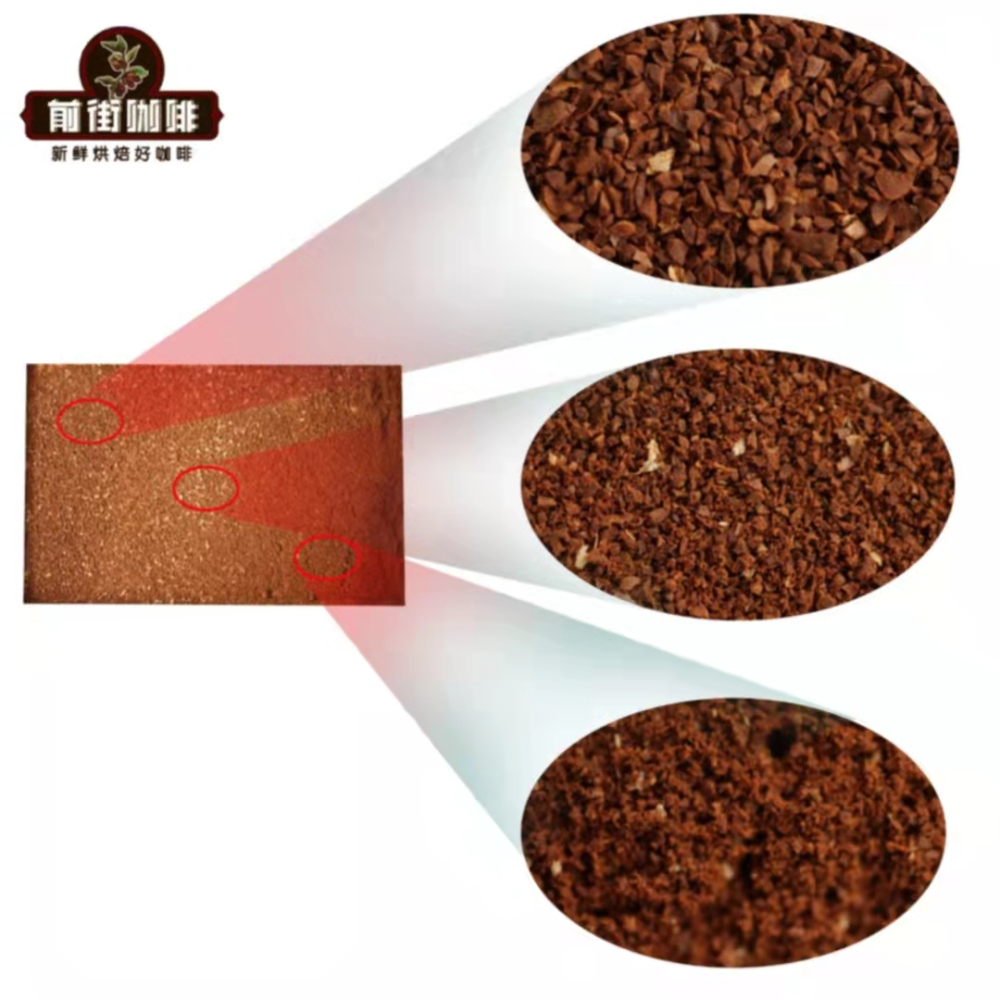
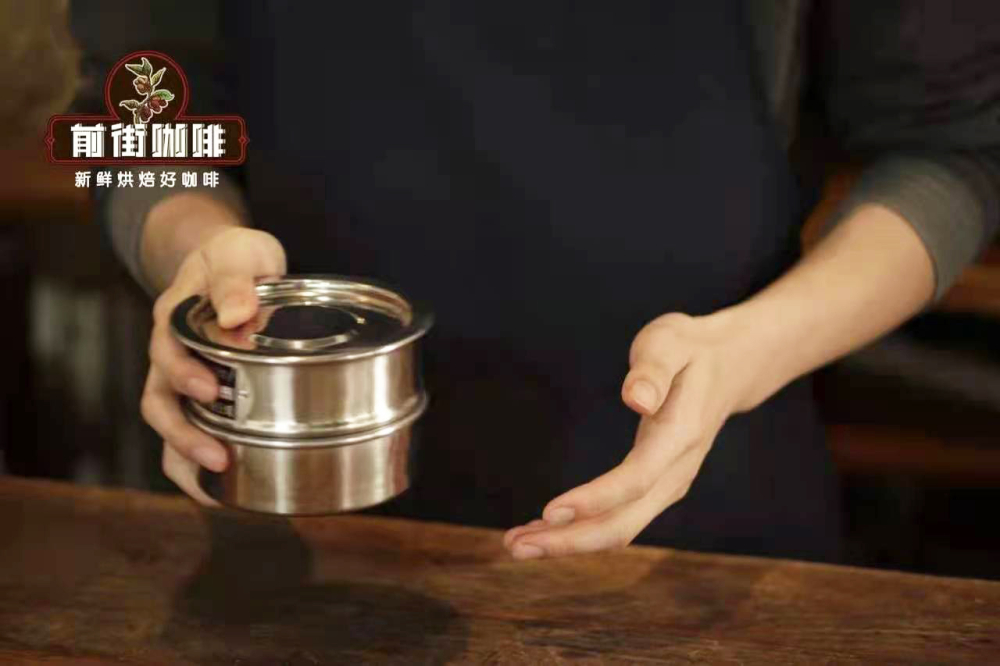
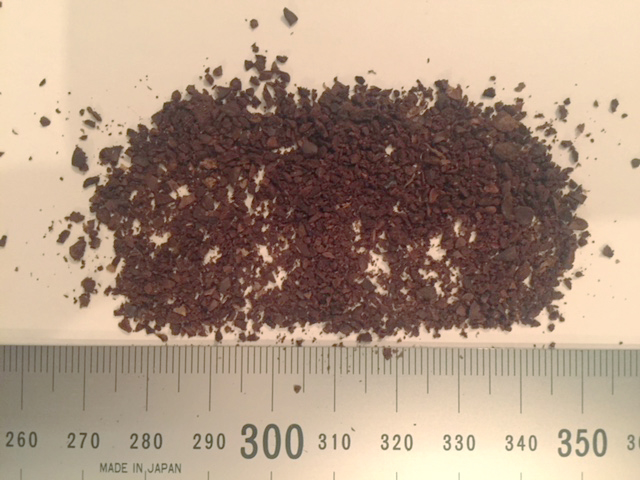
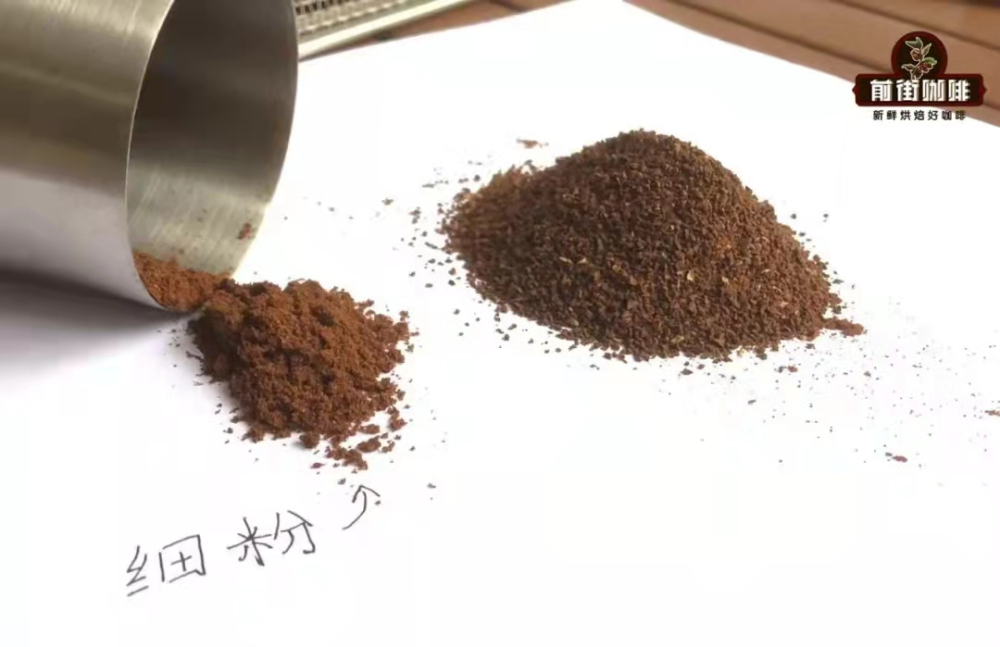
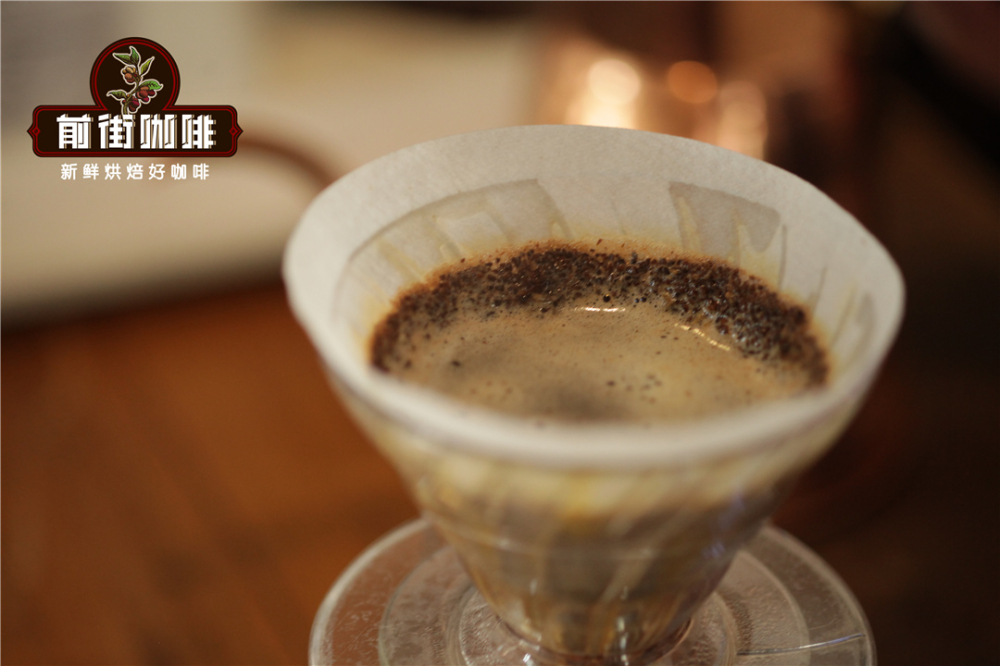
The issue of grind size is a hurdle almost every pour-over enthusiast cannot avoid. When replying to consultations from many coffee lovers, Front Street Coffee found that in cases where the brewing result was unsatisfactory, more than half could be traced back to a deviation in the grinding stage. Why coffee beans need to be ground People who have not had much contact with coffee may still have an impression stuck at the instant coffee stage. But the pour-over or espresso coffee bought in cafes today is almost always extracted after fresh roasted beans are ground into powder, and the finished product will contain coffee grounds. The reason beans must first be ground before brewing is that grinding greatly increases the contact area between coffee and water, and the release rate of flavor substances is far faster than soaking whole beans. The finer the grind, the larger the total surface area of the coffee particles, and the faster the internal substances are carried out by water. Coarser or finer As mentioned before, pour-over coffee is essentially filter extraction. If the grounds are too fine, the coffee particles will hinder the flow of water—fine grinding itself releases substances quickly, and combined with slower water flow and longer soaking time, it can easily lead to over-extraction, shown as a heavier taste, prominent bitterness, increased acidity, and possibly astringency. Conversely, if the grind is too coarse, the gaps between particles become larger and water passes through smoothly. Coarse grinding releases substances slowly to begin with, and with faster water drawdown, the brewed coffee often tastes thin, with weaker bitterness and acidity, fewer off-flavors, and a clear liquor color. Therefore, a grind size suitable for pour-over needs to strike a balance between particle size and water flow speed. Usually, for 1 to 2 servings of pour-over coffee, the extraction time is controlled at around 2 minutes. According to the SCA cupping grind calibration standard, cupping grind requires the passing rate of a No. 20 sieve to be between 70% and 75%, while pour-over requires a finer grind than cupping, so the pour-over grinding standard is a No. 20 sieve passing rate of 75% to 80%. This setting roughly corresponds to what various shops commonly call "pour-over fine grind." No. 20 sieve calibration has a limitation: it can only distinguish particles larger than 0.85 mm from those smaller than 0.85 mm. As for the distribution ratio of each particle size range below 0.85 mm, it cannot identify them. It is generally believed that the ideal pour-over particle size falls between 0.6 and 0.8 mm, meaning that the higher the proportion of coffee grounds in this range, the better. So if the budget allows, it is worth getting several sieves with different aperture sizes for more detailed distribution analysis. Particles smaller than 0.3 mm are called ultra-fine particles. A moderate amount of fines can enrich the flavor layers of coffee, but too many ultra-fine particles will seriously drag down the overall performance. As for how to define "too many," the reference line given by Front Street Coffee is 7% (not an absolute value). Empirical judgment is also feasible In addition to using data and tools to evaluate grind coarseness, we can also infer whether the grind size is appropriate from what happens during brewing. First, extraction time can serve as a reference indicator. Based on Front Street Coffee's brewing parameters, the extraction time for a normal 1 to 2 servings of coffee is about 1 minute 50 seconds to 2 minutes 10 seconds. If the grind is on the fine side, the extraction time will be correspondingly longer; if the grind is on the coarse side, the time will be shorter. From this, a preliminary judgment can be made as to whether the grind size is within a reasonable range. Another observation point is the settling state of the coffee bed during brewing. Under normal conditions, the coffee bed should sink at a steady and slow pace. If the drop speed is found to be too fast, it may mean the grind is too coarse; and if the settling becomes slower and slower or even clogs, with the bottom of the coffee bed appearing muddy, it is most likely caused by too fine a grind or too high a proportion of fines.
The above content is compiled by CoffeeHunters, a coffee news website.


