







How Coffee Update: Starbucks Union Efforts Spread in the US and Korea
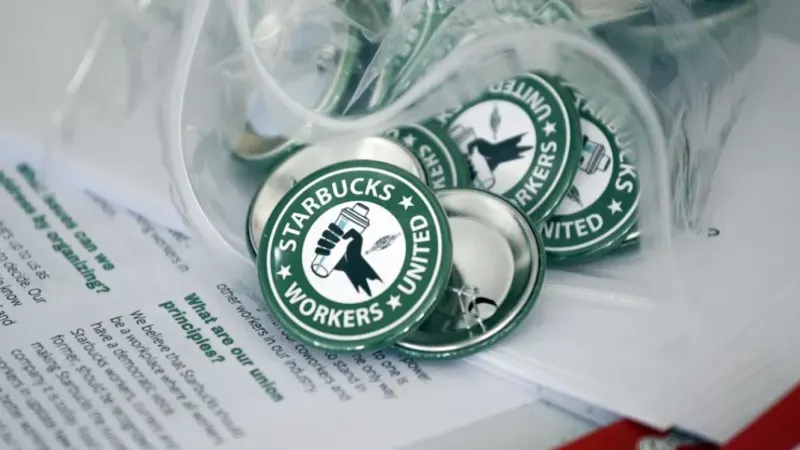
Starbucks employees in the United States and South Korea have turned to unions over understaffing, pay that does not match workload, and weak pandemic safety guarantees. The first US union came from a Buffalo, New York store; stores in Arizona, Chicago and elsewhere have since joined or applied, seeking direct collective bargaining with the company.
Workers say reports of staff shortages and excessive intensity were ignored or answered with unsatisfying fixes. In Chicago, employees joined an existing US union and wrote to executive John Culver, saying they love the job but face an imbalance between pay and workload. Union votes elsewhere continue, keeping the labor dispute in the news.
During the pandemic, Starbucks employees in the United States and South Korea, facing issues such as understaffing, a mismatch between wages and workload, and a lack of safety guarantees, chose to form or join unions in an attempt to improve their situation through collective bargaining. From the birth of the first union in Buffalo, New York, to the responses from employees in Chicago and South Korea, the dissatisfaction among Starbucks partners has continued to ferment. Although the company has been indifferent and even accused of failing to provide adequate pandemic support, employees are still seeking channels to voice their concerns. This article will sort out the ins and outs of the Starbucks employee union movement, as well as the wage, treatment, and work environment issues reflected behind it.
Over the past two years, employees at multiple Starbucks stores in the United States have continuously reported to the company issues such as staff shortages, excessive work intensity, and a mismatch between pay and effort, but the company either ignored them or offered solutions that failed to satisfy employees. As dissatisfaction grew, employees in many parts of the United States began taking action, choosing to form or join unions—something Starbucks least wanted—with the aim of gaining direct dialogue with the company rather than letting their demands disappear through layers of relay.
At first, employees at a Starbucks store in Buffalo, New York, created the first employee union in Starbucks' history in the United States. Subsequently, three other stores in Buffalo and one store in Arizona also applied to form unions, while Starbucks employees in six other cities are pushing for votes to decide whether to establish unions. With a union, employees can negotiate directly with the company, and Starbucks employees in other parts of the United States have also joined existing unions.
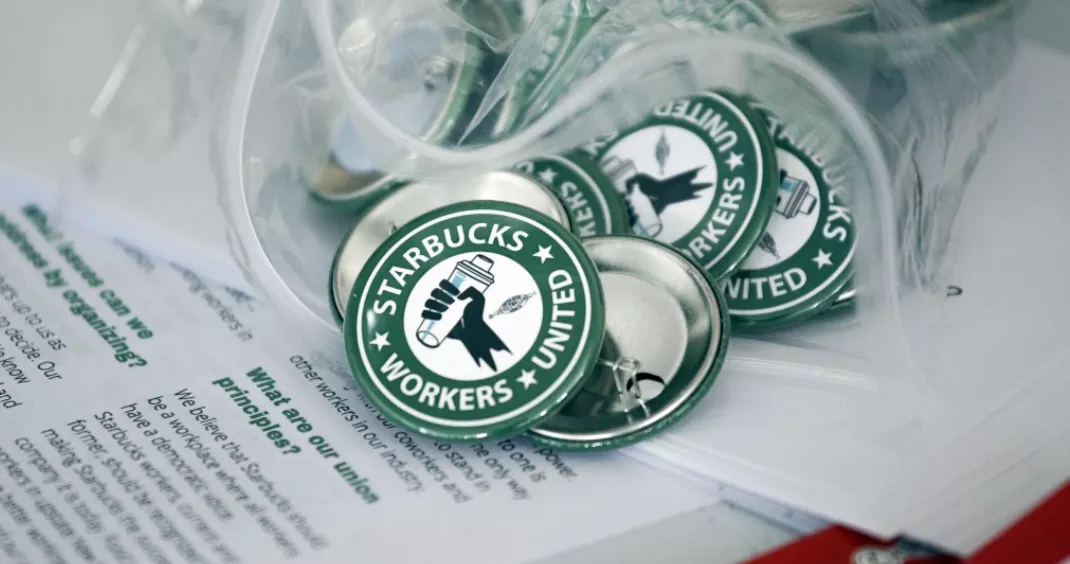
Recently, Starbucks employees in the Chicago area also joined an existing U.S. union, believing that only by standing together can the "partner voice" truly reach their "partners." In the name of the union, they wrote to Starbucks executive John Culver, saying they love the job, but understaffing has led to a severe imbalance between pay and workload for many employees. Therefore, they hope to negotiate with the company through the union on existing employee wages and store understaffing issues, and look forward to the company taking this dialogue seriously.
However, Starbucks in the United States has always opposed employees forming or joining unions, even describing unions as a "stumbling block" to the company's development. Previously, store employees also tried to form a union, and the company ultimately spent a large amount of money to dissolve that store. Regarding the formation of this union, Starbucks neither stopped it nor paid attention to it, so as of now, none of the union's requests for negotiation have received a response.
Not only have negotiations been fruitless, but Starbucks also failed to provide adequate safety protection for employees during the pandemic. On January 6, it was reported that employees at the Starbucks store in the United States that formed a union began resigning one after another because, at a time when the pandemic was severe, the company did not provide sufficient N95 masks for the store. Although the state government required masks to be worn in public places, many customers still did not wear them, yet Starbucks required employees to continue serving these customers. The unsafe environment, high-intensity work, and understaffing left employees extremely exhausted, so they recently resigned one after another.
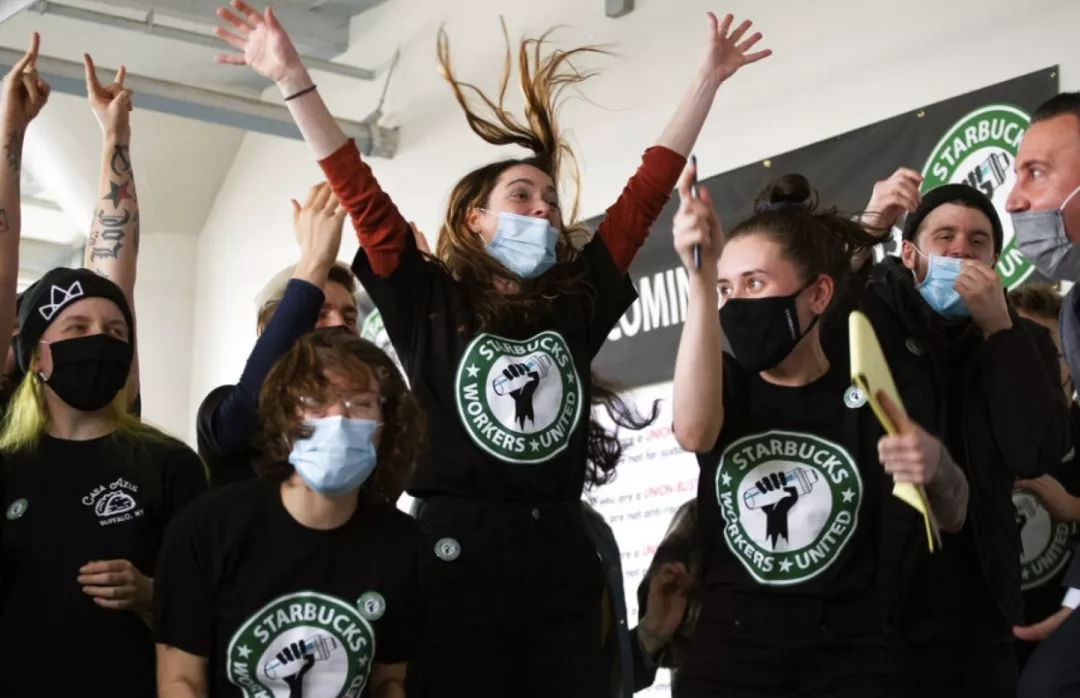
In response, a Starbucks spokesperson said that the company had closed dine-in service at 20 stores in the Buffalo area, offering only takeout and shortening business hours to cope with the local surge in cases and staff shortages. At the same time, the company hopes all employees will cooperate with pandemic prevention, get vaccinated as soon as possible, and has updated its policy on the isolation period after employees contract COVID-19 to minimize the risk of potential virus transmission.
In addition to the United States, Starbucks employees in South Korea have also recently joined local unions one after another, for the same reason: dissatisfaction with low wages, poor benefits, and high work intensity. Besides banding together collectively, they have also anonymously complained about Starbucks on online forums. One post read: "During a Starbucks promotion, a customer bought 650 drinks in one go, but the company did not send additional staff to the store, leaving all employees in a frantic rush while still having to smile and serve an endless stream of customers."
Last December, South Korean experts released survey data: in 2020, 613 Starbucks employees sought mental health treatment due to high work stress, more than a fivefold increase compared with 2015; injuries caused by understaffing also more than tripled compared with 2019.
In addition to complaining online, some Starbucks employees also rented a truck with a display screen that read: "Please don't forget, partners are Starbucks' greatest asset." The truck drove from downtown Seoul to Gangnam District to express dissatisfaction to all customers queuing for coffee during Starbucks promotions. This move was not only to protest high workload and low pay, but also because Starbucks, after entering South Korea in 1999, had promised raises based on seniority and performance, yet very few employees actually enjoyed that benefit.
In the past two years, Starbucks partners in mainland China have also been complaining bitterly. Although benefits have improved, they are not implemented immediately, but only after waiting half a year to a year. In terms of staffing, some stores are likewise understaffed and have no spare capacity to train new employees, and the wages and benefits offered to new employees are not as good as before.
From this perspective, joining or forming a union seems to be of little significance. Fortunately, Starbucks partners at least have an outlet to vent their emotions. Once the emotions are vented, the work must continue.
Image source: Internet
For professional coffee knowledge exchange and more coffee bean information, please follow Coffee Workshop (WeChat public account: cafe_style)
For more specialty coffee beans, please add the private WeChat of Front Street Coffee (FrontStreet Coffee), WeChat ID: kaixinguoguo0925
The above content is compiled by CoffeeHunters, a coffee news website.


