







What Is Arabica Beans and How Did the Champion Brew Them?
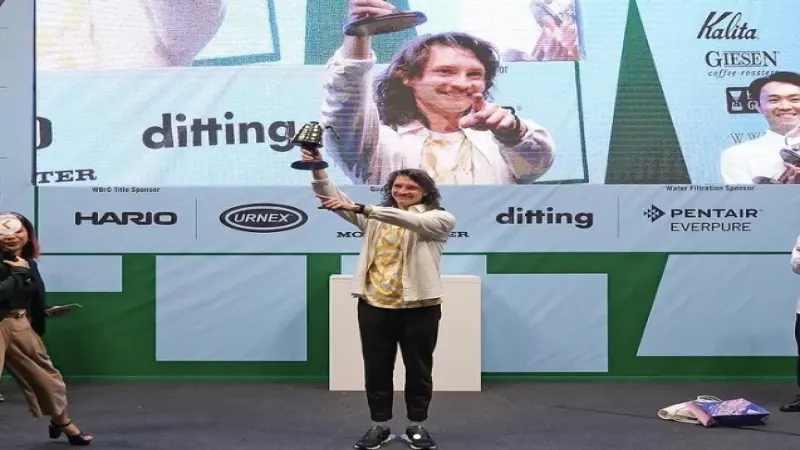
At the 2021 WBrC World Coffee Brewing Championship, champion Matt won with a blend instead of Geisha: 60 percent natural Eugeniodes and 40 percent washed Catucai. Eugeniodes, the parent species behind what is arabica beans today, brought high sweetness, while the washed Catucai from Finca Florida in Ecuador added bright, clear acidity.
His coffee brewing used a metal V60, a 1:15 coffee-to-water ratio, and five pours, with water split into two temperature stages at 93°C and 88°C. The pouring ratio closely resembles Tetsu Kasuya's 4:6 method. The blend balanced sweetness and layering, and the choice of a blend over a single origin eased judges' fatigue with competition regulars.
At the 2021 WBrC World Coffee Brewing Championship, champion Matt won using a blend rather than Geisha, which sparked widespread attention. His recipe consisted of 60% natural Eugeniodes and 40% washed Catucai; the former provides extremely high sweetness, while the latter brings clear acidity. For brewing, he used a metal V60 dripper, a coffee-to-water ratio of 1:15, five pours, and innovatively split the water temperature into two stages: 93°C and 88°C. Through video analysis, Front Street found that his pouring ratio closely resembles Tetsu Kasuya's 4:6 brewing method. This article provides a complete analysis of this competition plan, which balances sweetness and layering with high compatibility, for coffee enthusiasts to reference and learn from.
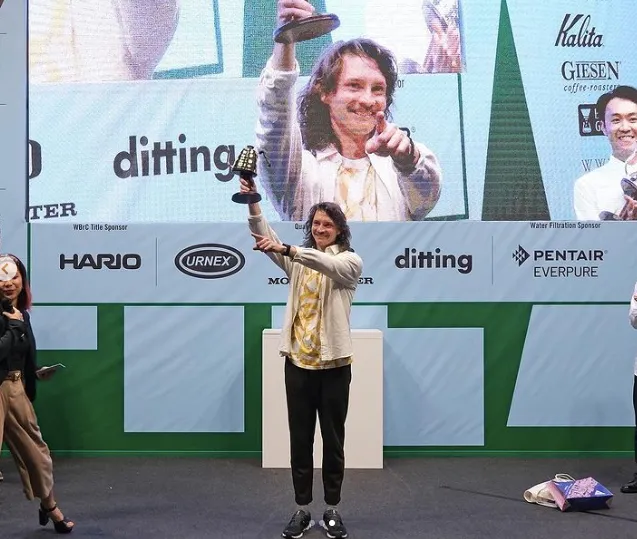
This year's champion and runner-up shared a common trait: neither chose Geisha or single-origin coffee beans, but instead competed with blends. It should be noted that there is no inherent superiority or inferiority between single-origin beans and blends. When explaining his recipe, Matt mentioned that he used 60% natural Eugeniodes paired with 40% washed Catucai.
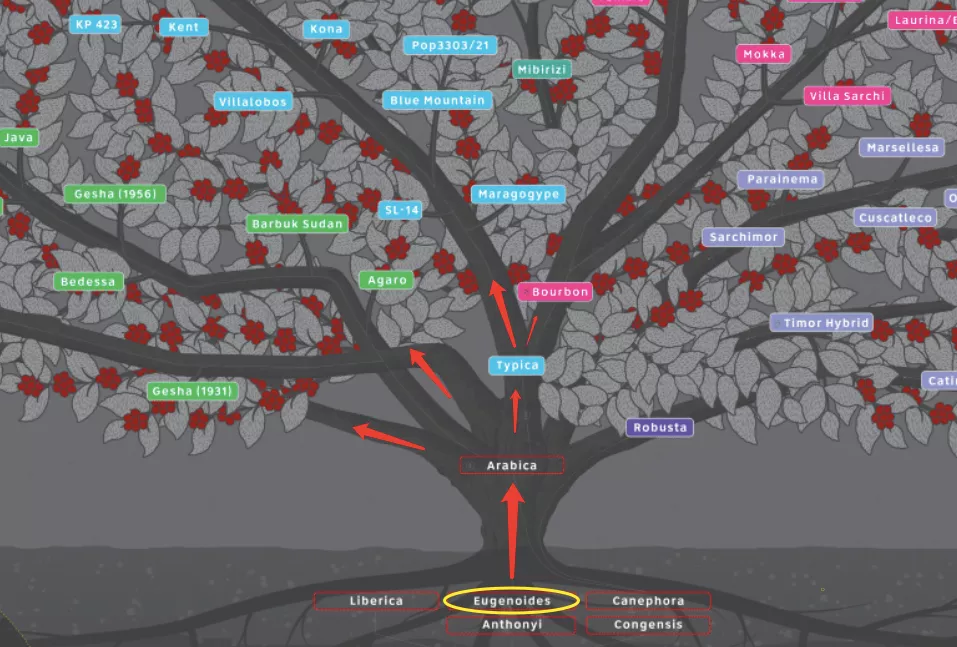
The name Eugeniodes might be confusing, but looking at it from another angle makes it clear—the Arabica we all know is actually a descendant of a cross between Eugeniodes and Canephora. Because its Chinese transliteration is quite a mouthful, it is simply referred to as "mother species." Matt also said during the competition that the mother species presents extremely high sweetness in flavor, with almost no perceptible acidity or bitterness. Of course, the cultivation standards of Finca Deborah and the natural processing method also deserve credit.
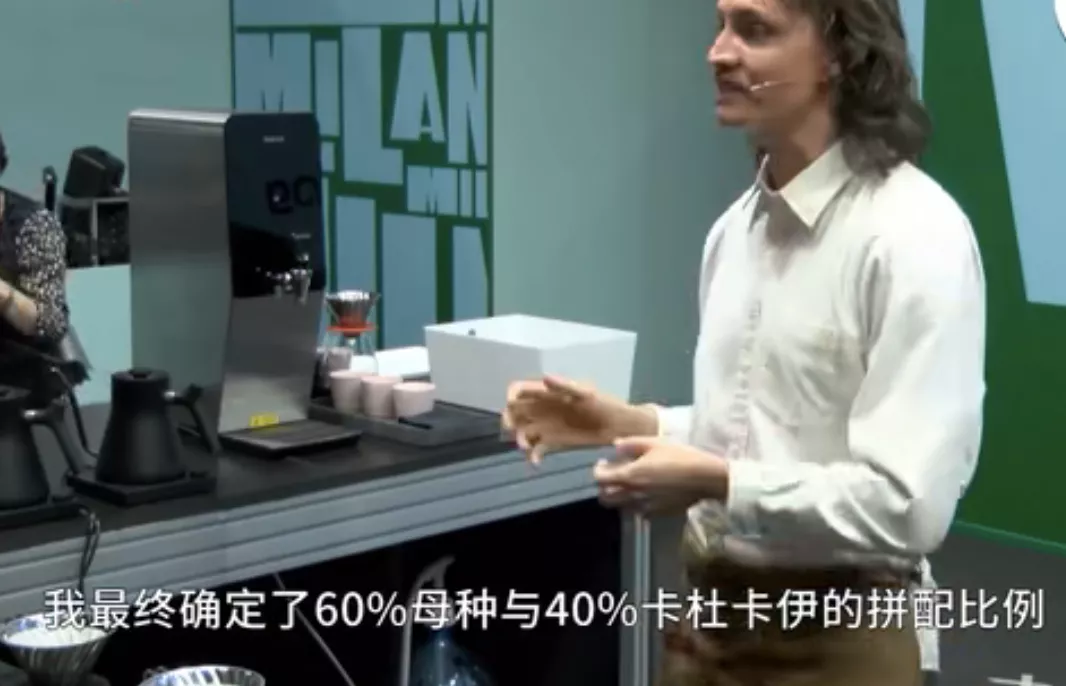
However, super sweet coffee alone is not enough; some acidity is needed to complement it. Matt selected washed Catucai from Finca Florida in Ecuador. Catucai is actually quite common in Central and South America, but choosing Ecuador as the producing country is relatively uncommon. Fortunately, Finca Florida is a T1-level estate in Ecuador, so quality is fully guaranteed. This bean provides bright, pleasant, and clear acidity.
To summarize, although the beans Matt chose were not the competition regular Geisha, their quality is absolutely T0 level. Combined with the blending approach, it alleviated the judges' aesthetic fatigue and generated strong interest. We cannot replicate the bean quality—that requires deep pockets.
But the idea of hand-brewing blends is very much worth learning from. Just as single-origin beans were once promoted essentially to improve quality and create better flavors, today's "specialty blend" concept follows the same logic.
Next, let's look at Matt's brewing parameters. From the competition video, the information he directly revealed includes: a metal V60 dripper; regarding water, a dose of 20 grams and total water of 300 grams, i.e., a 1:15 ratio; a coarser grind; and 5 pours (including the bloom). For water temperature, he prepared two kettles, using 93°C for the first three pours and 88°C for the last two.
For extraction time, starting from when Matt began pouring his first cup in the video (competition timer 3:42) to when he removed the first dripper (competition timer 6:25), the total was 2 minutes and 43 seconds.
Matt did not disclose the specific ratio for each pour. However, by carefully observing the pouring method and drawdown speed in the video, Front Street found that Matt's pouring approach is similar to Tetsu Kasuya's 4:6 method, with only adjustments to the pouring ratios and water temperatures. Using pouring time as a proportional reference, it is approximately 60g, 80g, 60g, 60g, 40g.
Now that the basic parameters have been covered, let's analyze what aspects of these practices are worth referencing.
First, Matt used a metal dripper, explaining that this maximizes the expression of acidity and flavor. Front Street believes that dripper material does indeed affect how coffee flavors present, though in everyday brewing the difference is not particularly significant.
The second point is using different temperatures to brew coffee, a practice that has also become popular recently. Based on current theory, higher temperatures extract more substances, while lower temperatures extract less; the early and middle stages of coffee are pleasant, while the later stage tends toward bitterness. Brewing the early and middle stages at high temperature brings out more pleasant flavor compounds, while switching to low temperature for the later stage reduces extraction, thereby achieving balance.
Third, you can watch Matt's competition video on Bilibili. His pouring method involves center pouring, then high-speed agitation with a large stream, followed by center pouring again. His brewing philosophy is similar to the 4:6 method: coarse grind, large stream, high-speed agitation, stable ratios. One small detail worth noting is that during the center pour after the circular pour, Matt kept his eyes fixed on the scale—if a pour stage did not reach the target water amount, he would top it up.
In other words, after countless brewing trials, the pouring technique during competition has minimal impact on the coffee; what matters is whether the brewing plan is reasonable and whether execution is on point. For example, during the second pour, after finishing he noticed he hadn't reached the desired water amount and chose to top it up rather than ignore it, even though the motion looked a bit awkward.

Competitions have time limits and are decided in a single attempt with no chance to redo. Therefore, aspects related to competition scoring are what contestants pay particular attention to; no one would choose high-difficulty brewing techniques or extreme brewing methods to take risks. In competition, contestants tend to choose scientific brewing theories and safe brewing methods. So, setting aside the practices that require deep pockets, the other brewing methods are very suitable for audiences to learn from.
Matt's brewing technique and parameter choices this time were all very safe and highly compatible: coarse grind, high temperature first then low temperature, split into 5 pours. The final coffee presented rich layering, almost eliminating any risk of over-extraction, with high flavor clarity. Add to that the carefully selected blend—highly sweet mother species and Catucai with clear, bright acidity—paired with repeatedly tested custom water and details like "dripper material." There is much we can learn, such as his approach to formulating hand-brewed blends and his research into details.
The above content is compiled by CoffeeHunters, a coffee news website.


